
Height levels
The five height levels of a Messalith battlefield, zero to four: how the squad climbs between them, what height buys in sight and Aim, and the landmarks on top.
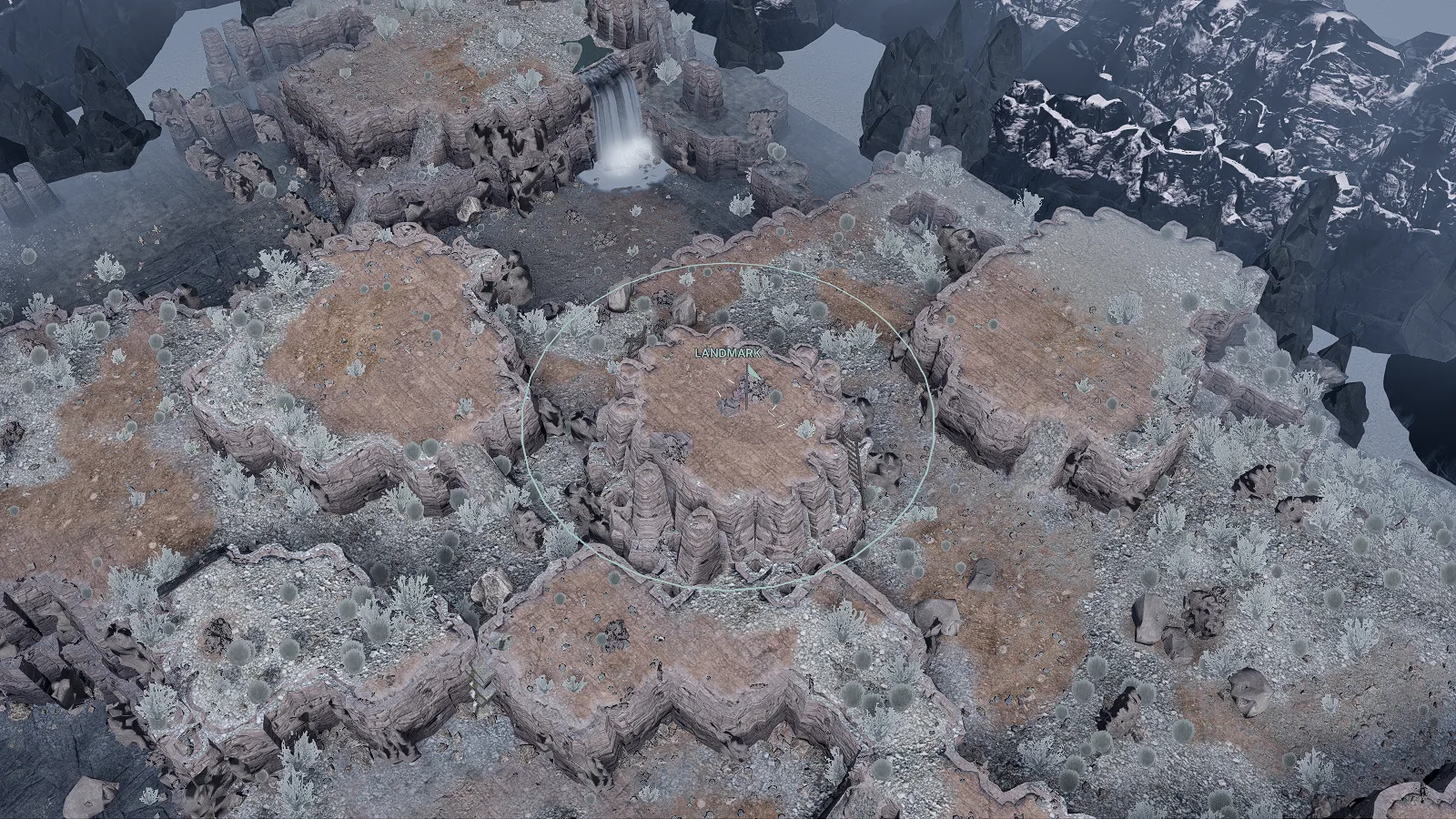
A battlefield has 4 levels above the ground, and so five heights in all. Ground is level zero. Every tile has one height, and everything about movement and shooting asks how far apart two heights are.
Getting between levels
| Way between levels | Levels | Cost of the step | Notes |
|---|---|---|---|
| Ramp | 1 | 1 a step, as on the flat | Either way. A ramp is a tile of its own. |
| Ledge | 1 | 3 up, 1.5 down | Straight steps only. |
| Ladder | 2 | 2 either way | Straight steps only. No cover and no overwatch on it. |
Anything else is a cliff, and nobody climbs it. Two tiles at the same height are always joined by a free step.
What height buys
- Aim: an attacker gets +10 Aim for each level above its target, up to +20.
- Sight: the viewer sees one tile further for each level it stands on, up to +3.
- Cover: a piece only protects a unit at its own height.
- Melee: a blade or spear reaches at most 1 level up or down.
These are the rules of height and terrain, unchanged. The new part is how high a board can reach.
Level four
The classic boards, the places, the camp and the kit's pieces stop at level 3. Only a big board goes to the top, and only its landmark does. Each biome has one:
- A tor, a crowned knoll of rock, on the steppe, the scrub, the highland and the alpine slopes.
- A mesa, a flat top reached by ladders, in the canyon and on the desert's rim.
- A sea stack, a pillar of rock nobody can climb, on the coast and the brine shore.
- A hot spring, travertine terraces with the pool on top, on the salt flat and in the marsh.
- A fallen beech, a trunk lying a level up with its torn root plate higher still, in forest and parkland.
A landmark is a place to scout, and the ground on top is the highest a squad can stand on. It is reached by ramps, ledges and ladders, at two spread places on each step.