
The world, fire and walls
A dozen kinds of country, planted from Europe's fossil record. The weather counts in a fight, fire goes where the wind sends it, and walls break.
The world, and how it looks
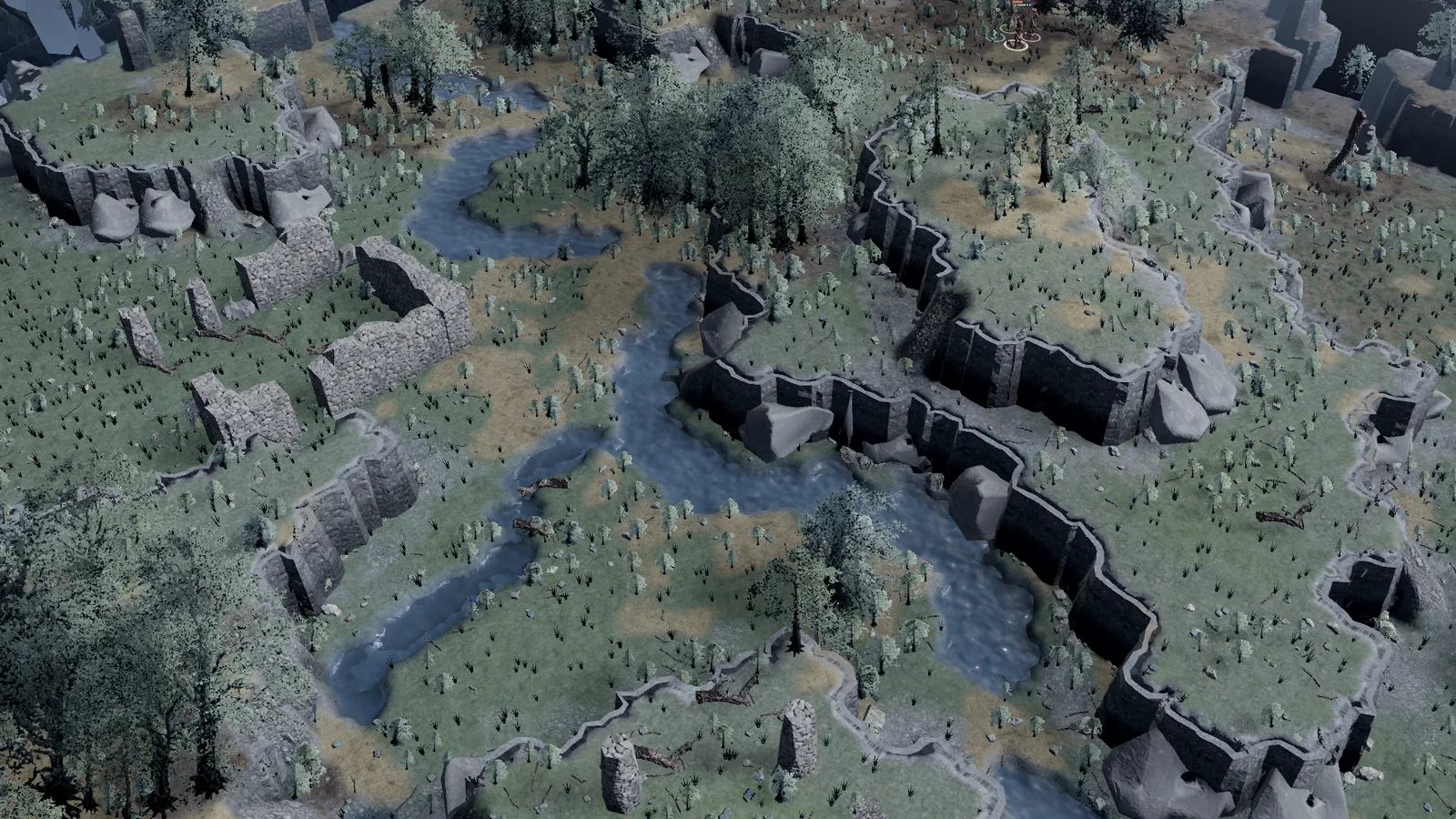
A battlefield is one piece of ground. The grid sits on a landform grown from it: the ground rolls between the tiles, every step up is a rock face that follows its contour, a ramp is one long slope, and the land runs on past the board's edge, so the map never stops at a cliff.
In mountain, highland and canyon country the ranges on the horizon are the region's real relief, cut from the same elevation data as the campaign map. Elsewhere, ridges of their own close off the view.
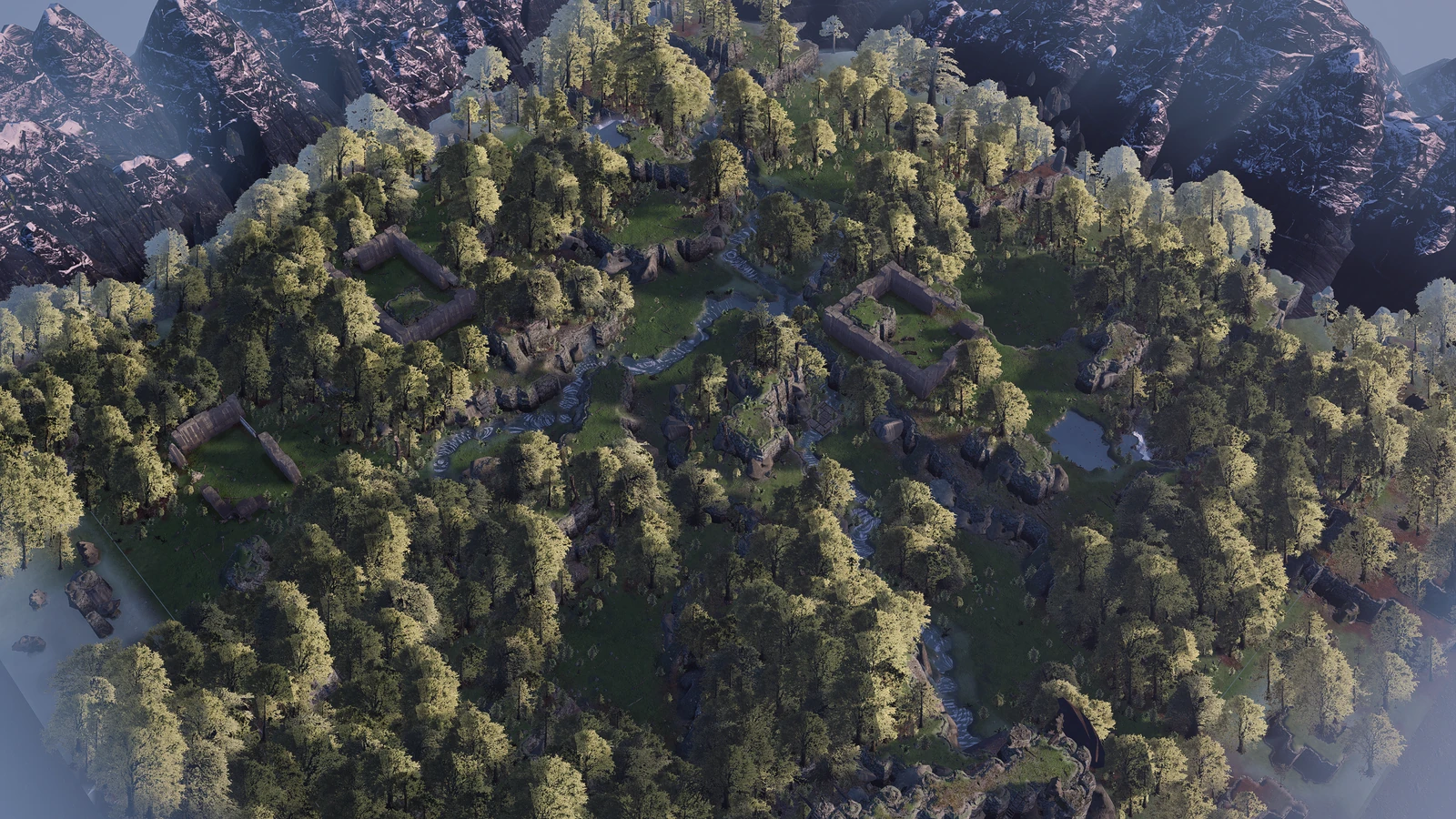
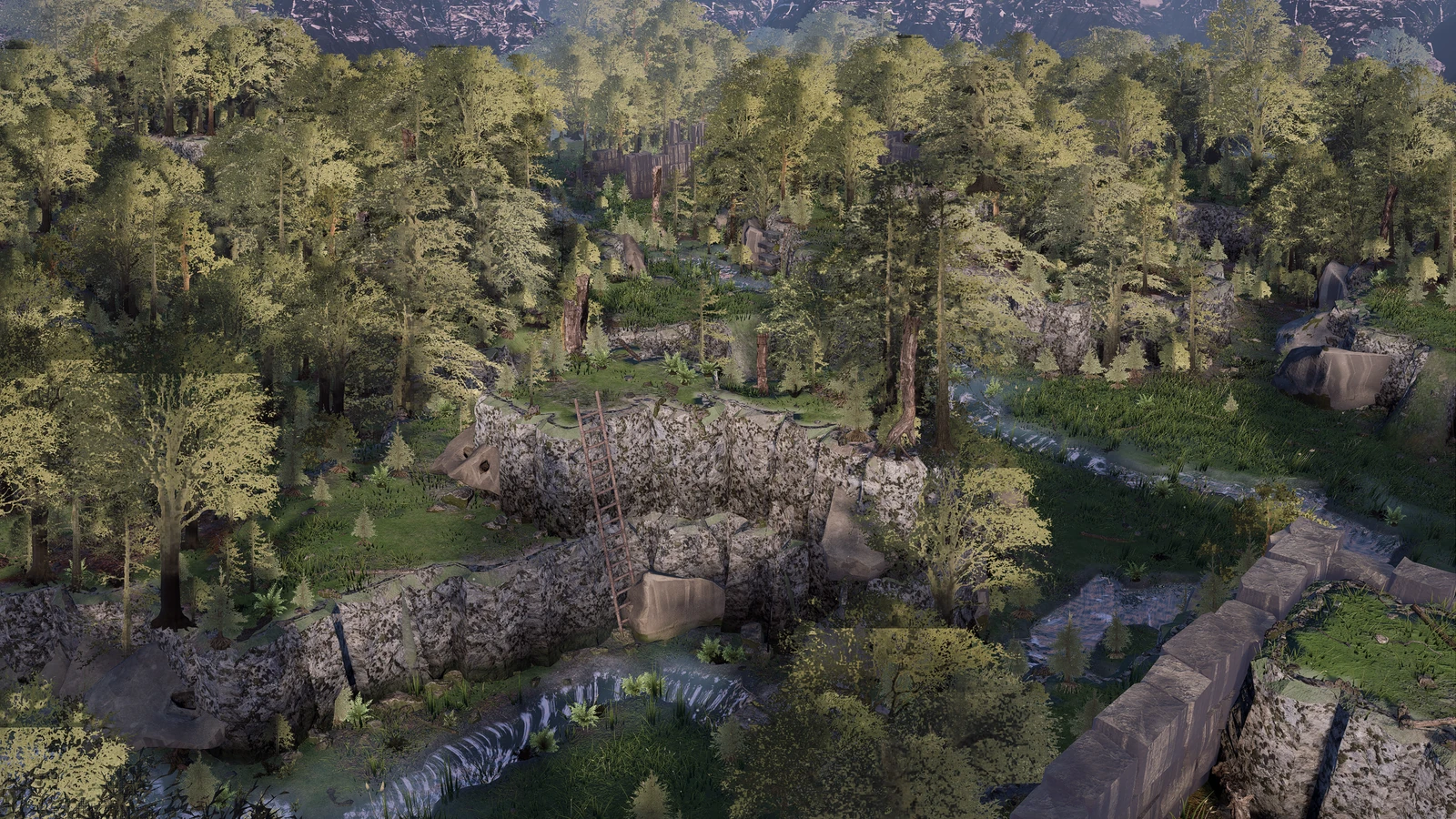
Battlefields are generated from a dozen kinds of country: forest and parkland, marsh, canyon and badlands, steppe, alpine slopes, salt flats and brine shores. Every plant on the map is drawn from Europe's fossil record, from tall pine and fir forest with ferns and deadfall to swamp cypress and saltbush. The big trees beside the camera keep every branch, and further off they step down to simpler shapes and then to flat cards baked from the same tree, so a forest stays full out to its edge.
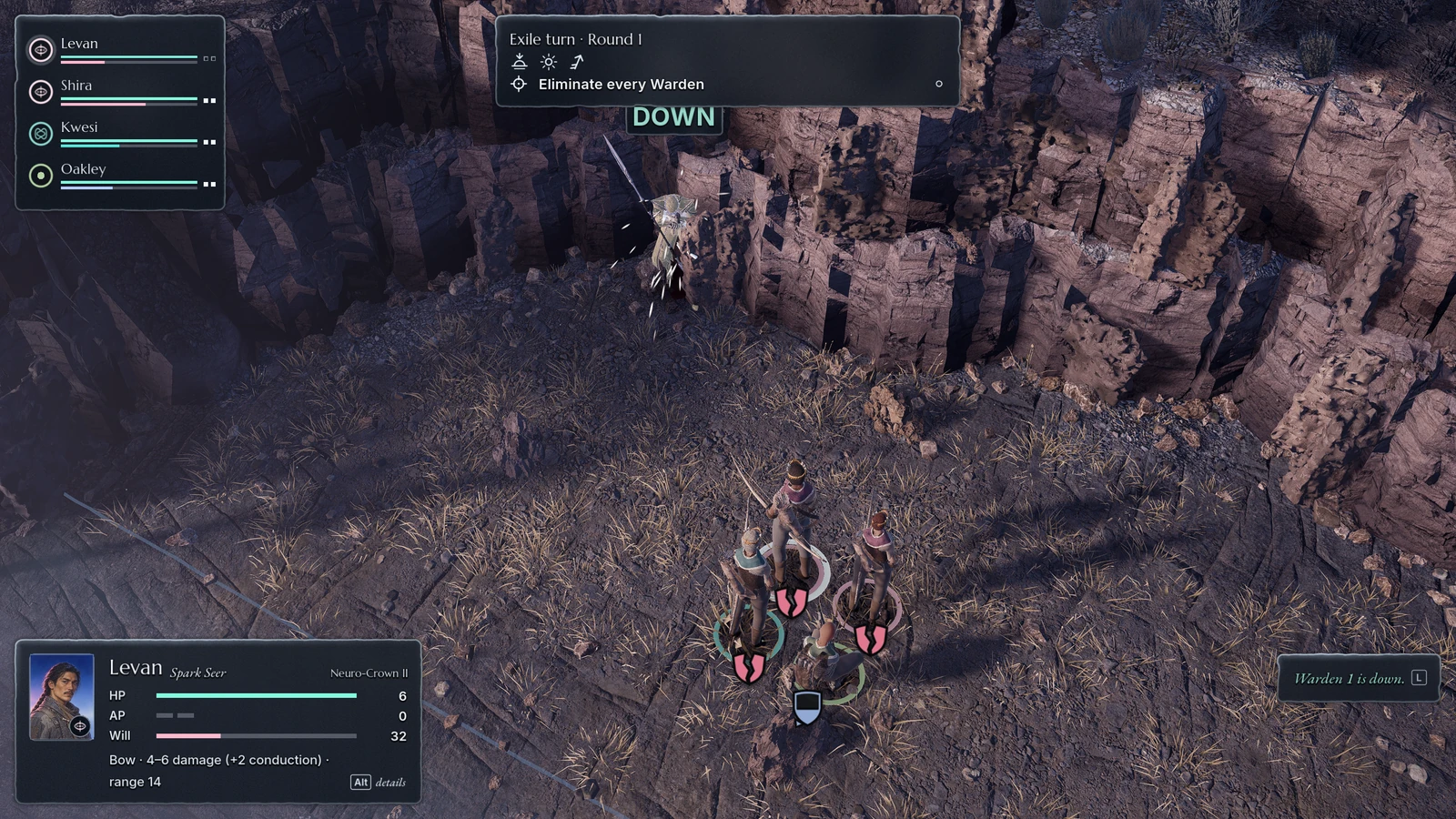
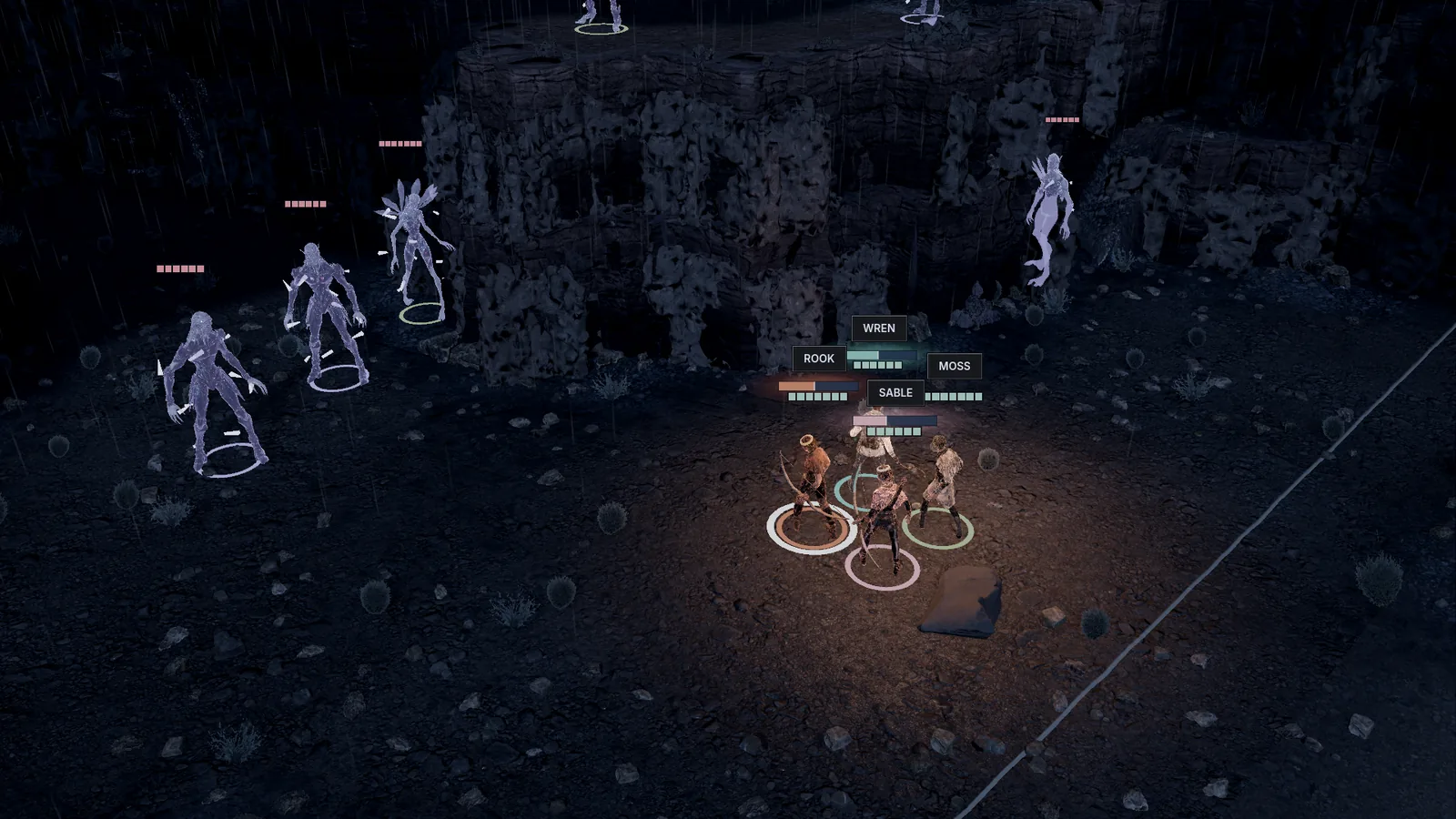
A warm sun sits against cool shadow, from dawn through day and dusk to night. Mist pools in hollows and among the trees, a fire throws flickering light and lit smoke, and at night each exile carries a small torch. On Medium and High each country gets a colour grade for its hour, the dusk one fitted to the game's painted mood pieces, and the grade never touches the interface. Hits chip stone and spray grit, misses ricochet, broken cover settles as rubble, and Tuatha glass shatters when its wearer falls. There's no blood.
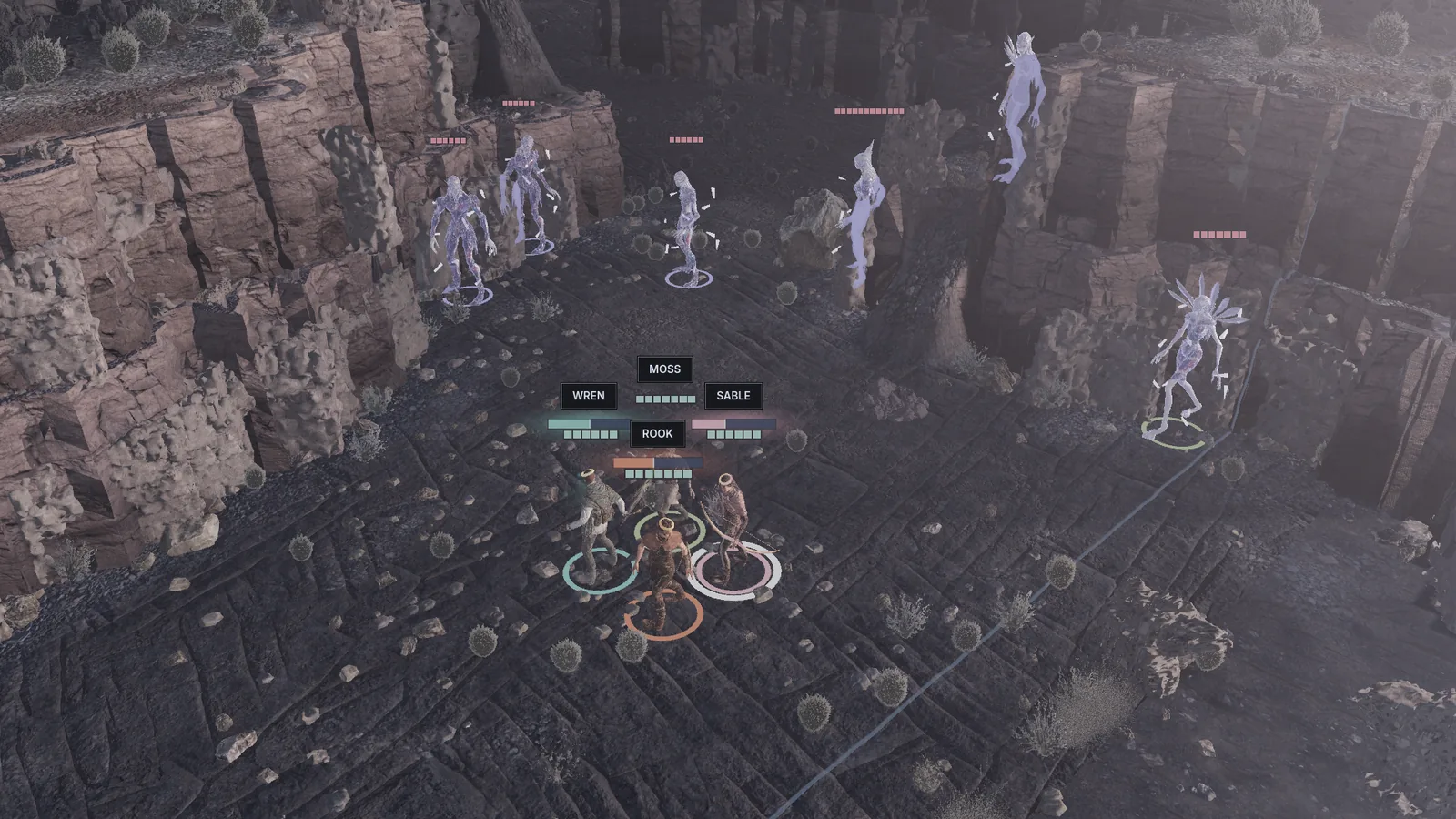
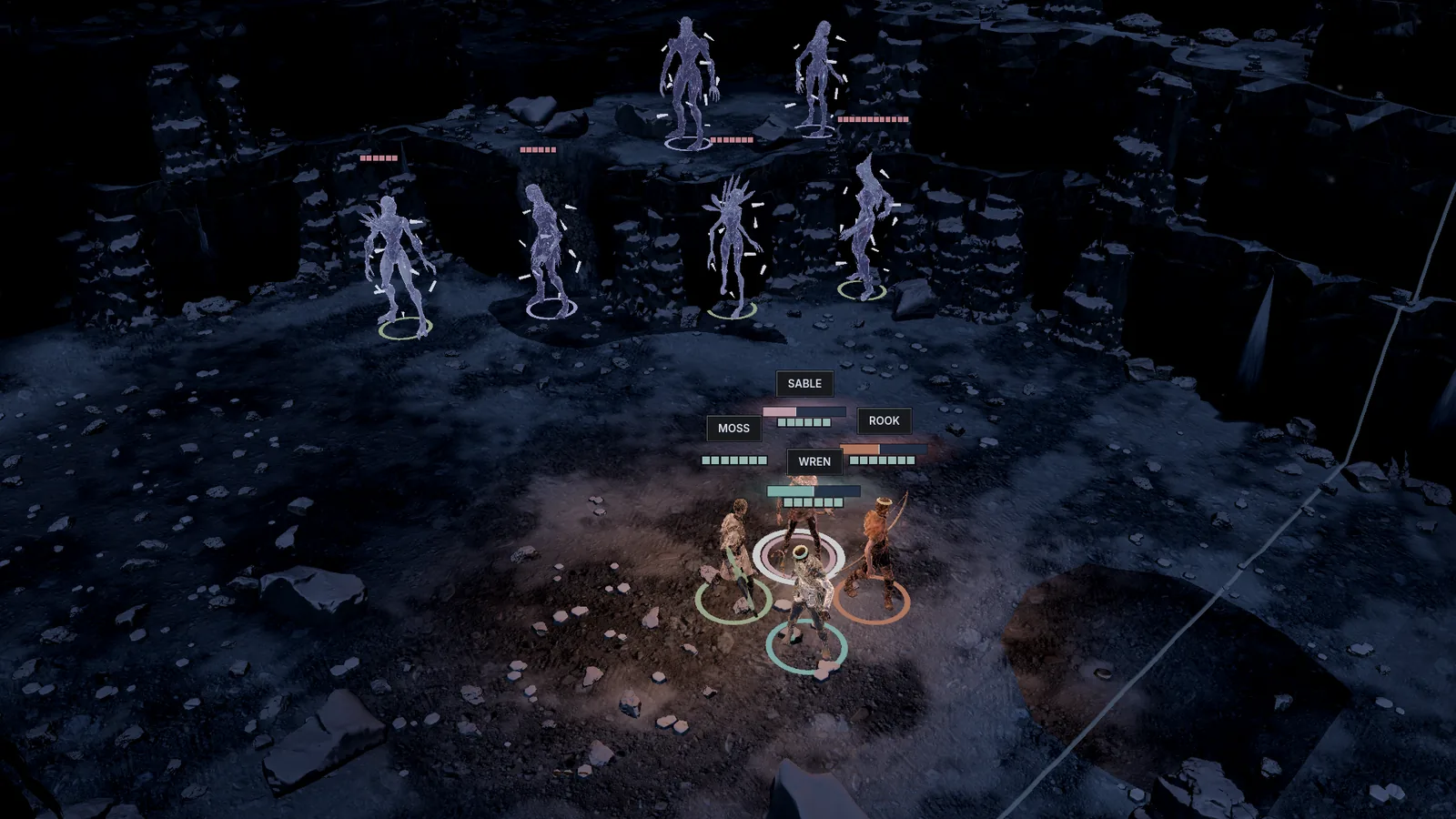
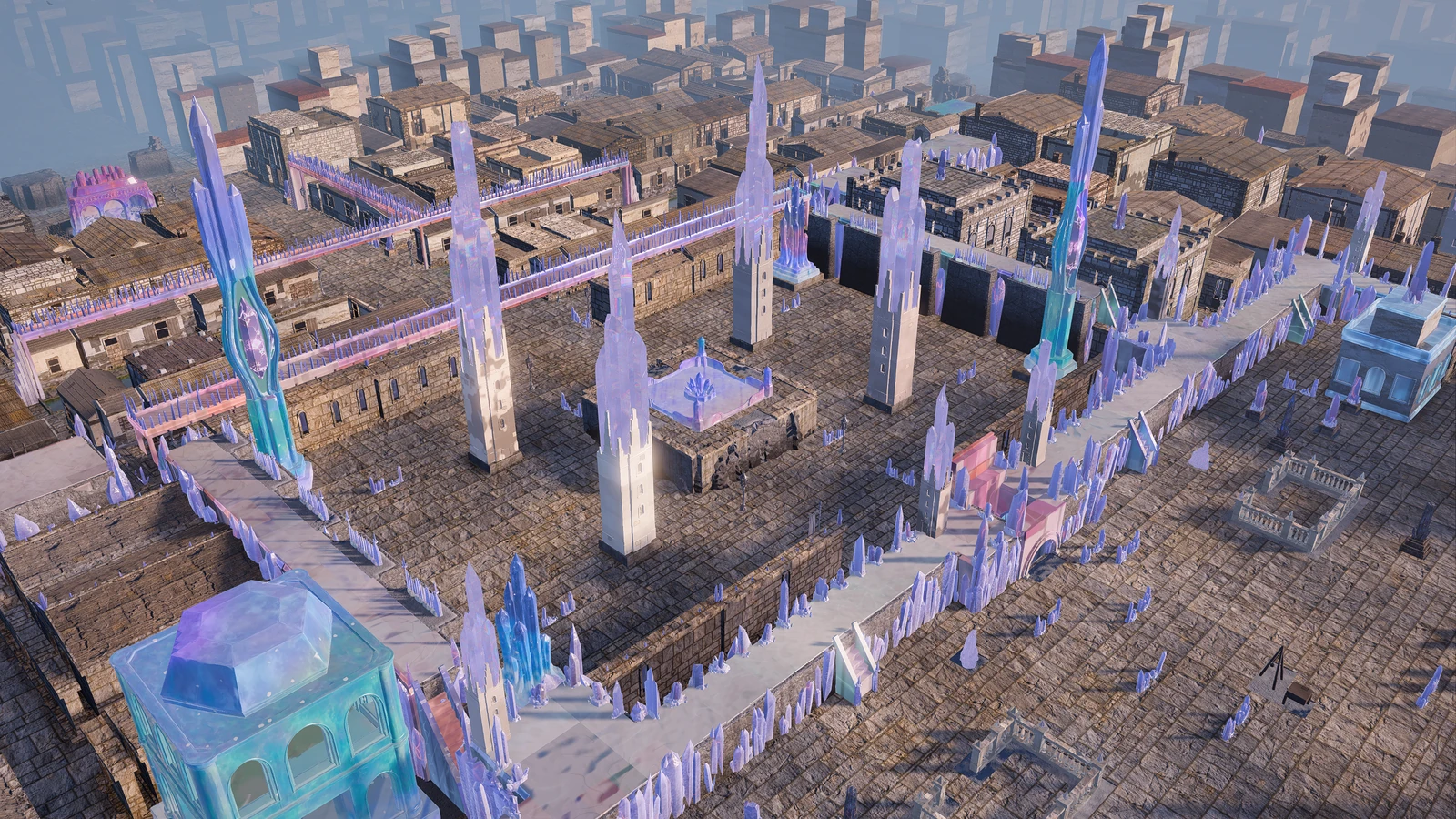
Crystal grows. It stands in clusters with dark violet bodies, frosted edges and a faint warm glow at the core, threaded with ember light. Repeated pieces are each their own: one spire snapped, the next regrown, each stretch of glass wall clear, milky or smoky, so no two in a row match.
The towers of the Tuatha cities are cast salt-glass, lit from within. Ground the squad can't see lies under the fog of war, the walkways over the streets included. Four graphics presets run from Laptop, for integrated graphics, up to High, and the far ranges and the colour grade come in at Medium.
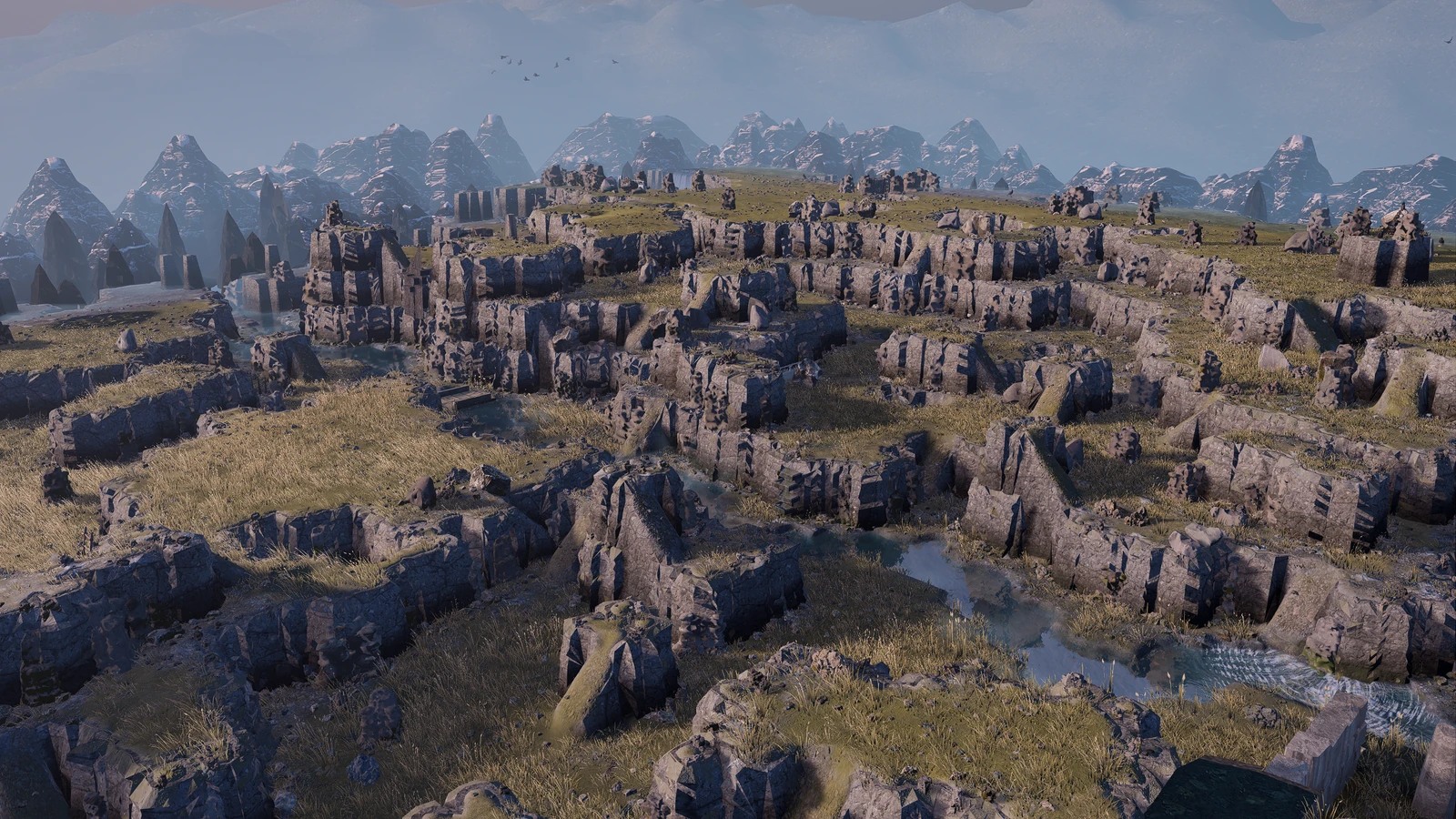
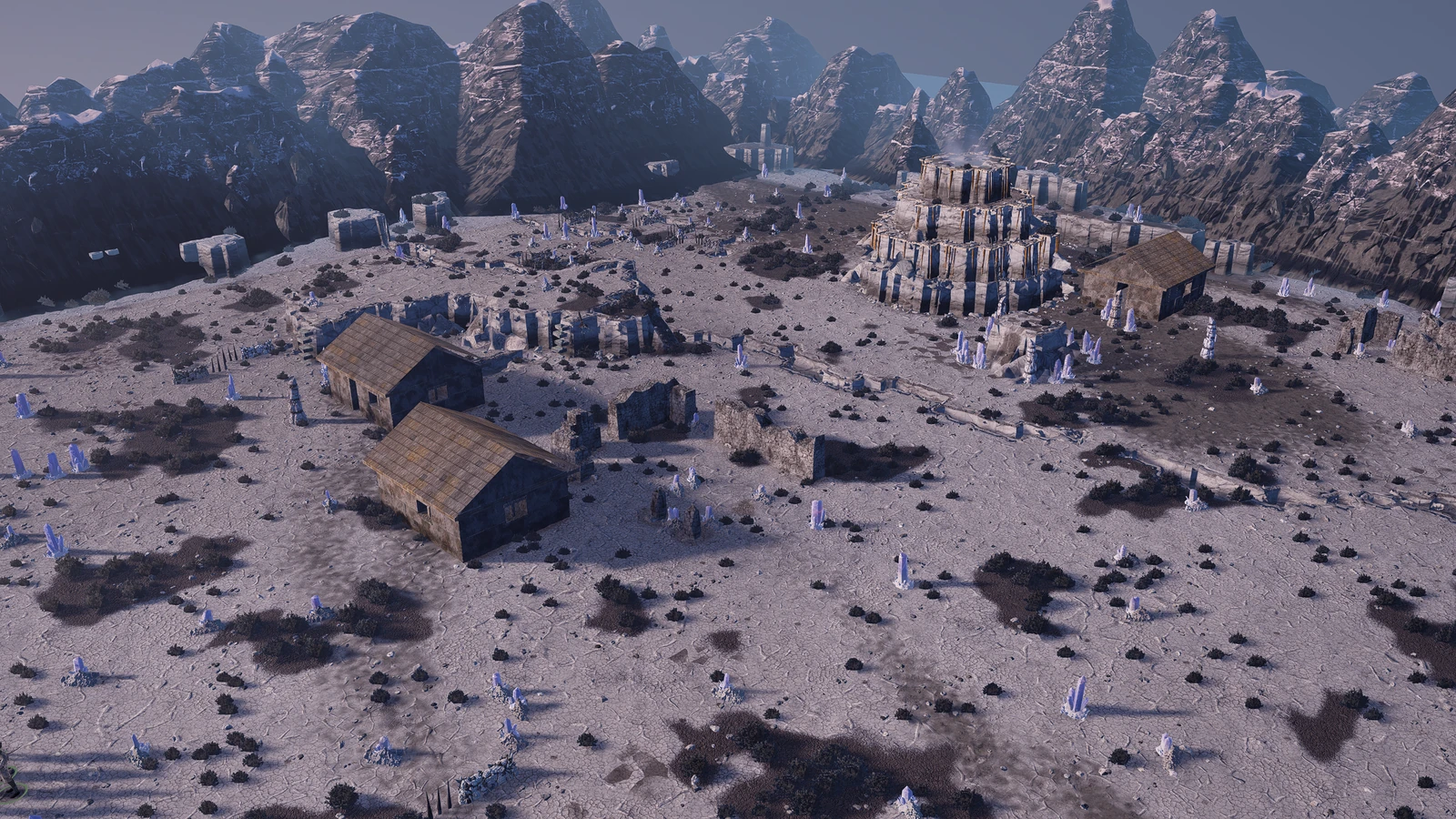
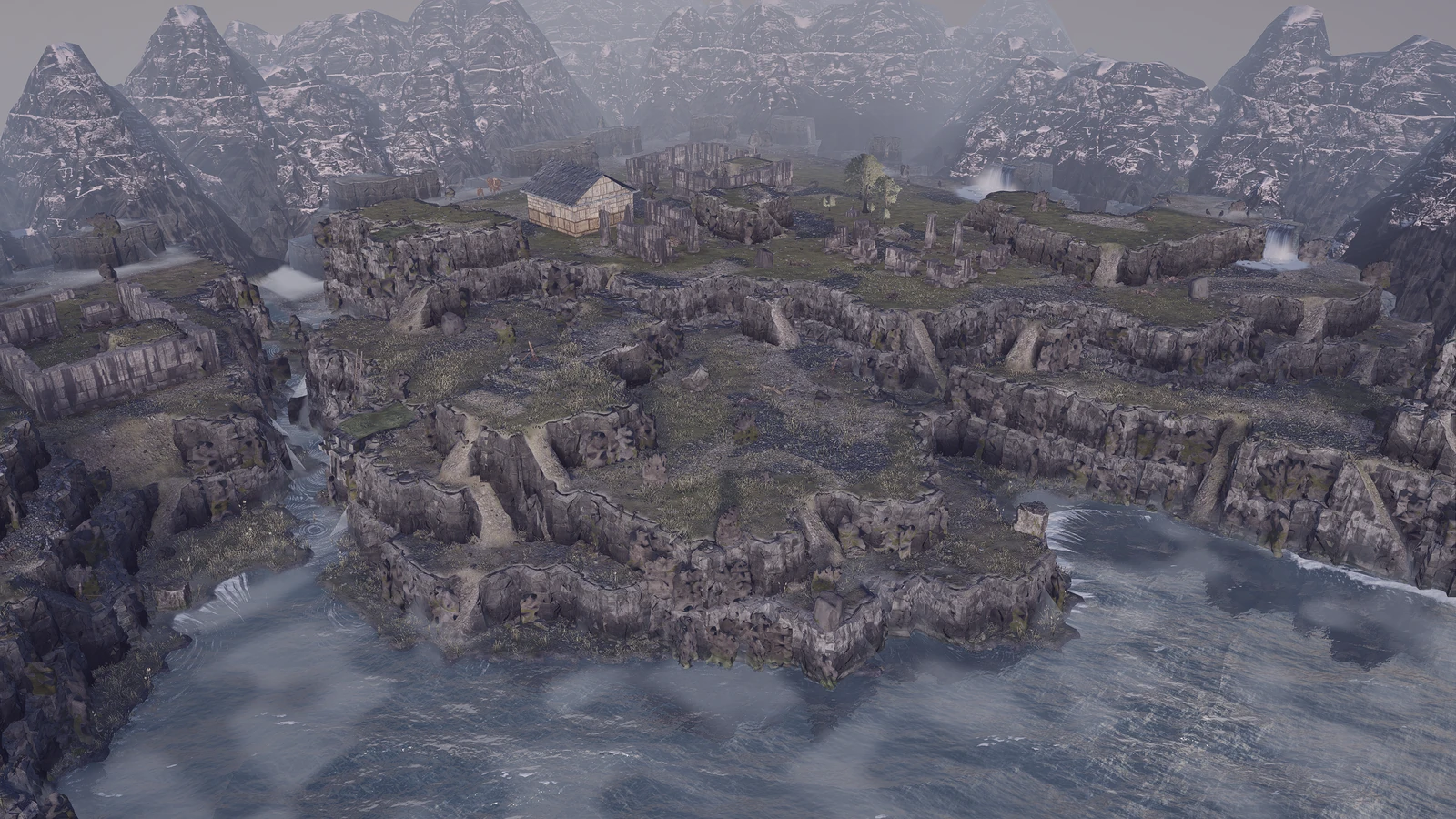
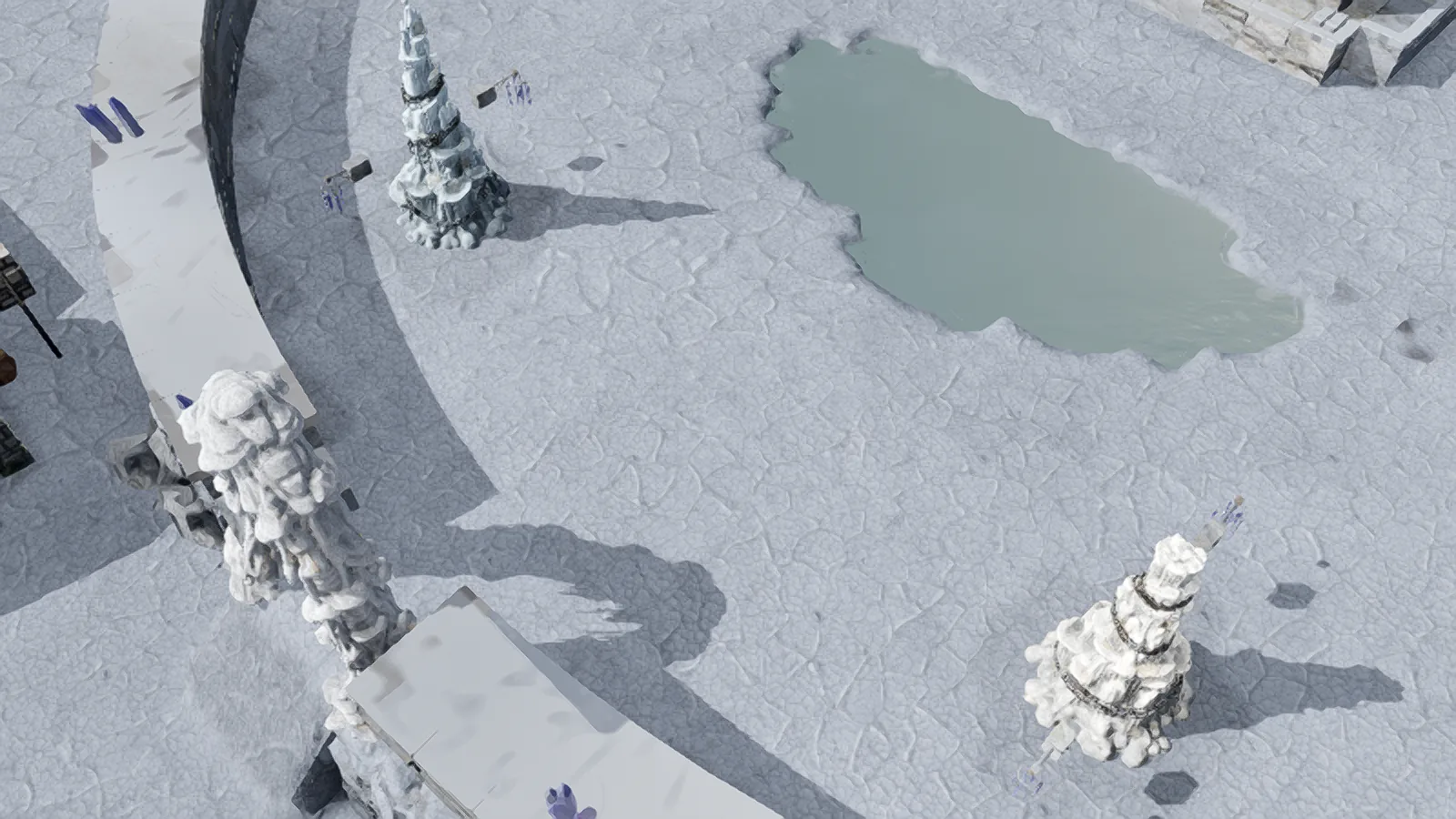
Each mission rolls its own weather and hour. Clear skies, overcast, rain, a dust storm, salt haze or snow, at dawn, by day, at dusk or at night. The weather counts in the fight. A dust storm cuts everyone's sight and spoils a bowman's long shot, rain and snow make open ground slow going, and the briefing gives the forecast before you pick the squad. It can turn mid-fight, with a round's warning. Psychic powers don't care either way. The wiki has the numbers.
One wind runs through all of it, bending the grass, pushing the smoke and carrying the fire. Boots kick up dust or splash through marsh, and powers leave scorch marks and cracked ground behind them.
Still pools are dark mirrors with the cypresses standing in them, streams run downhill to wherever they drain, and waterfalls pour off the cliffs into foaming pools. Crows and doves feed at the board's edge and scatter when your squad comes near.
Crows and doves aren't the only life. Wild bees work the flowers by the water, and a small herd of three-toed horses grazes open country in the south. The beasts of the Pliocene are loose on the battlefields now, at the edge of the board.
Mastodons, Anancus, rhinos, deer, pigs and monkeys in the forests, wild oxen and giant tortoises on the open ground, and far off on the ring a sabre cat, a giant cheetah or a running hyaena. They are scenery. They give no cover, block no shot, and nobody can target them. Walk the squad up to a herd and it moves off along the edge.
The oxen are Leptobos, an early wild cattle, lean and long-legged. The first model looked too much like a cow, so it was made again.
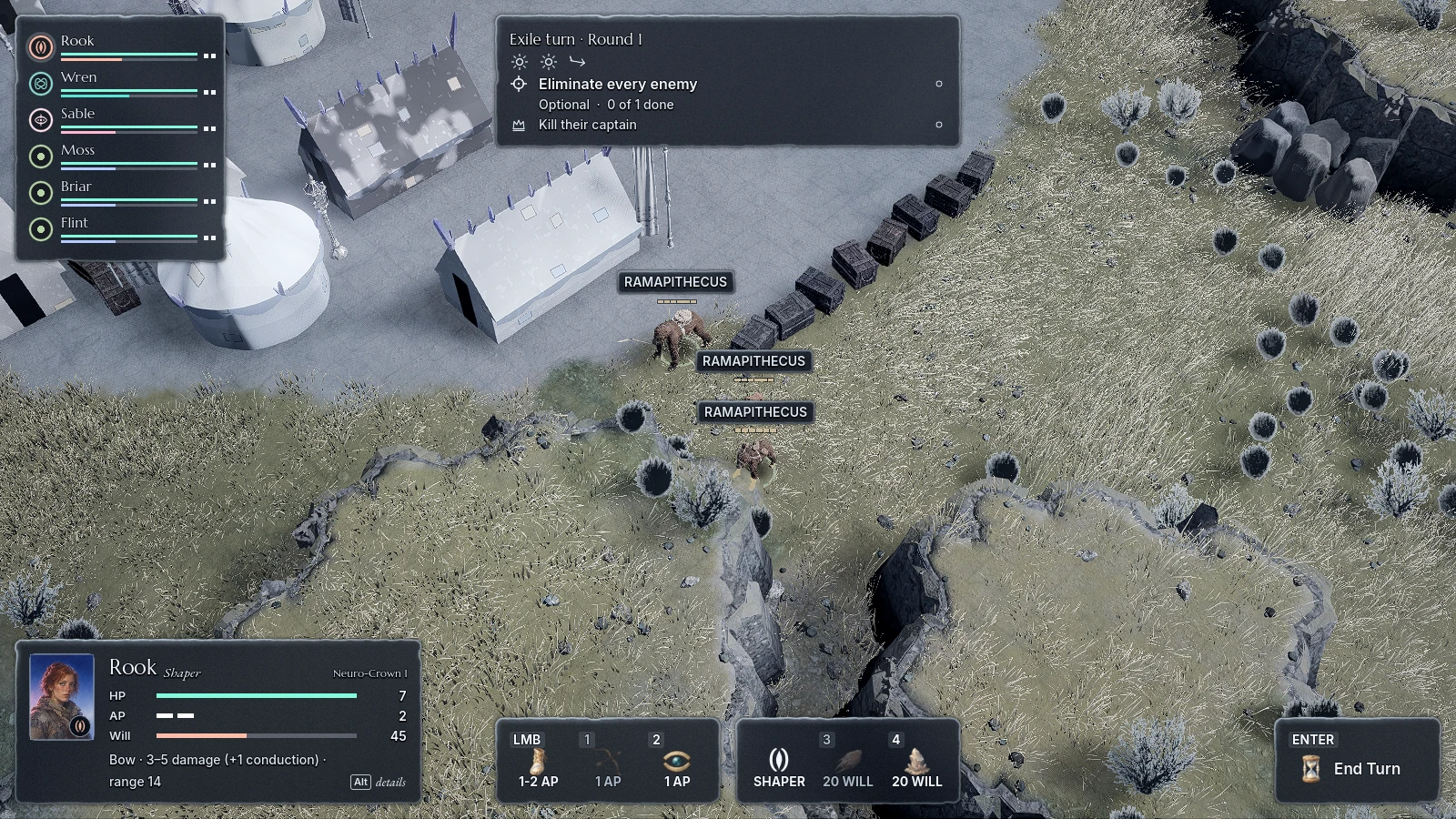
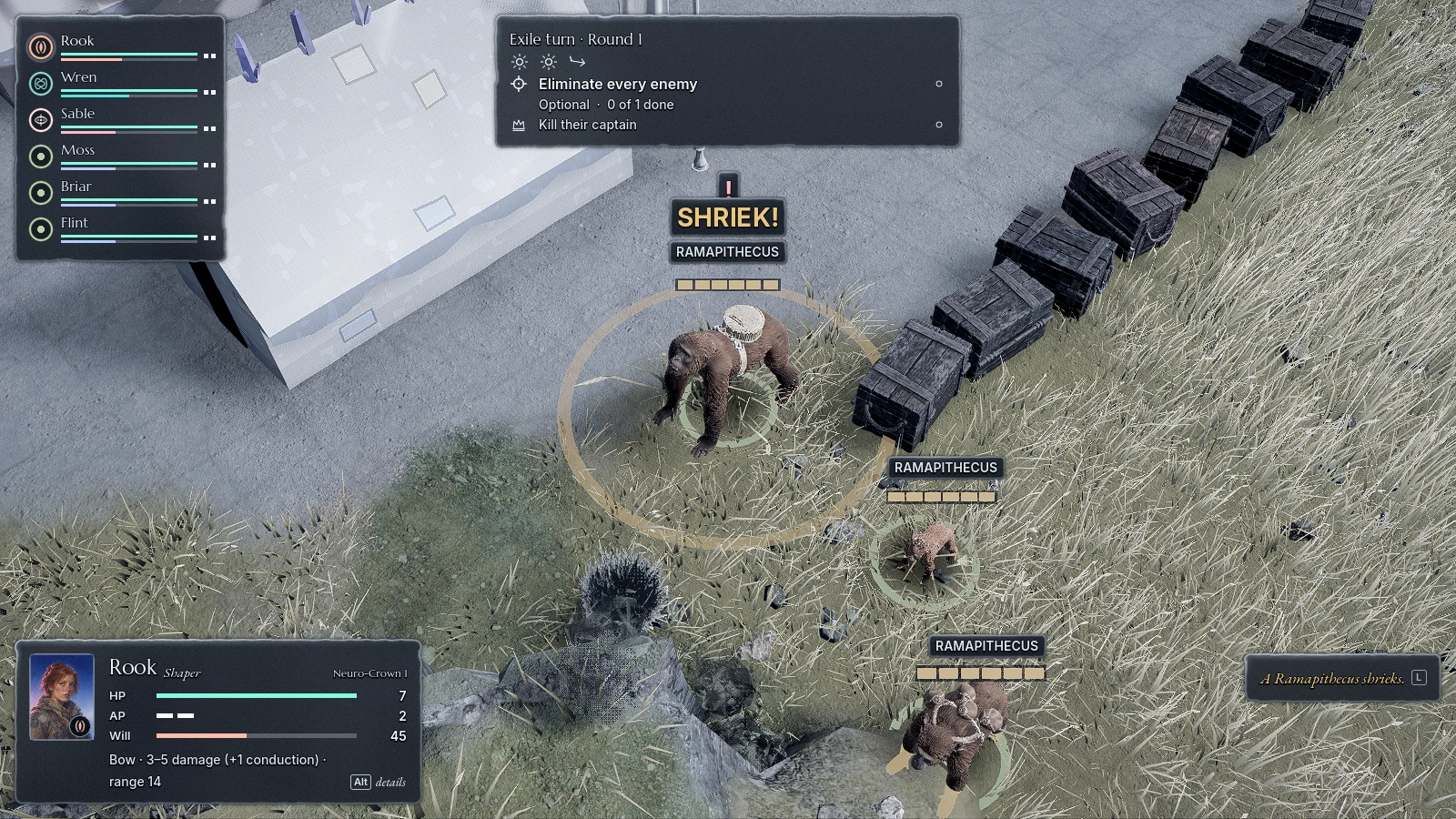
Round every Tuatha place a troop of Ramapithecus works at the board's edge, the old male with his basket, the females with water skins and a young one in tow. They are harmless and never attack, but they are watchers. An ape sees about six tiles, and if it sees an exile, or is hurt, it shrieks once and wakes the nearest Tuatha who are still at rest. Each one takes up a tile, so the squad walks round them.
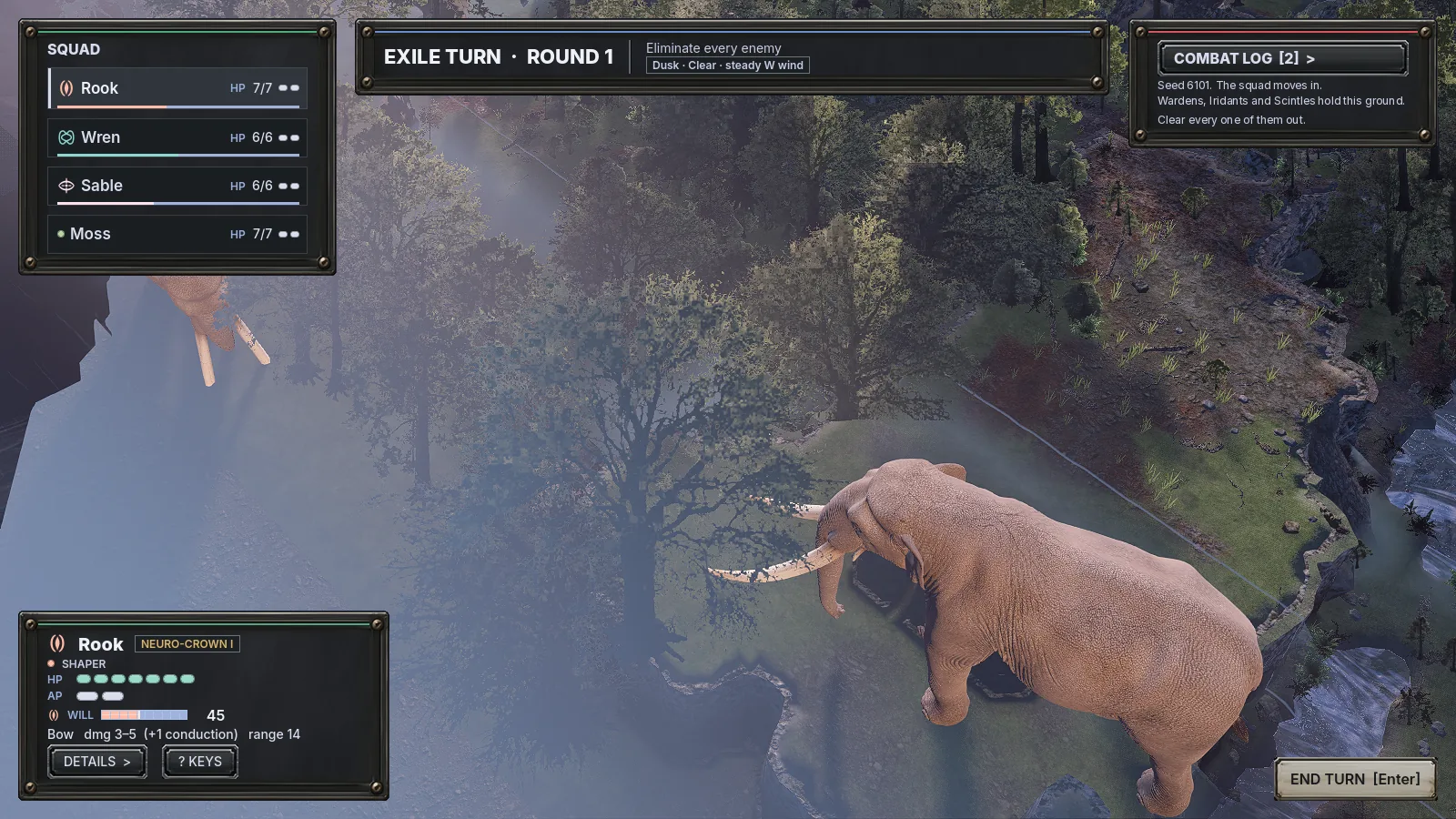
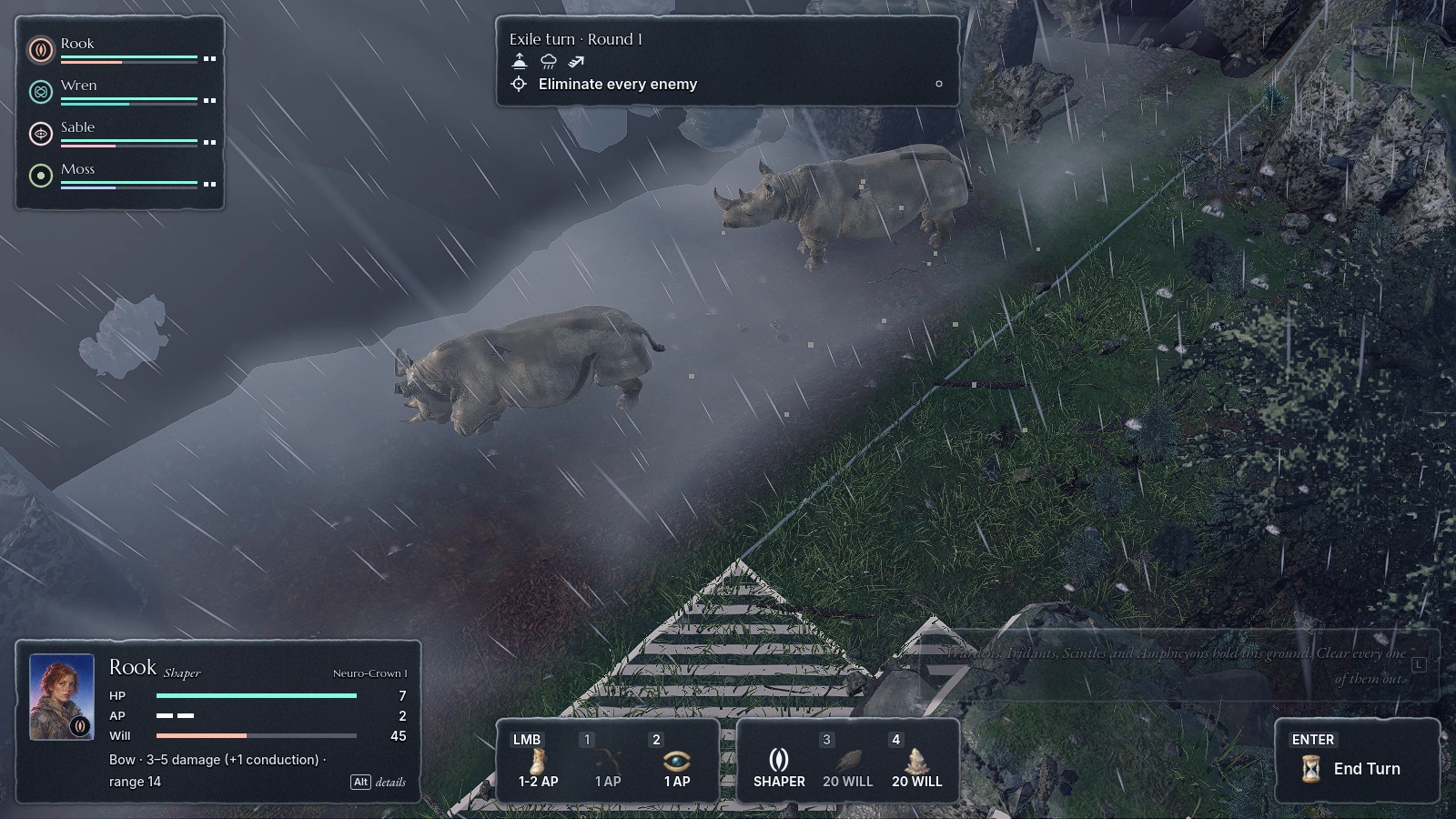
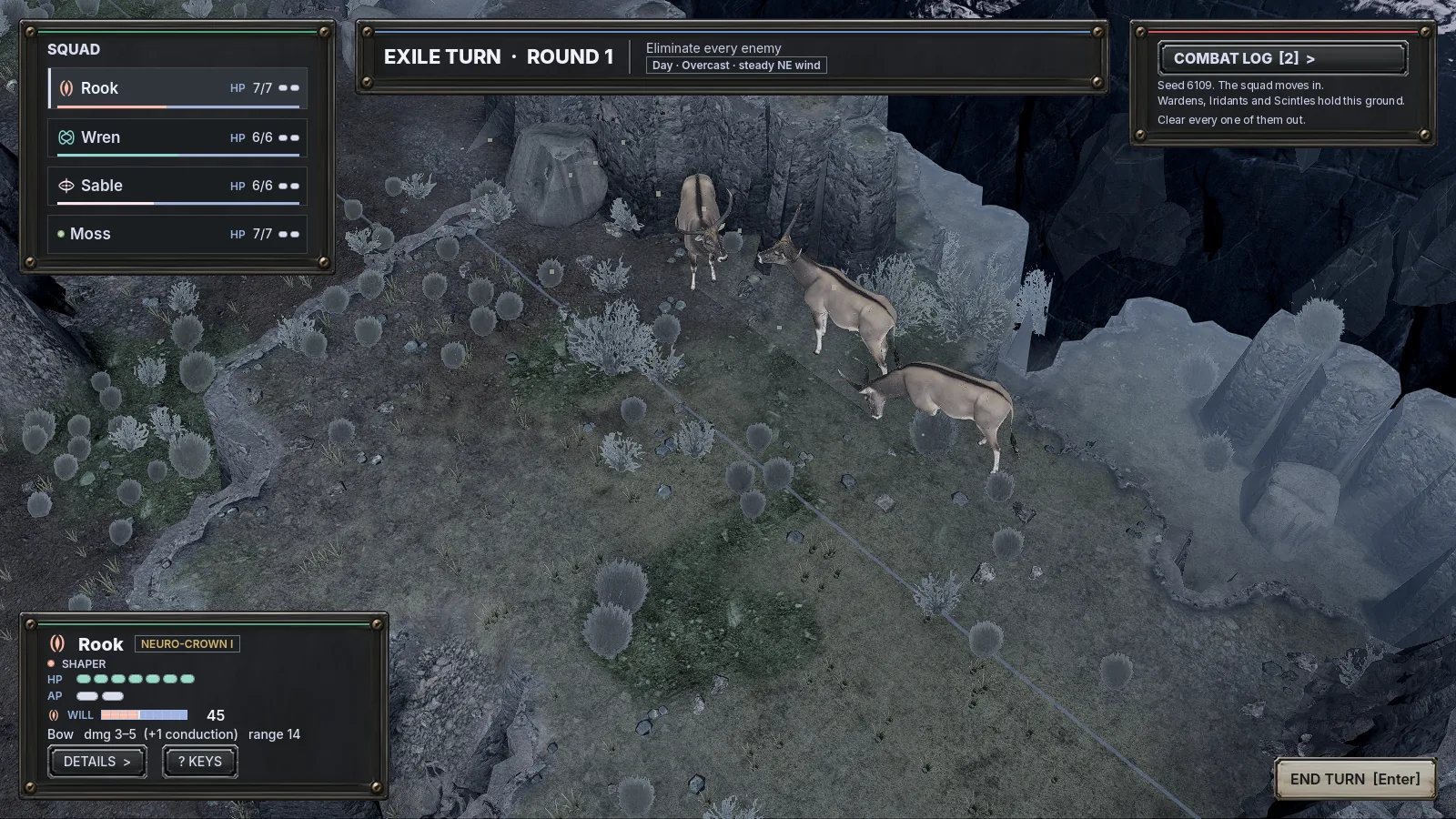
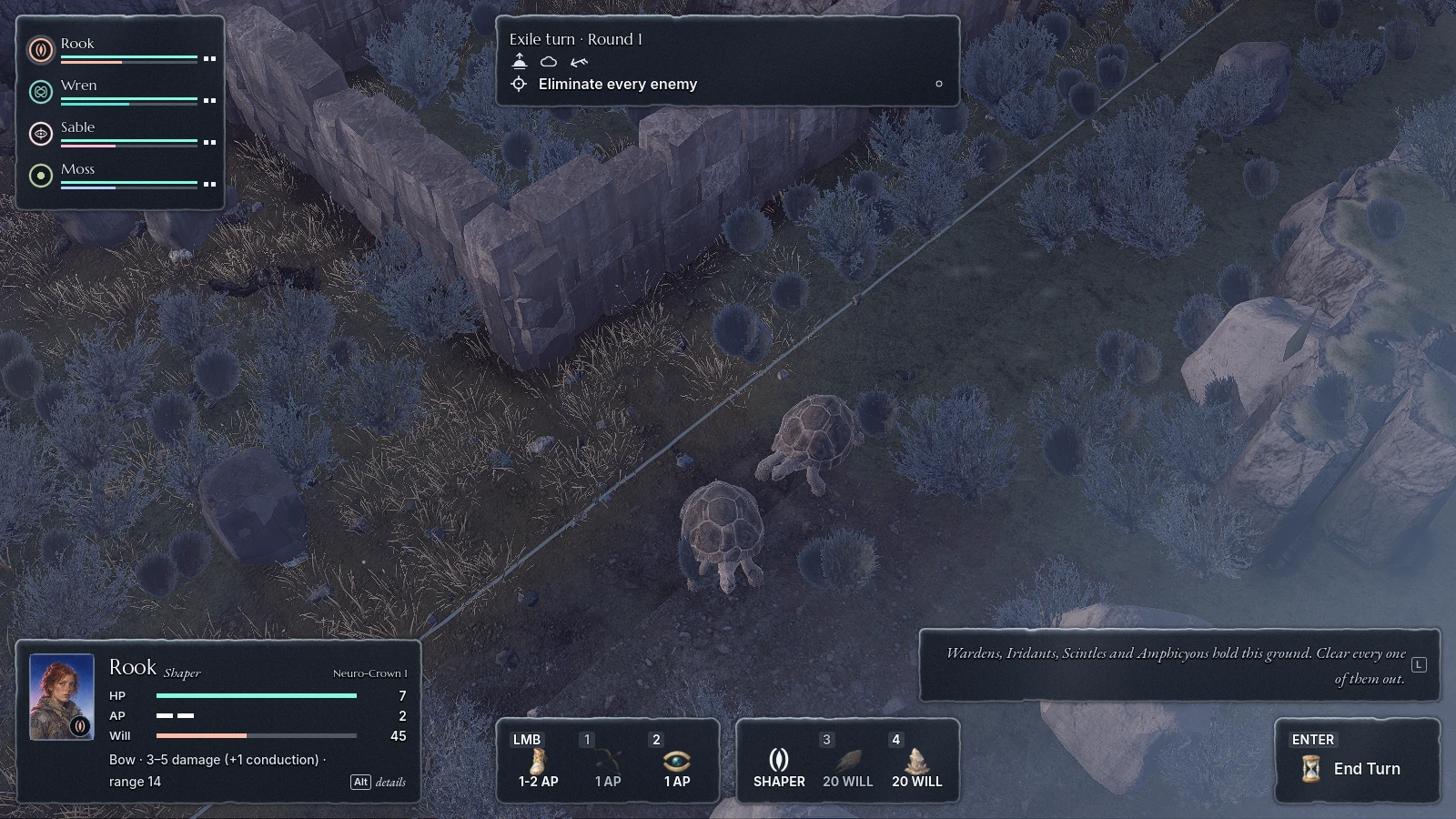
The beasts, the birds and the hour are all for the eye. None of them touches a hit chance. The weather is the one that does.
Fire, smoke and wind
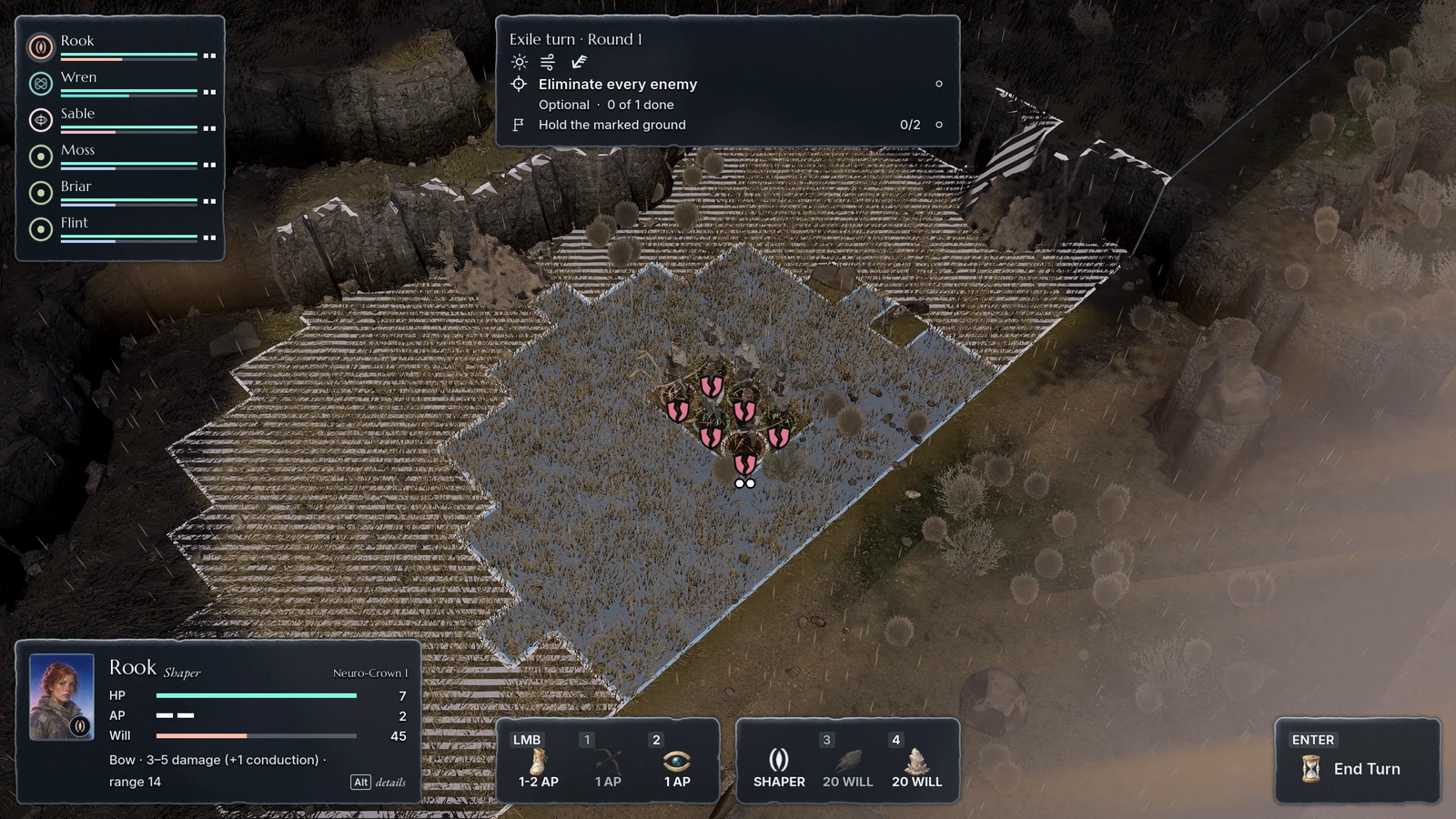
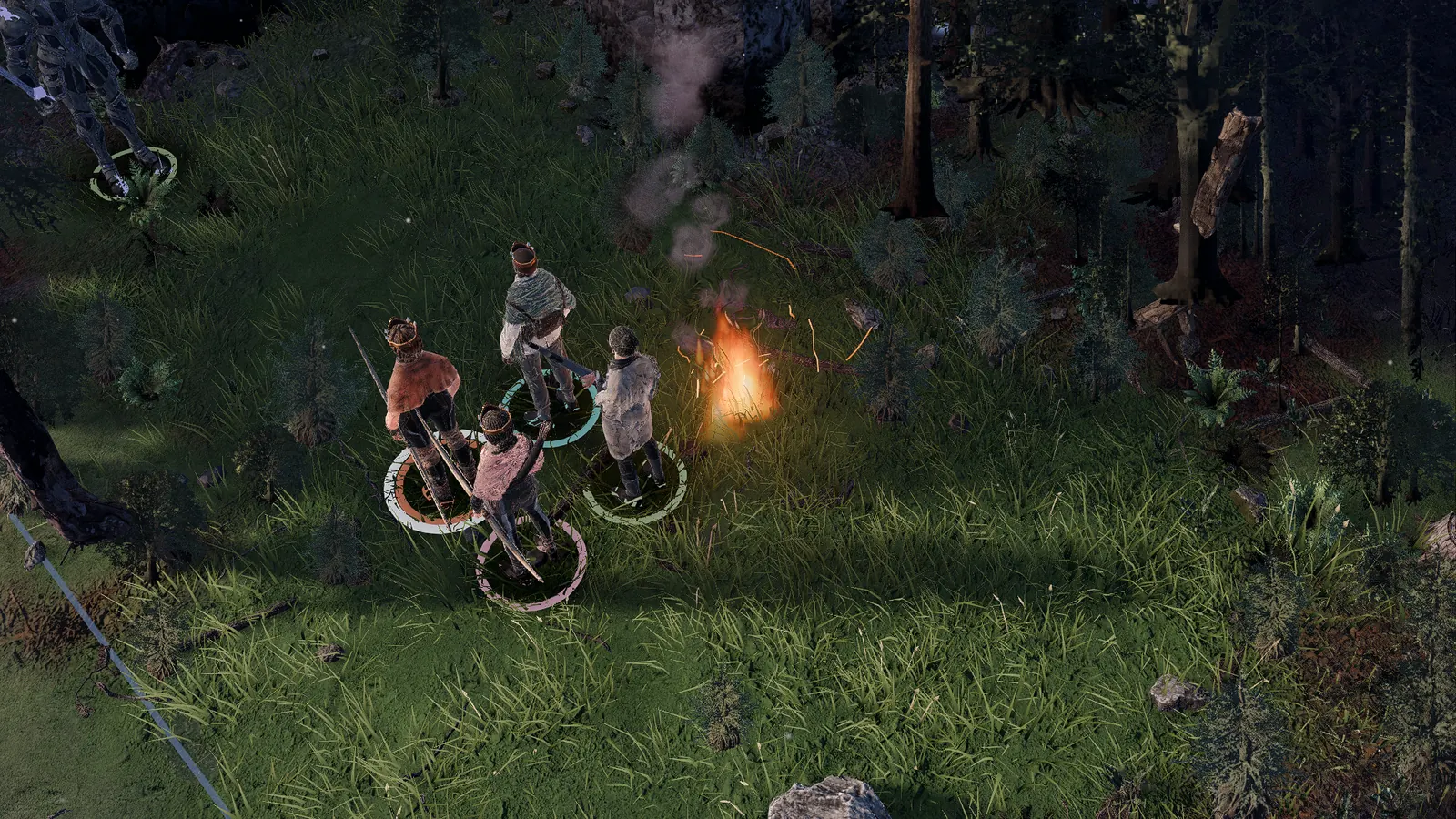
Fire is a tool for both sides, and once it's lit nobody owns it. A fire arrow from a bow or a Shaper's Ember forms will set a tree, scrub, a fallen log or a timber walkway alight. A burning tree stays full cover for two rounds, drops to a half-cover trunk for two more and ends as a charred stump. Whoever stands beside it takes the heat each turn and is driven out, up to two steps, and the fire's push draws no overwatch.
It spreads with the land, the weather and the wind. Dry country catches readily and marsh hardly at all, rain and snow damp it down, and a dust storm dries everything out. Fire runs downwind and struggles against it, and the wind is the one the weather chip names: light, steady or strong. When the weather turns mid-fight, the fire follows the new weather from that round on.
Smoke drifts downwind off every burning tree and blocks sight for both sides, further when the wind is strong. However dry the day, spread stops after sixteen tiles a mission.
The enemy uses it too. The leader of every enemy pod carries a brand, and so do the Firbolg Descants and Antiphons, theirs of pitch. A Scintle or a Lucent sets a tree going with the heat of its lance. Each gets one use a mission.
An enemy that carries fire weighs burning the tree you shelter behind against the best shot it has, and burns when the fire is worth more. A lone exile behind a tree it can't hit is reason enough. It never lights one with its own people close by. All of it works the other way as well: a fire arrow into the tree a Lucent hides behind does to the Lucent what a brand does to an exile.
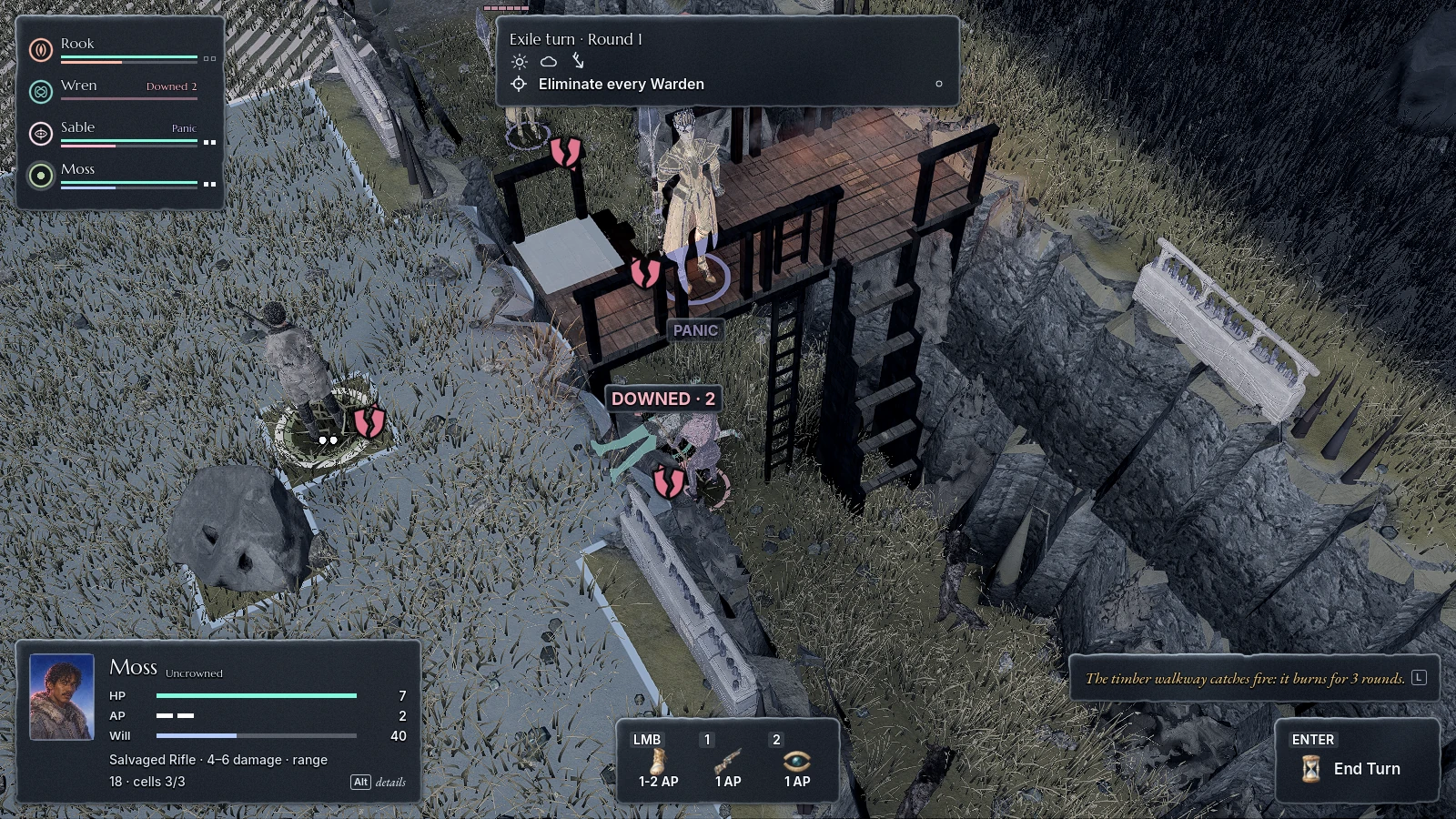
Timber walkways burn along their length, and three rounds after a stretch catches it burns through and drops whoever is standing on it. Stone, glass and Tuatha walkways never burn. The fire page on the wiki has every number.
Walls, gates and buildings
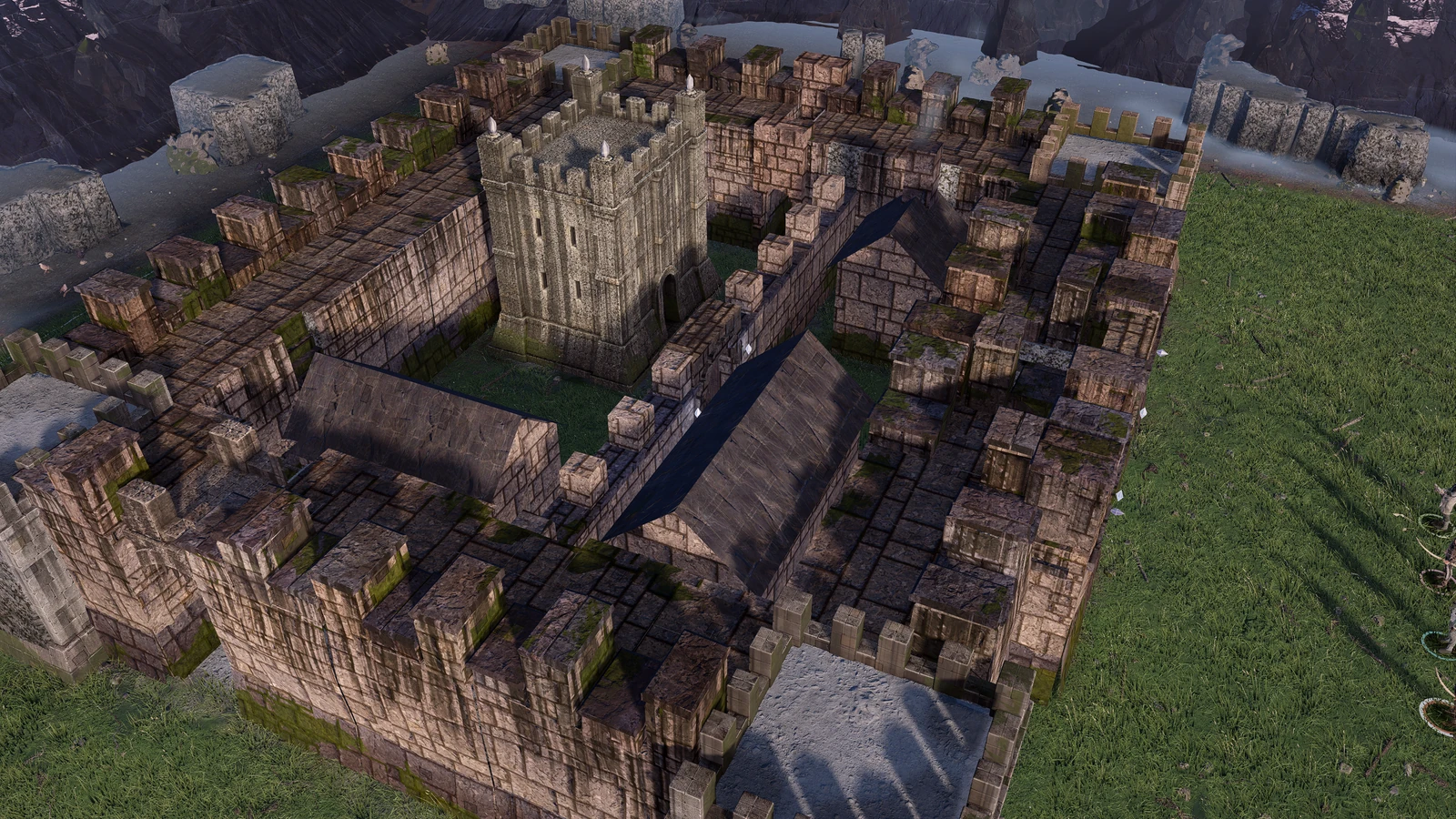
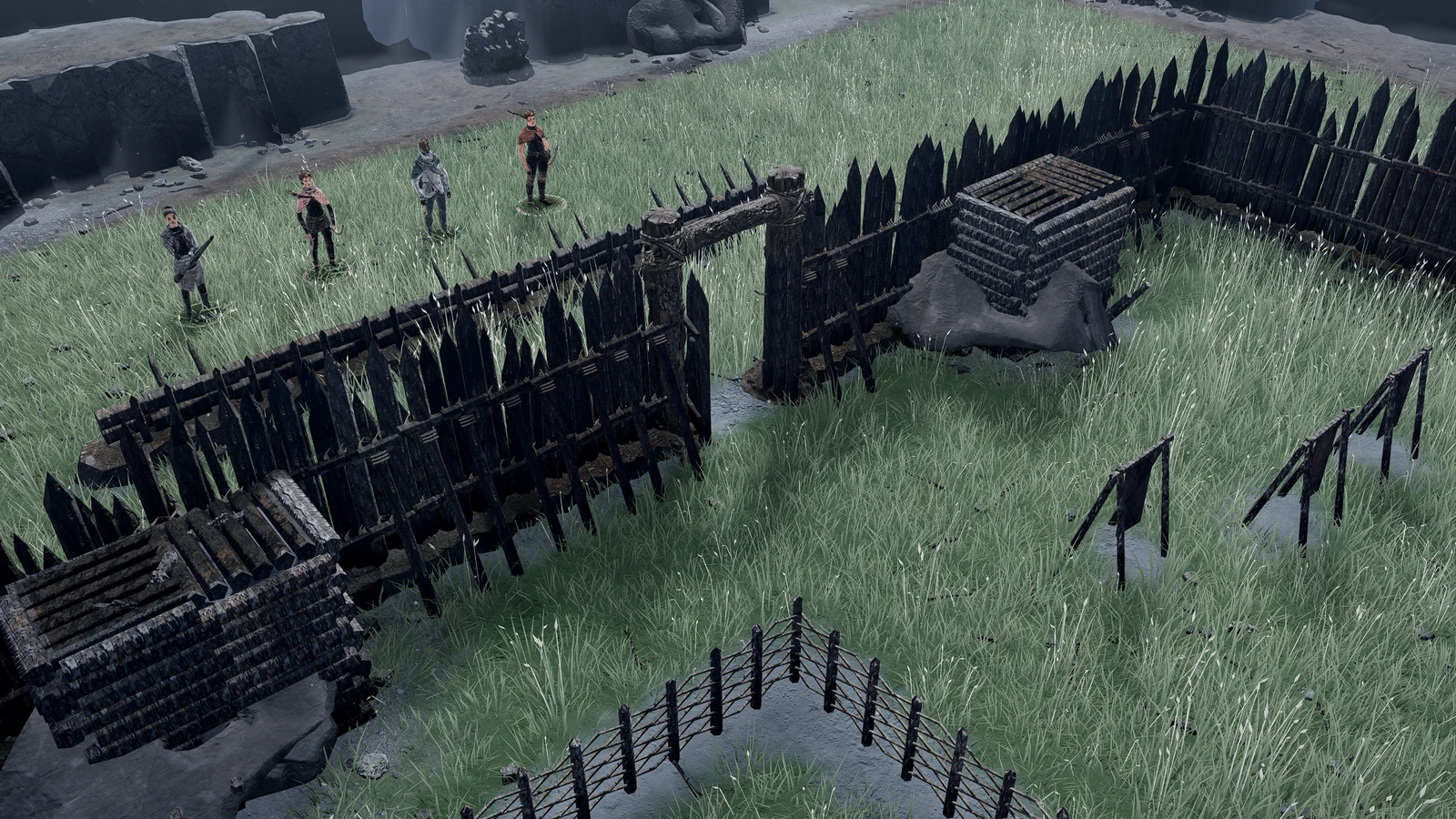
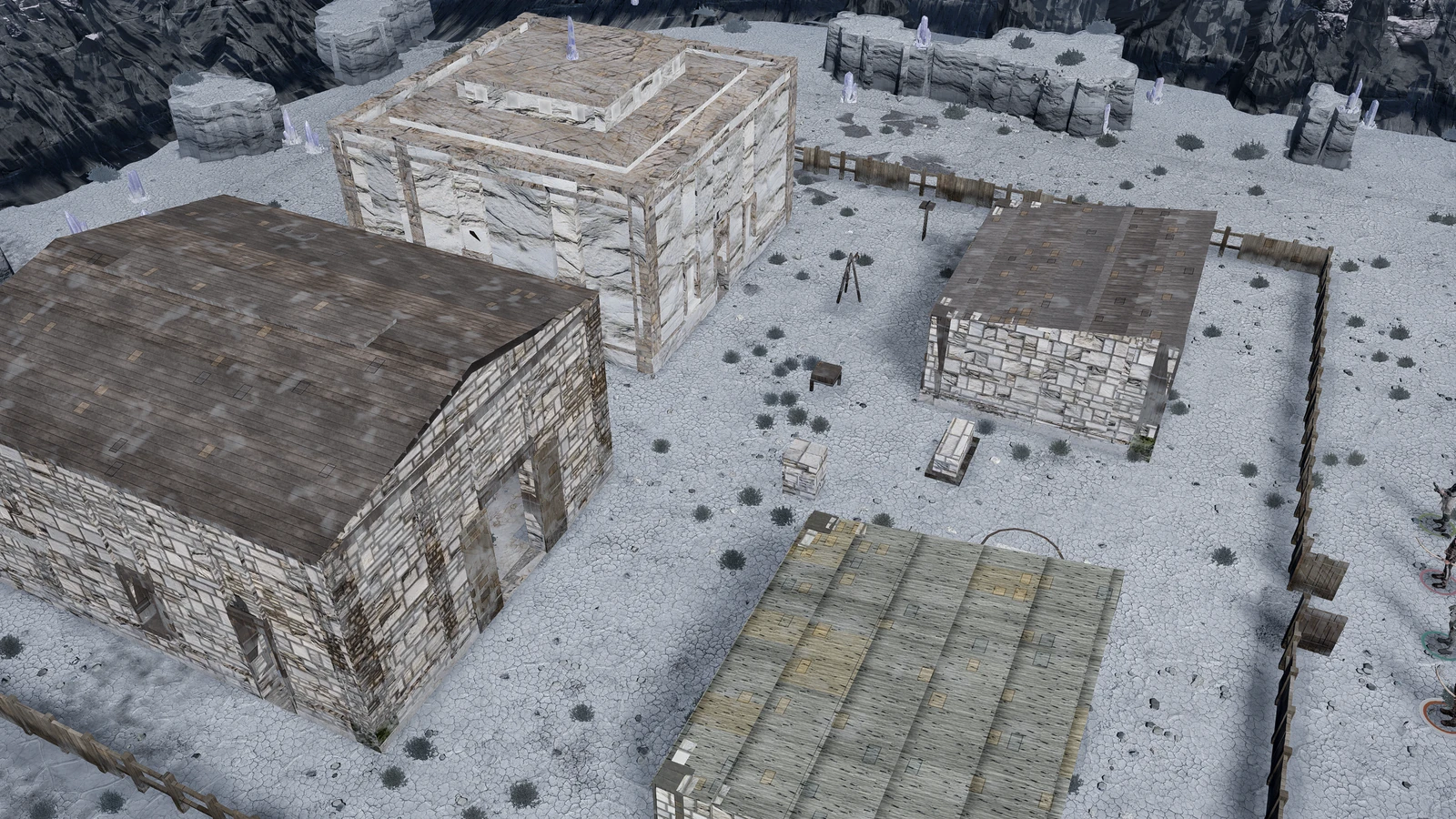
Castles, Tuatha city walls, the exiles' palisades and the Tuatha's salt works are all built from pieces on the grid, and they play exactly as they look. A wall blocks movement and sight. The walk along the top holds the high ground, with full cover behind a merlon and half behind the gap beside it. Stairs and ladders get you up there. Gates open and shut, and only the squad works them.
Things break. A Shaper's Hurl knocks pieces down, fire eats timber, a palisade falls to half cover and a broken gate leaves an open doorway. The stone is weathered, with moss and lichen in the wet country, salt crust on the salt works, and rot and mud round the camp. The campaign's own maps are built from the same sets: castles, the Tuatha's cities and salt works, the Firbolg's earthwork siege rings and cave camps, and the home camp's palisade, gate and tower.
Every image on this page is a work-in-progress capture from the game, and some of it already looks different. See what's built and what's next on the progress page.
Follow development
No spam. Development updates, roughly monthly. See the privacy policy.