
The campaign and the camp
Fifty regions from Britain to Anatolia, and two peoples at war with each other and with you. Somewhere in it is a home camp to build, feed and defend.
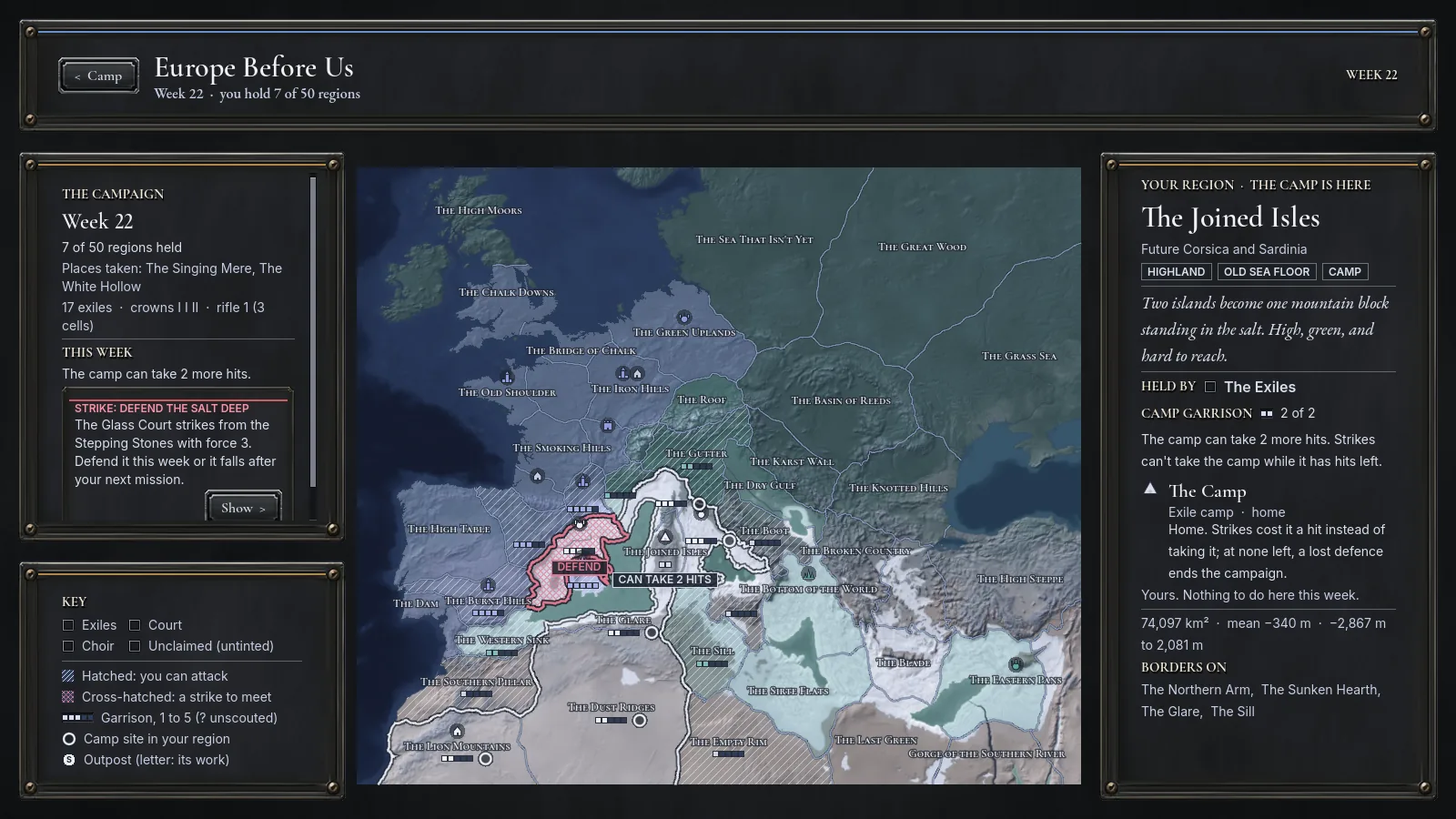
A campaign across a lost Europe
The map runs from Britain and the Atlantic coast east to the Balkans and Anatolia. Fifty regions, cut from real elevation data, with the Mediterranean dried down to salt and brine in the middle. The map is painted. The geography under the paint is real. The Tuatha Dé Danann and the Firbolg are at war with each other as well as with you, garrisoning regions, raiding your camp and striking wherever you've spread thin.
Cities and capitals fall by siege, three missions back to back: the outer works first, then the walls, then the citadel.
Clearspire, a Tuatha city on the Tableland, is fought on a board of its own, 128 tiles a side with no countryside at all: the Bound's lower city along the water, the high quarters and the great plaza, and above them the walled inner court. Each stage of its siege is a different mission. A raid on the high quarters, then a rescue from the holding yard or a break-out from the service yard, then the assault up the Processional Way with reinforcements coming in waves. Take it and every Tuatha garrison weakens.
Highglass, the citadel quarter of Saltcrown over the Salt Deep, falls in one fight. Either the squad lands at the foot of a viaduct of many arches and fights across the flooded salt flat to the citadel, or it starts in the holding hall of the salt works and has to break out under that viaduct while the reserve turns out. Win either and the road to Saltcrown is open.
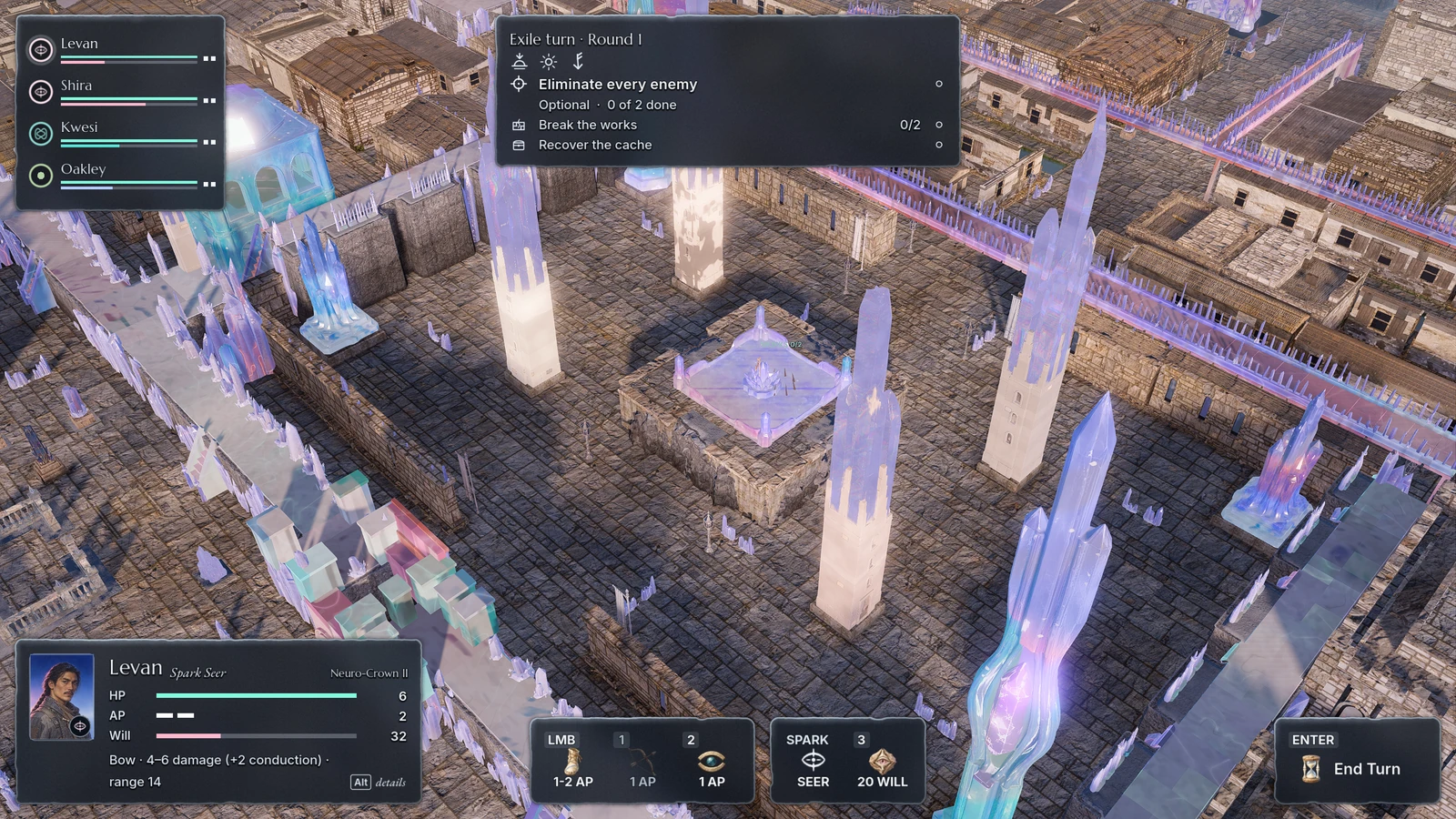
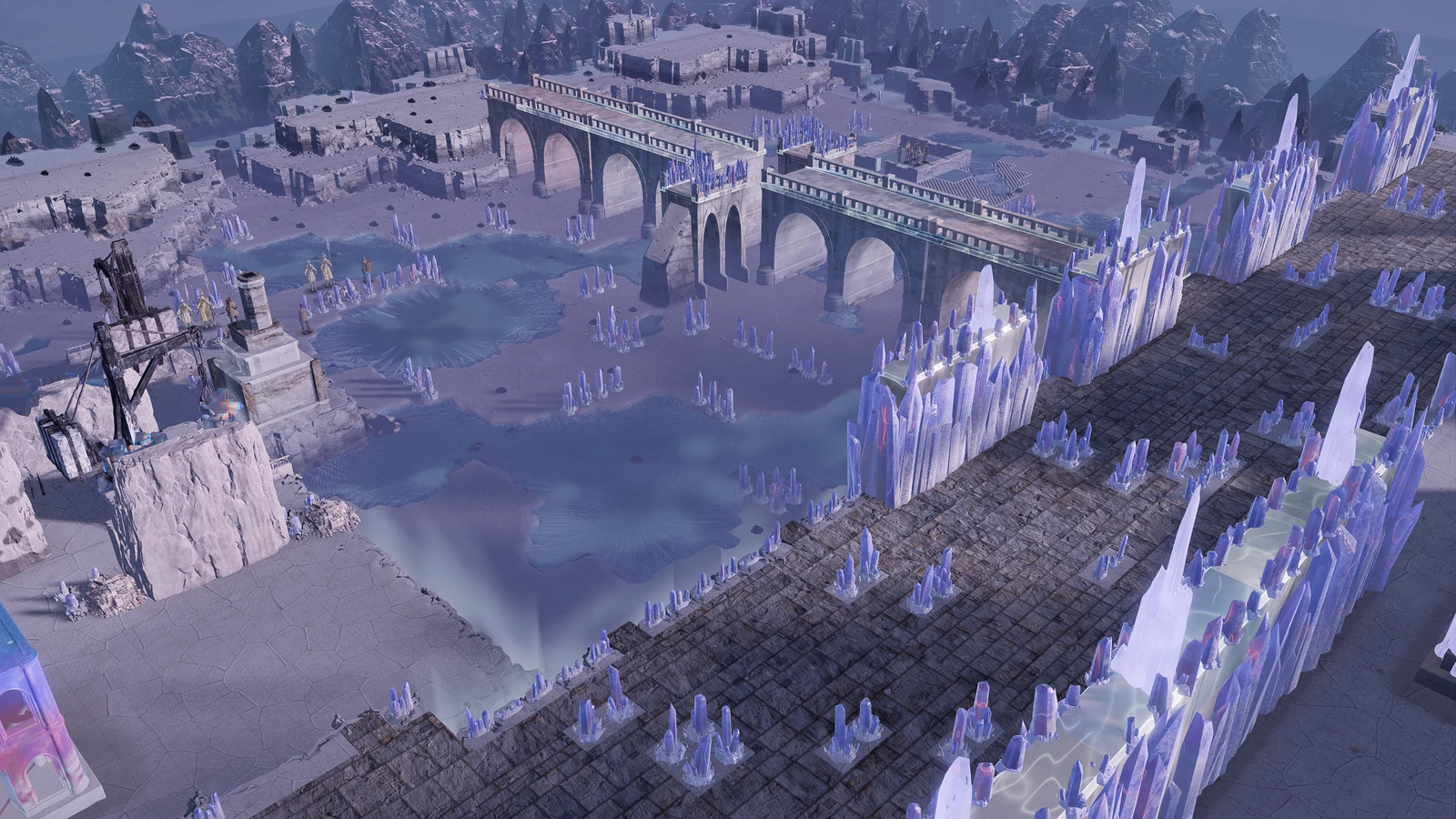
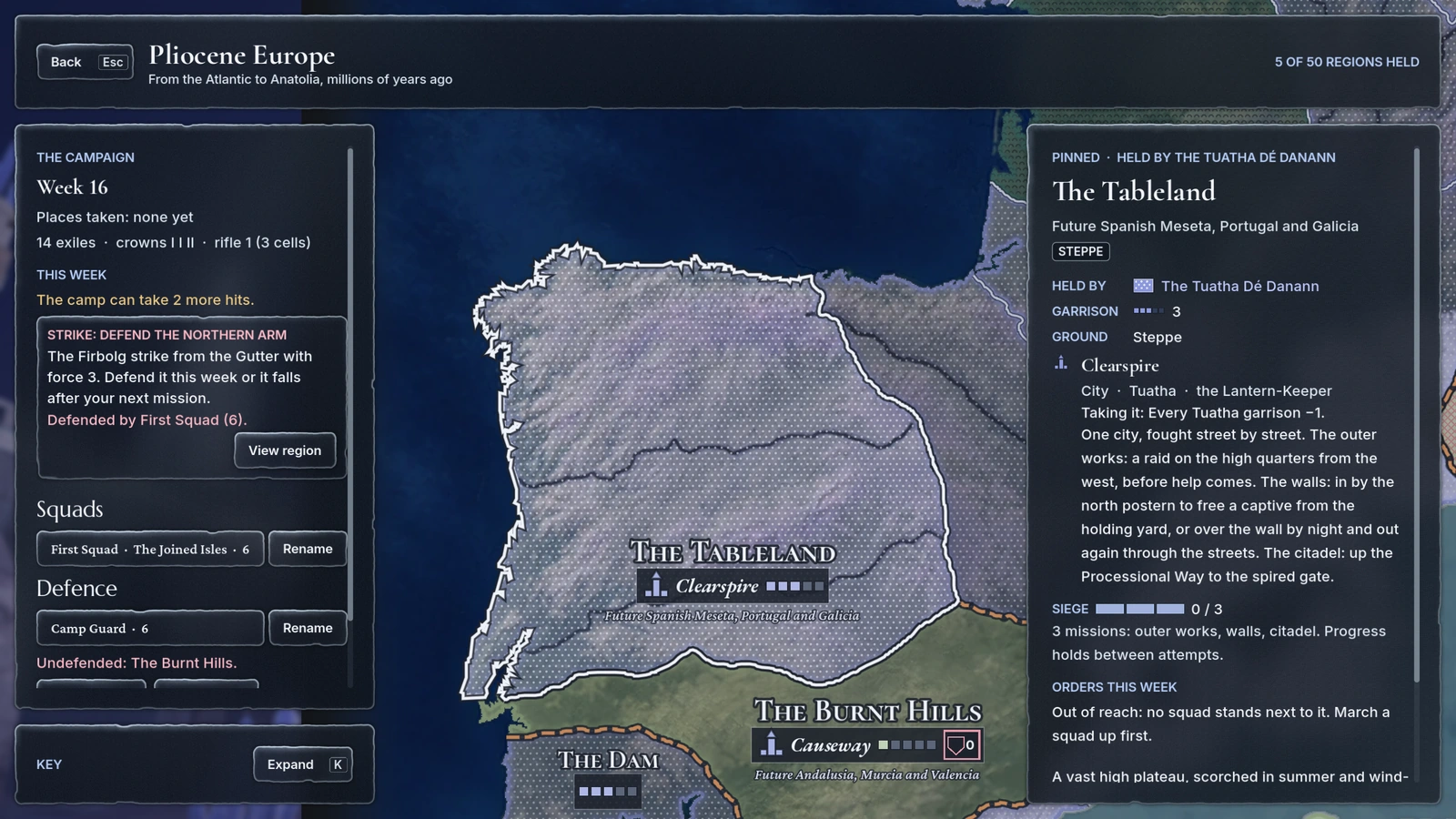
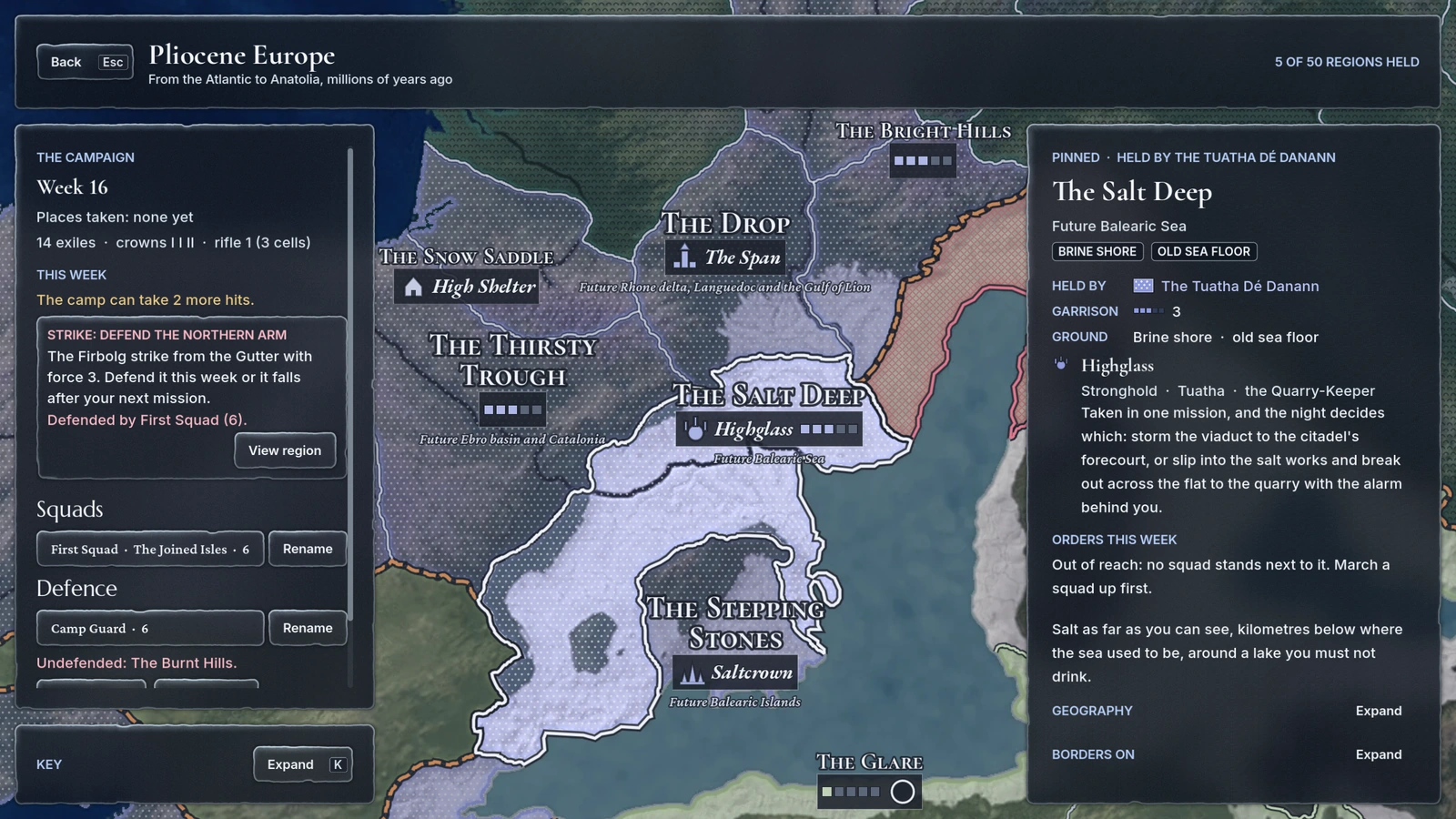
Attacks go out in squads, up to three on the map, each standing in a held region and moving one region a week. The exiles you station in a region are its defence squad, named for it, and when a strike comes they fight on prepared ground: each starts on the best cover within five steps, and anyone who has held the region three weeks or more fights at +5 Aim.
Every squad can be renamed from the map. Every few weeks a hidden refuge sends new exiles your way, and story missions turn up as the war moves.
Up to five campaigns sit in save slots of their own, and the camp can save into any slot, though never while a squad is in the field, so a slot can't undo a mission. It's ironman all the way.
The camp
The home camp stands on its own patch of ground, in 3D. You mark out where each building goes, from shelters and a kiln to an infirmary, a study hut, the training yard and the crown forge, and each one goes up over weeks of work, from pegs in the dirt to a finished building.
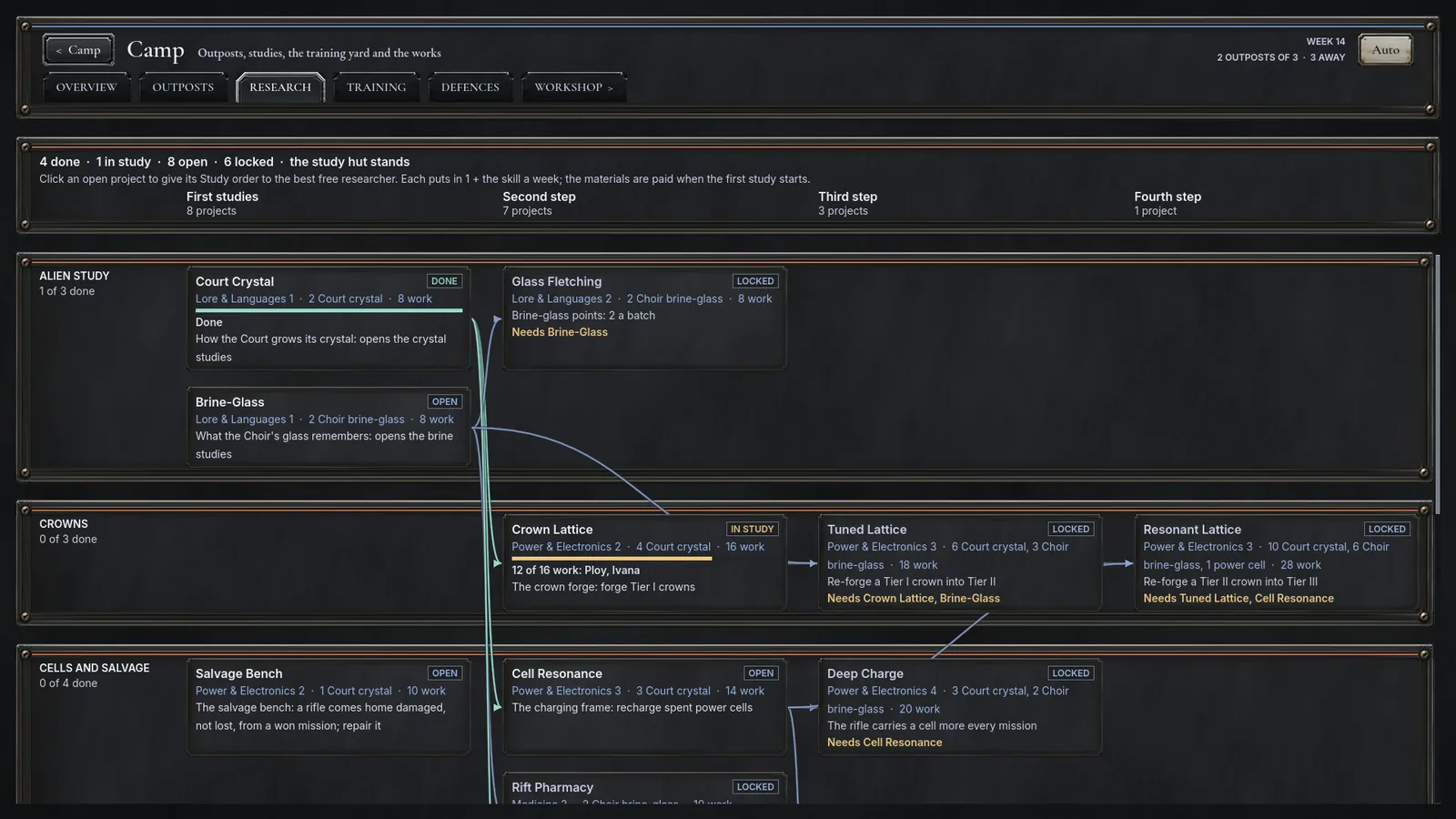
As you take ground you can push out a couple of outposts, each working a mine, timber, salt pans, a hunt, herbs, shard diggings or a watch post. What comes in pays for research (twenty-five studies across six strands), for training, and for the crown forge, which makes new crowns and re-forges old ones up a tier.
Expect raids. When the home camp is struck, the fight happens on the camp's own ground, with the palisade, gate, towers and crystal ward standing where you put them. Where you put the gate matters.
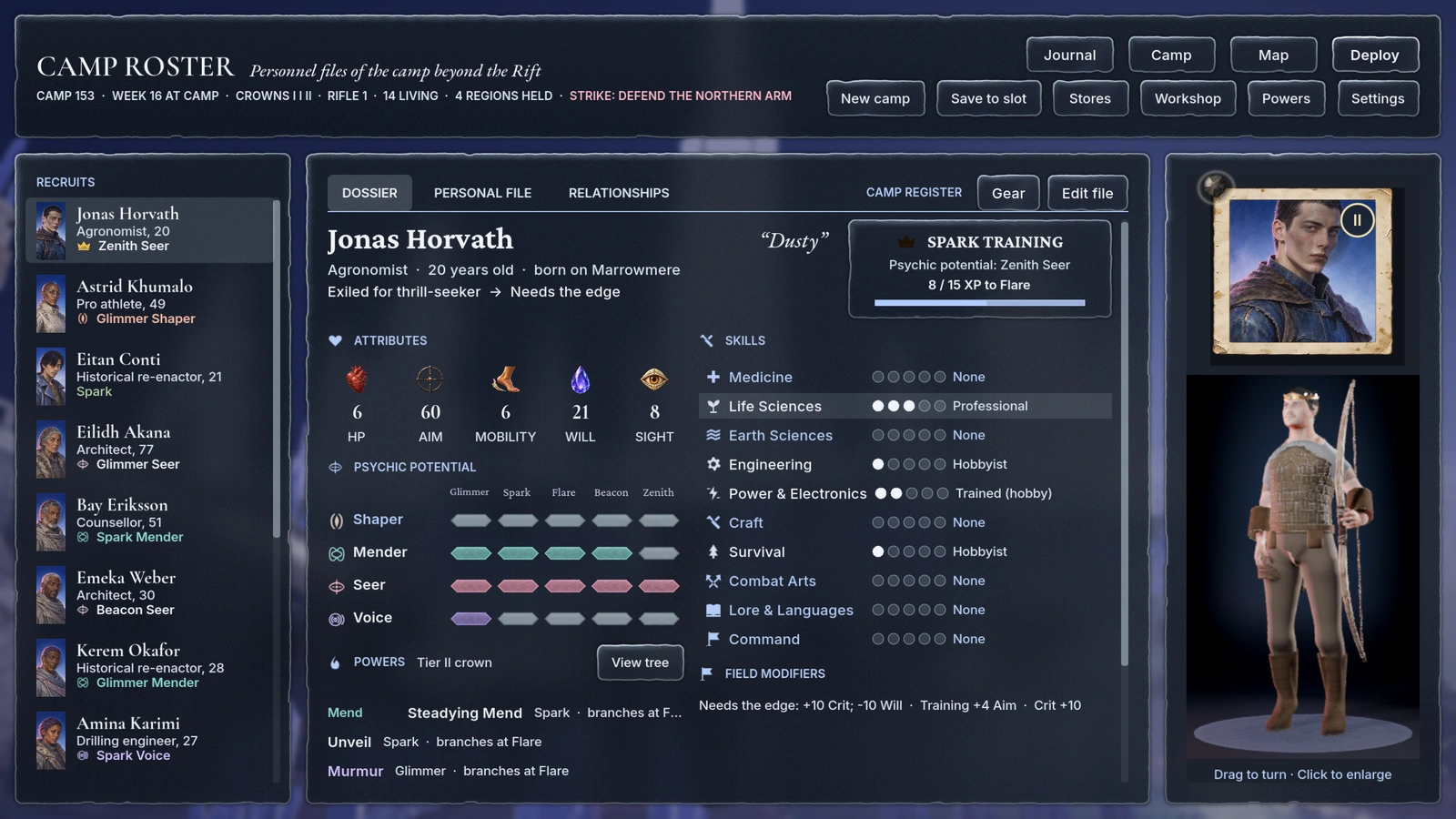
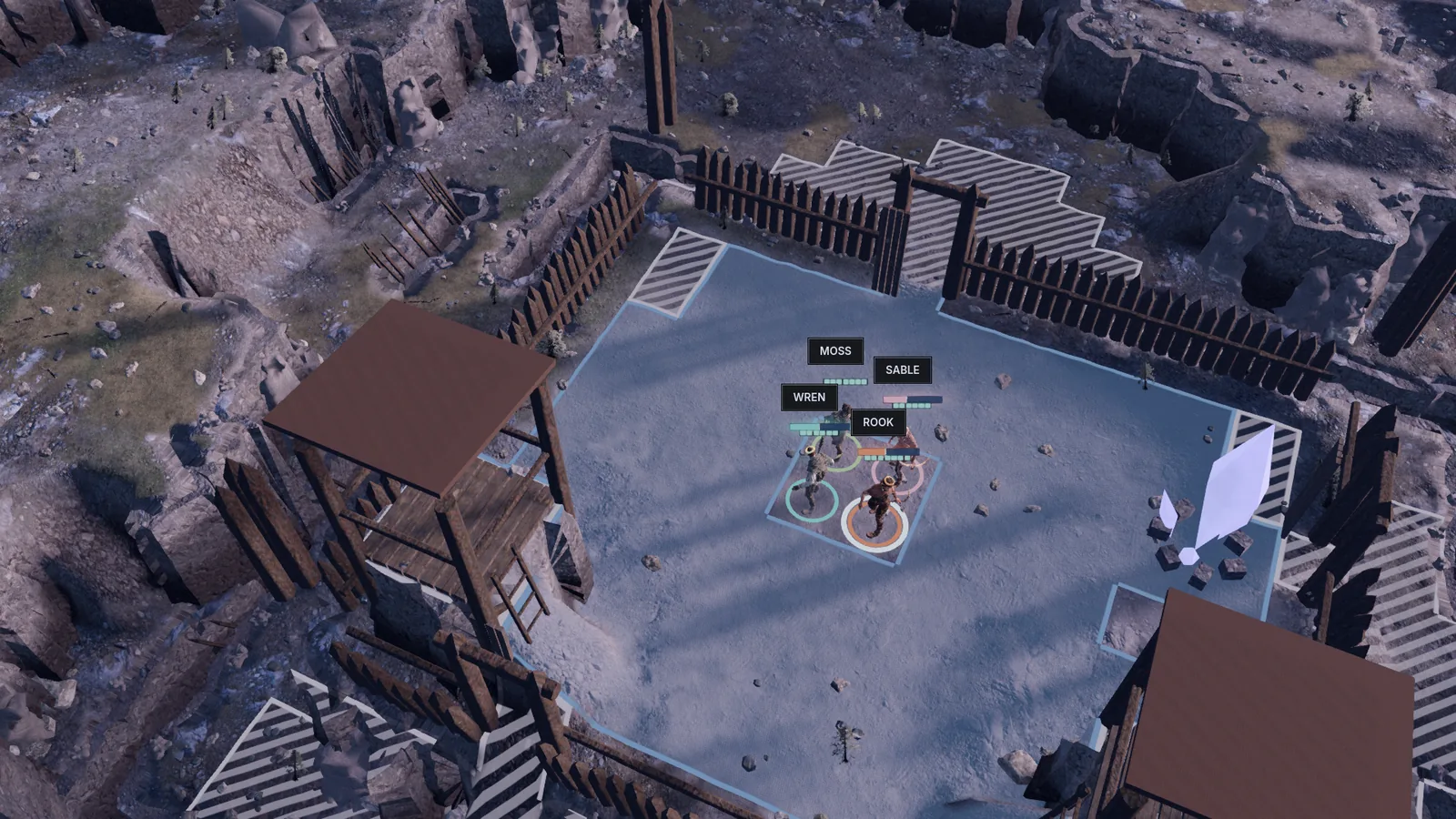
Every image on this page is a work-in-progress capture from the game, and some of it already looks different. See what's built and what's next on the progress page.
Follow development
No spam. Development updates, roughly monthly. See the privacy policy.