
Squad tactics and the enemy
Turn-based fights on ground shaped like real country. Up to six exiles go in, and two peoples from other worlds wait on the far side.
Squad tactics, turn by turn
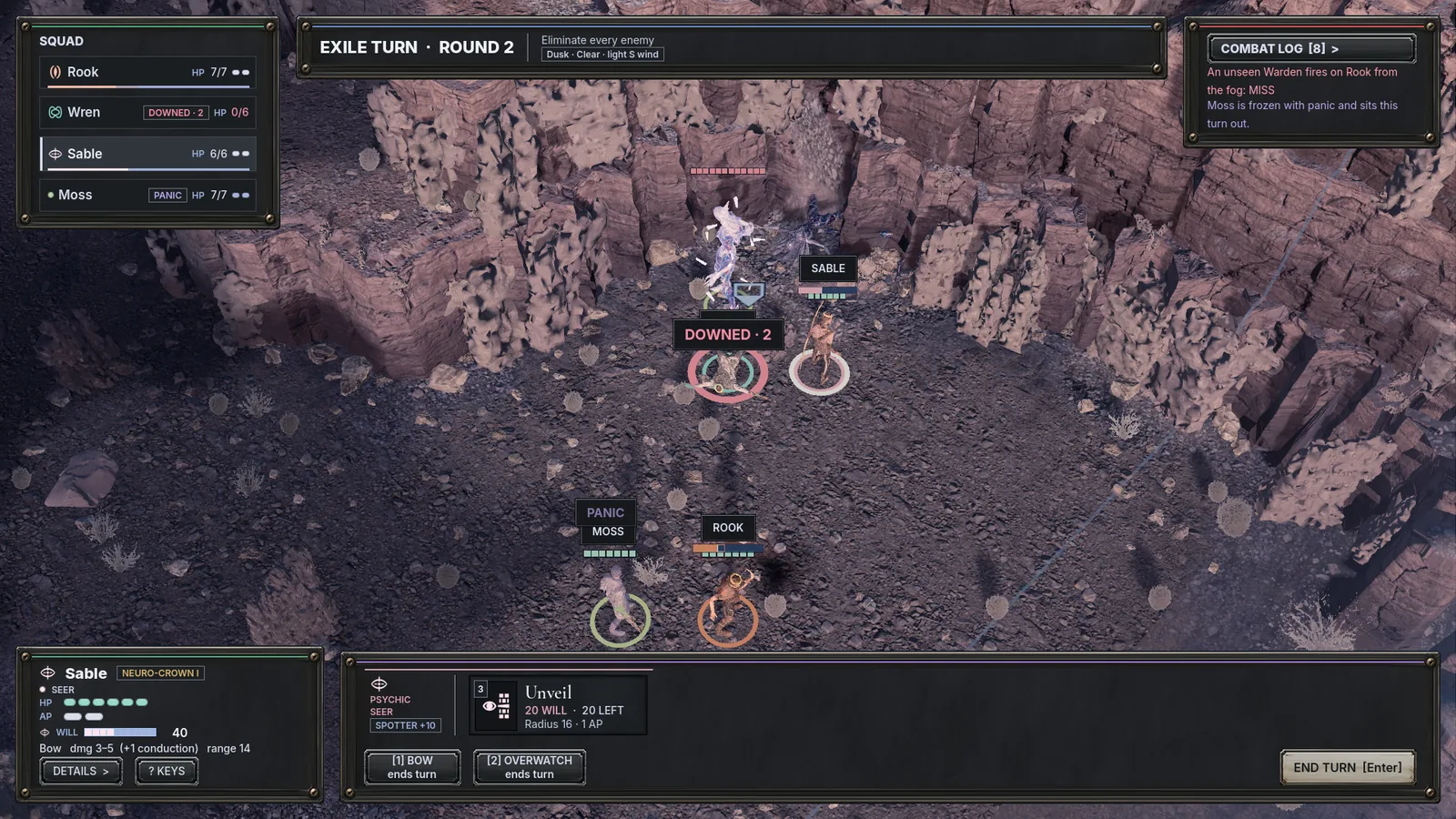
Missions are turn-based fights on ground shaped like real country. Your squad moves up, gets behind rock and timber, takes the high ground and sets overwatch, then shoots with whatever came through the Rift: bows, slings, spears, and one salvaged rifle that carries three power cells into a mission. Anything out of sight stays hidden. Someone has to scout it, or a Seer has to look.
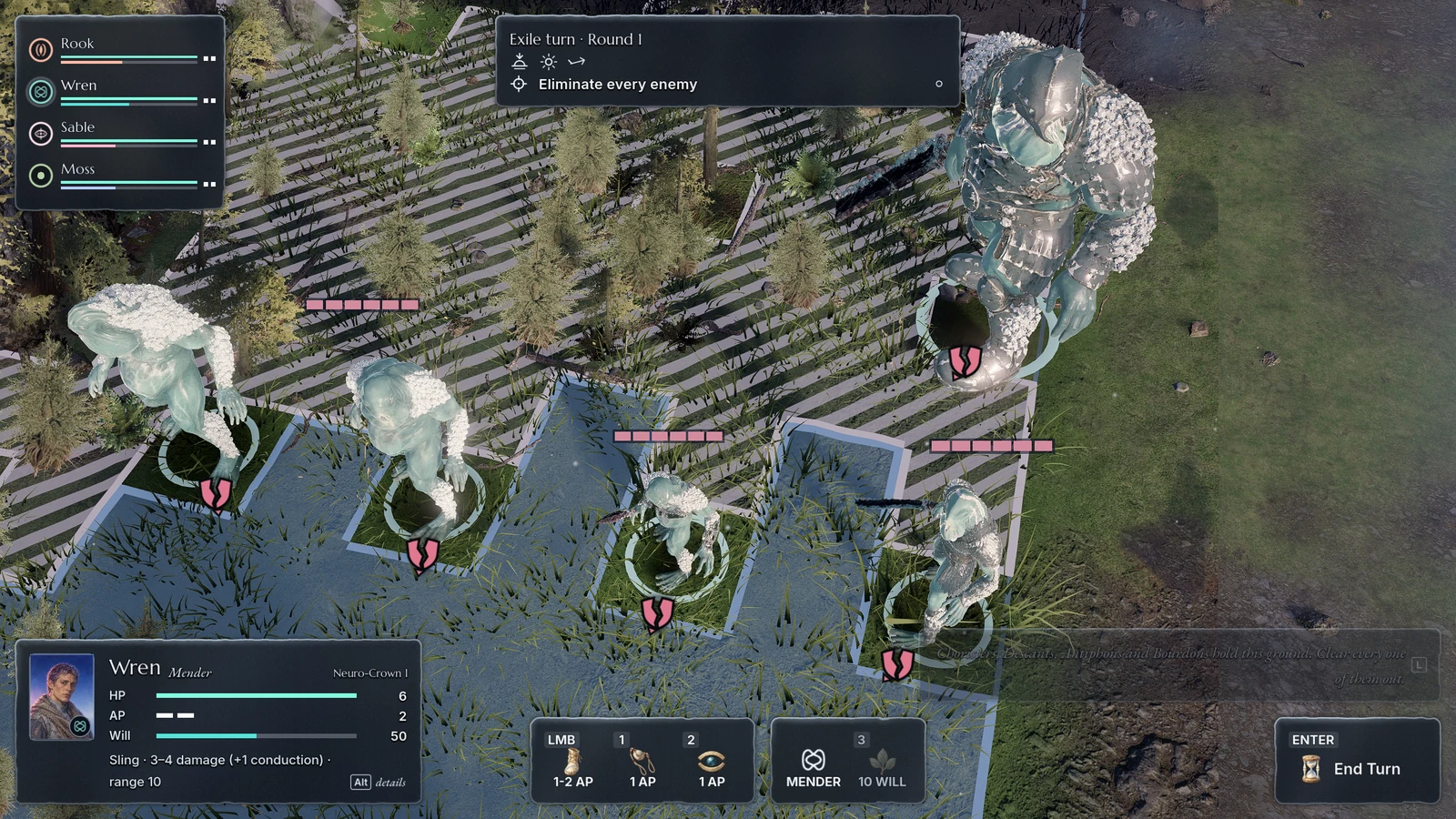
Select an exile and their options line up in the action bar along the bottom of the screen: Move, the weapon, overwatch and kit on one pane, their powers on a second, and End turn at the right end. Each button shows its key and its cost in AP or Will, and hovering one opens a card with the damage, the range and, when it can't be used, the reason.
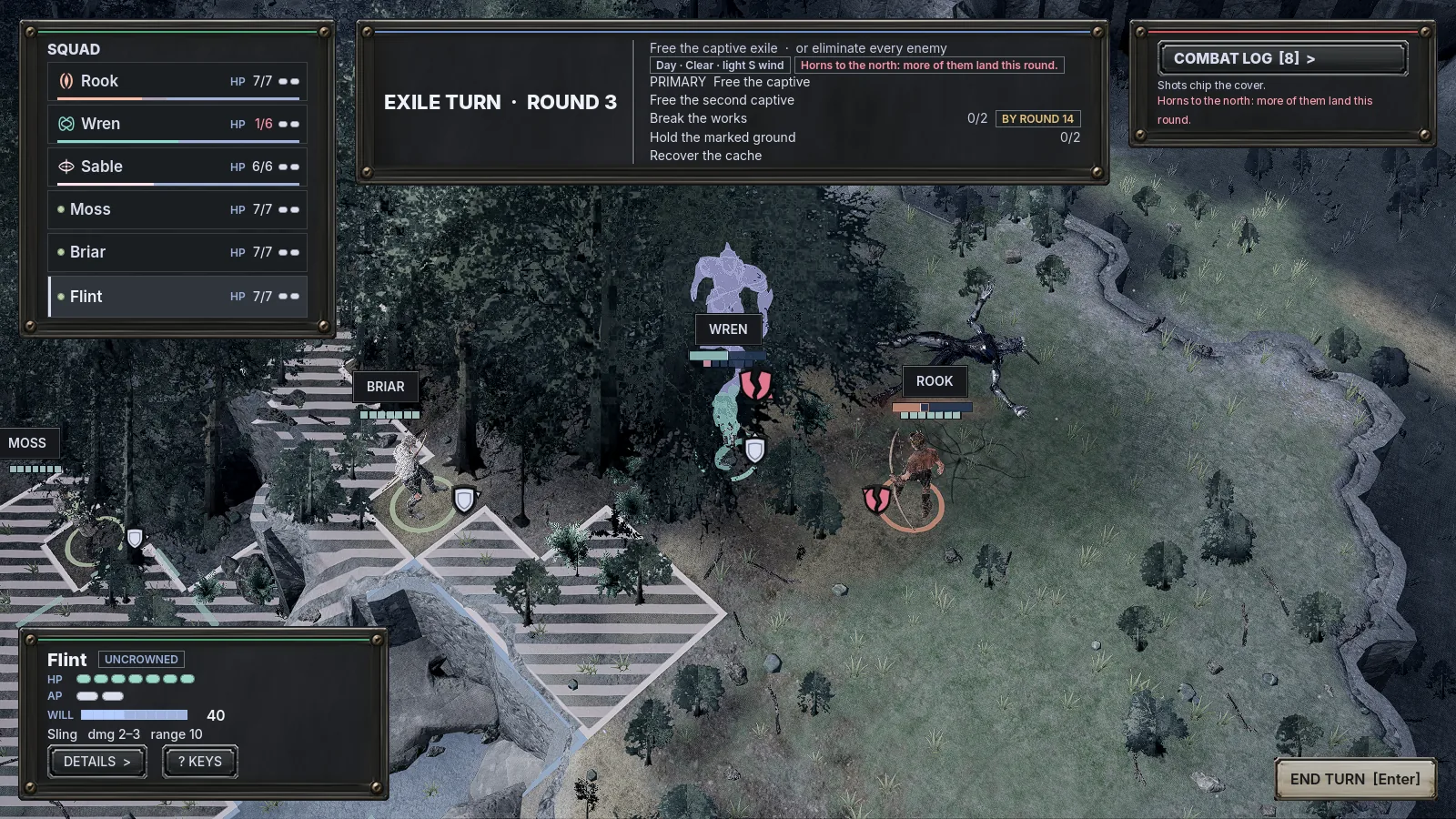
A small shield at every unit's feet shows its cover against the threats you know about. Whole means full cover. Half-filled means half. A shield cracked in two means exposed or flanked, and a hidden enemy never changes one, so the shields can't be used to find it. See the action bar on the wiki.
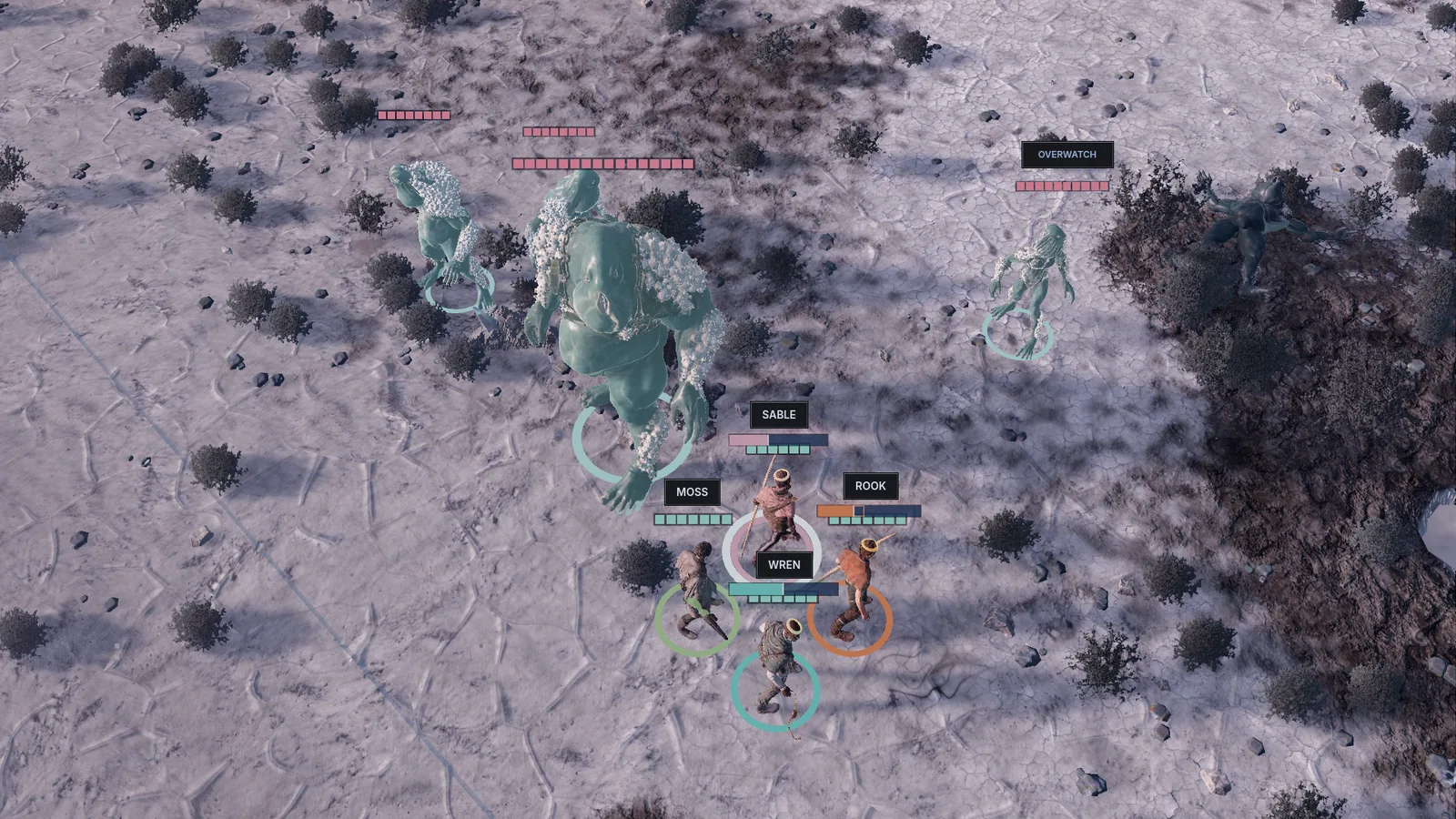
One mission sends you to wipe out a patrol. The next wants a captive freed, the camp held, or the squad out before the alarm brings the reserve. An exile who drops is downed, not dead. Two turns later they bleed out unless someone gets to them, and the friend who watches it happen may panic and lose their next turn. The campaign is ironman. The dead stay dead.
Salt-glass
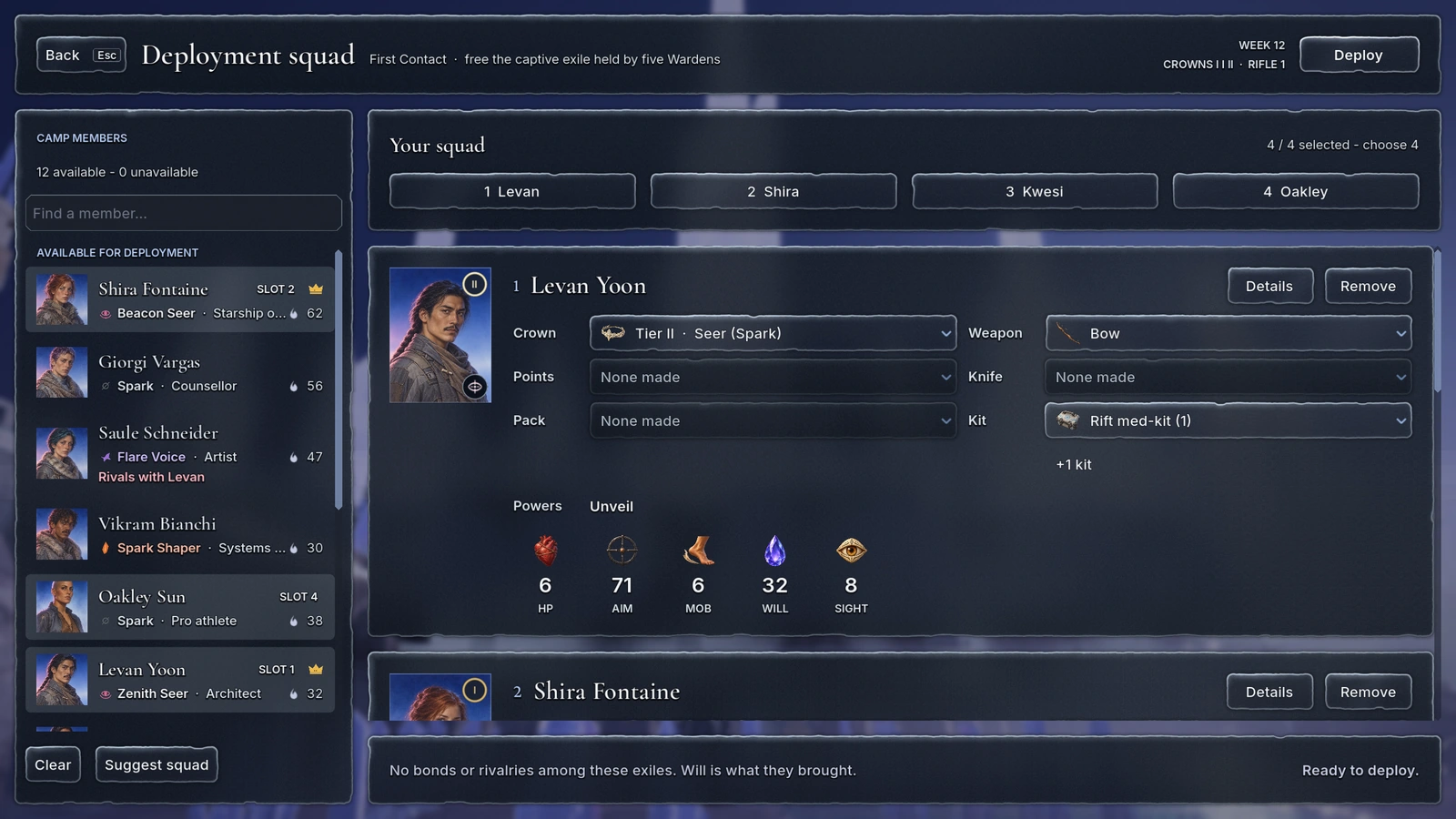
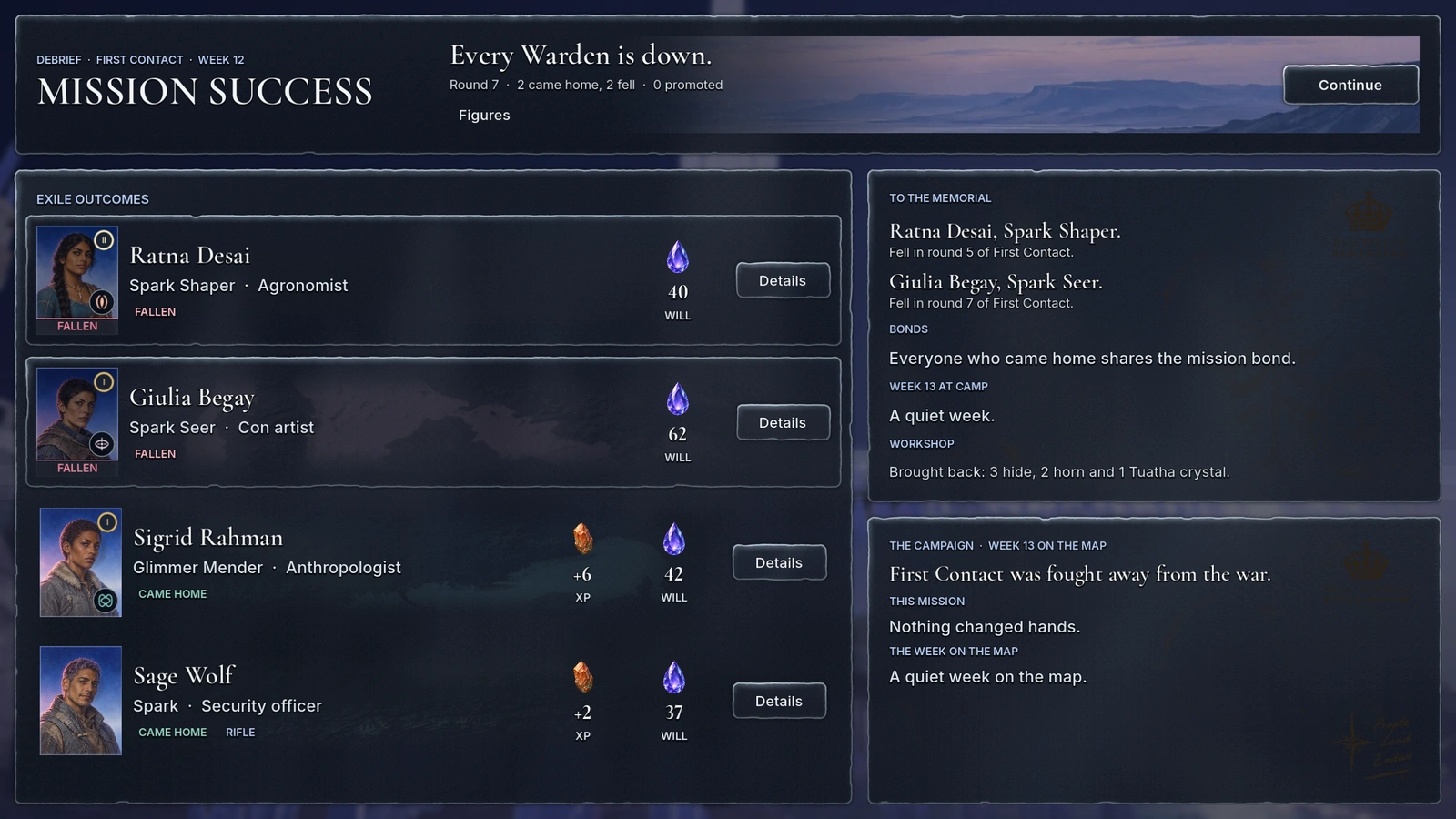
Every screen wears the same glass: the main menu, the camp, the war map, deploy, the battle, the pause menu and the debrief. It's a dark, cool, slightly milky pane with a faintly chipped edge and the board blurred behind it. Readability came first, so the tint is heavy and the text carries an outline. There are no coloured borders anywhere.
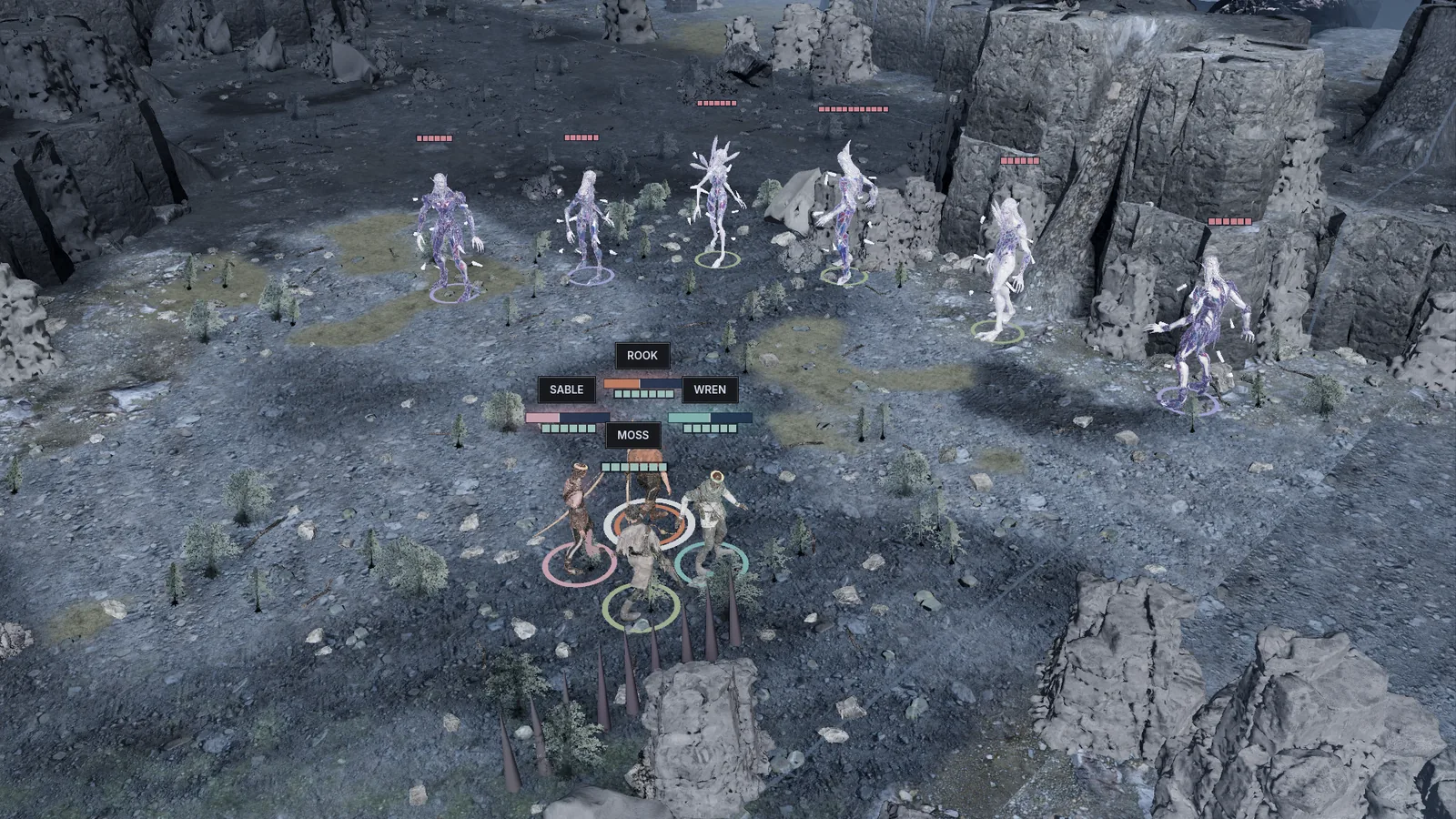
The names over the units and the words that matter in a fight, OVERWATCH, PANIC, DOWNED, sit on small glass tags of their own.
The loading screen shows the faces of the squad going in, and the main menu sits over the salt flats under Saltcrown at dusk, with a live flock of birds wheeling over them.
More ground, more to do
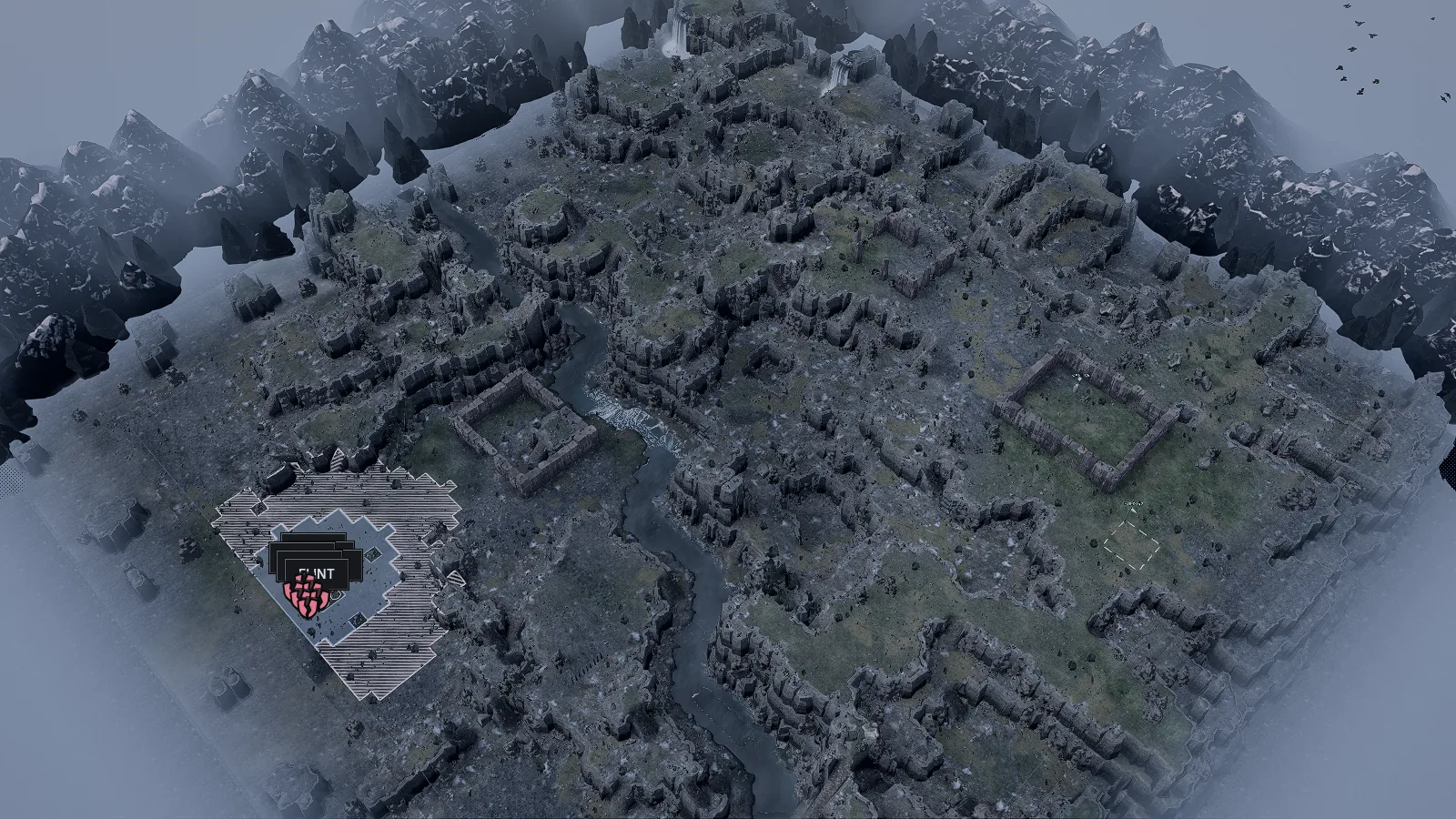
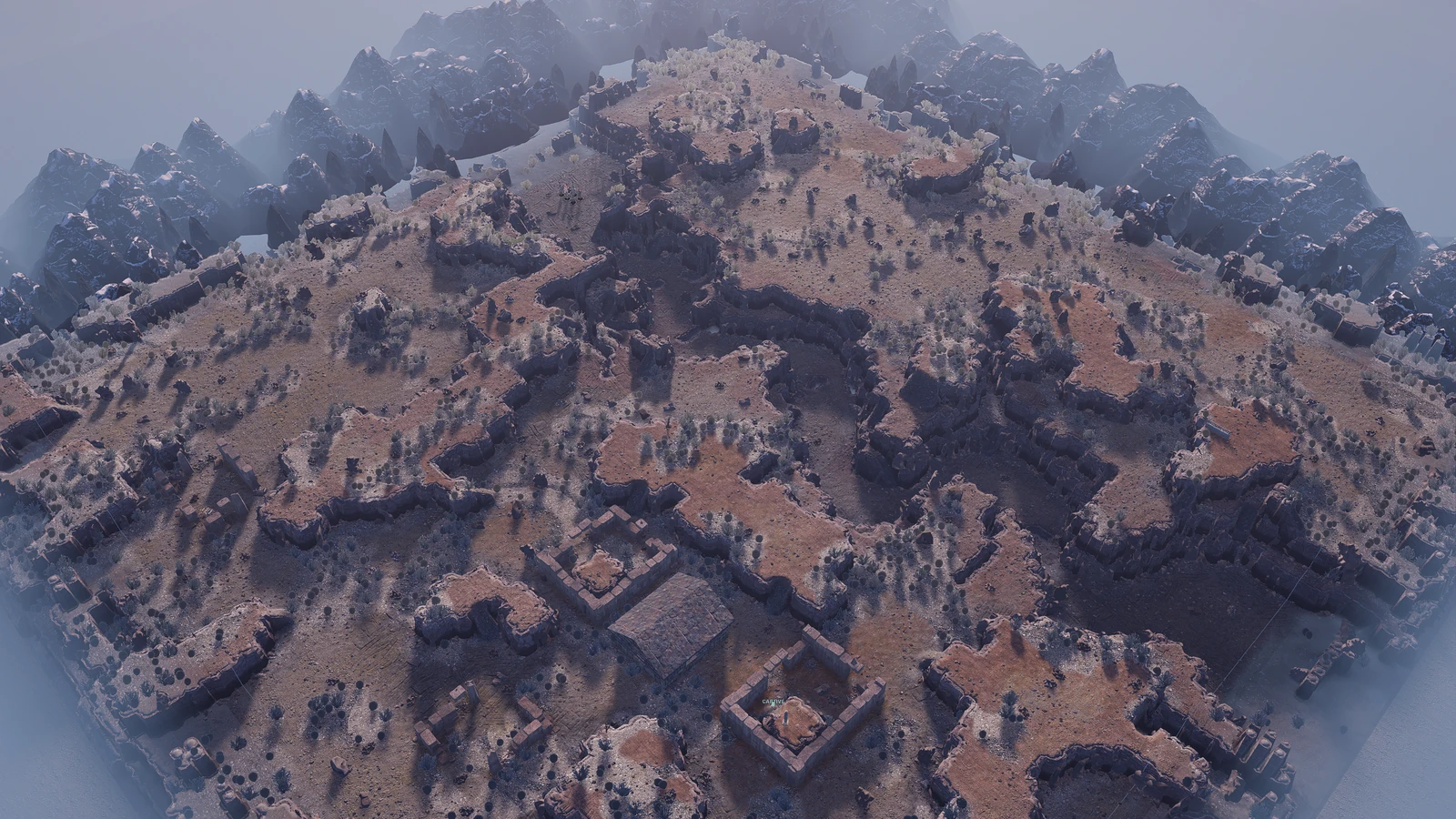
Battles are fought on boards of 72 tiles a side, or 84 for a siege, a refuge or a war camp. First Contact, the tutorial, stays at 24. Every board has a river across the approach, a pass through a ridge and at least three ways from the squad's edge to the far ground, so there is never one chokepoint to wait behind. Ruins and outposts stand in each zone. And you take six exiles, up to two more than before.
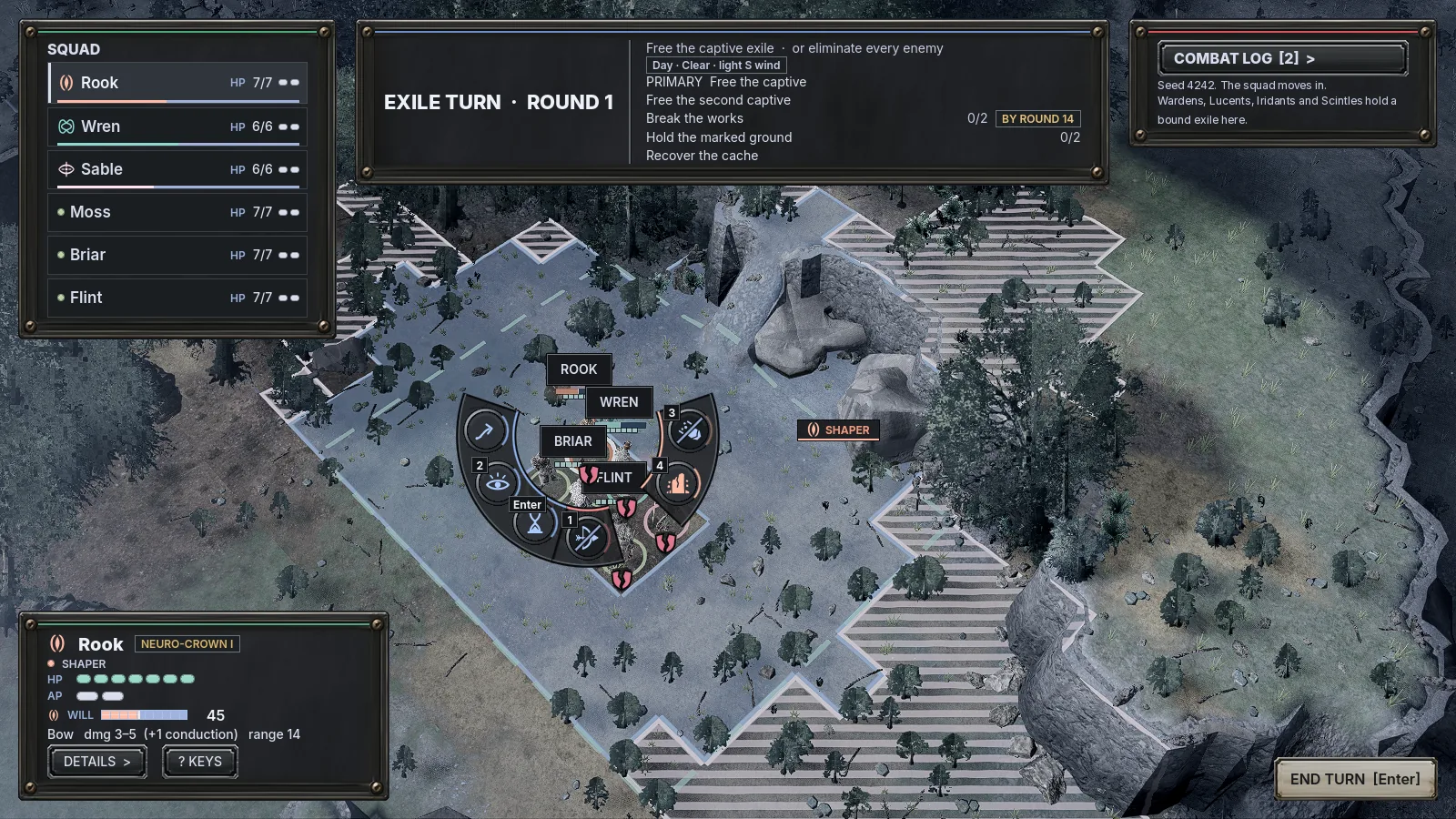
The country is taller now. Heights run from ground level to level four, and each country has one landmark on top: a tor, a mesa, a sea stack, a hot spring or a fallen beech. Cliffs are climbed at ladders, which take an exile up two levels, and at ledges, which take one.
Rivers are crossed at fords, where a step costs double, there is no cover and a wader is easier to hit. Deep water can be swum too, at three times the cost, but a swimmer can't shoot, cast or keep overwatch. It's the shortcut nobody takes twice.
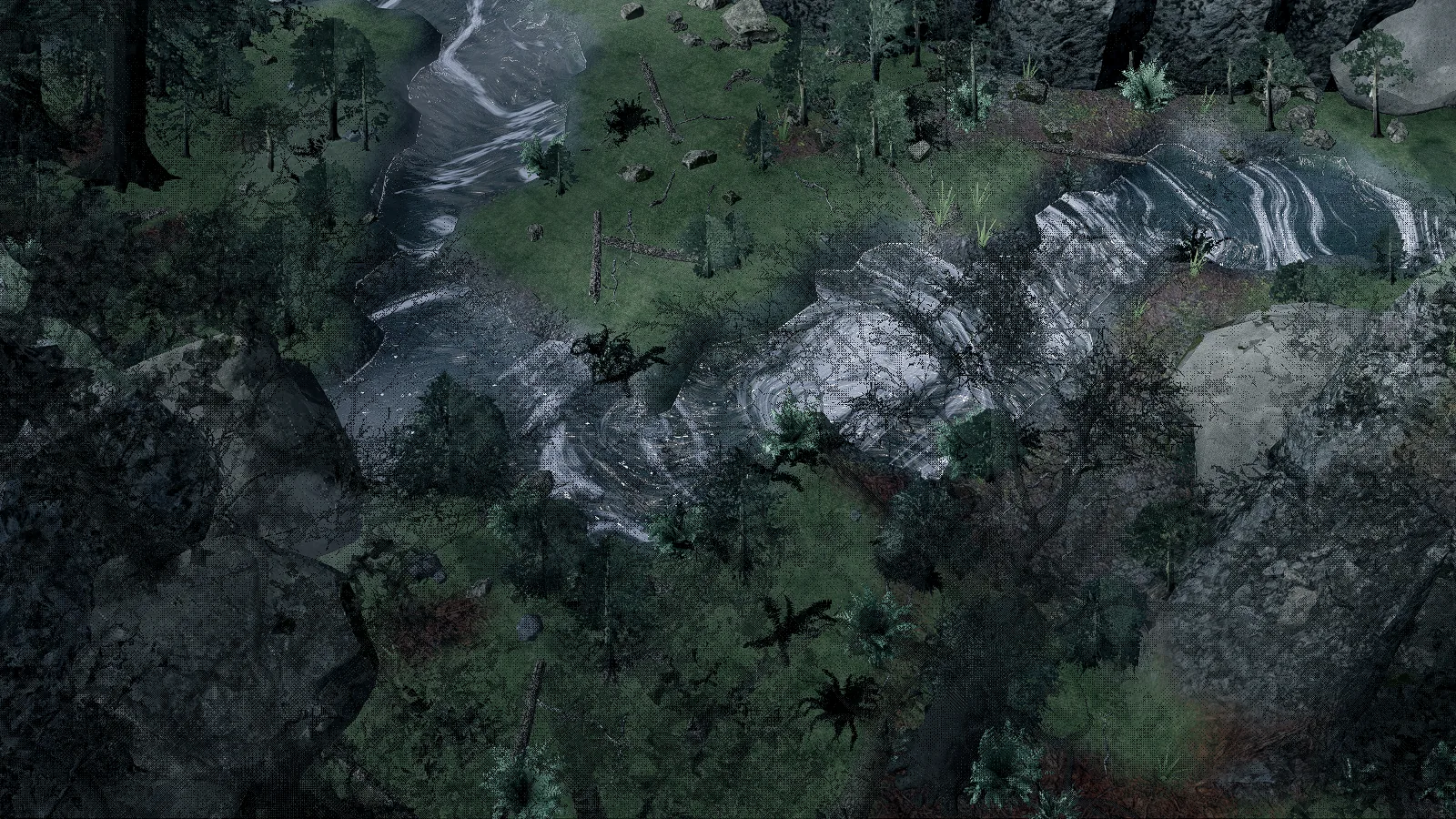
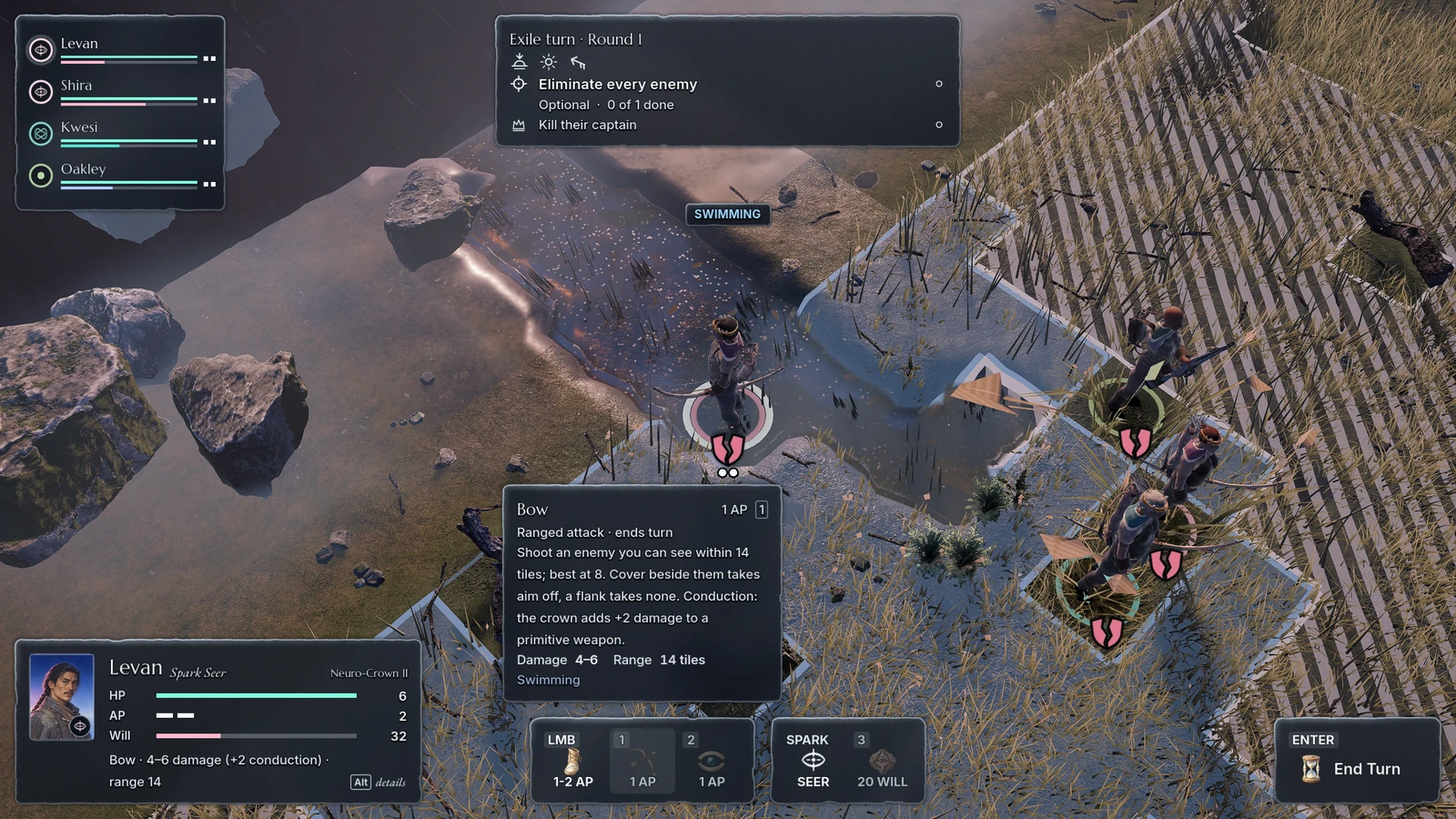
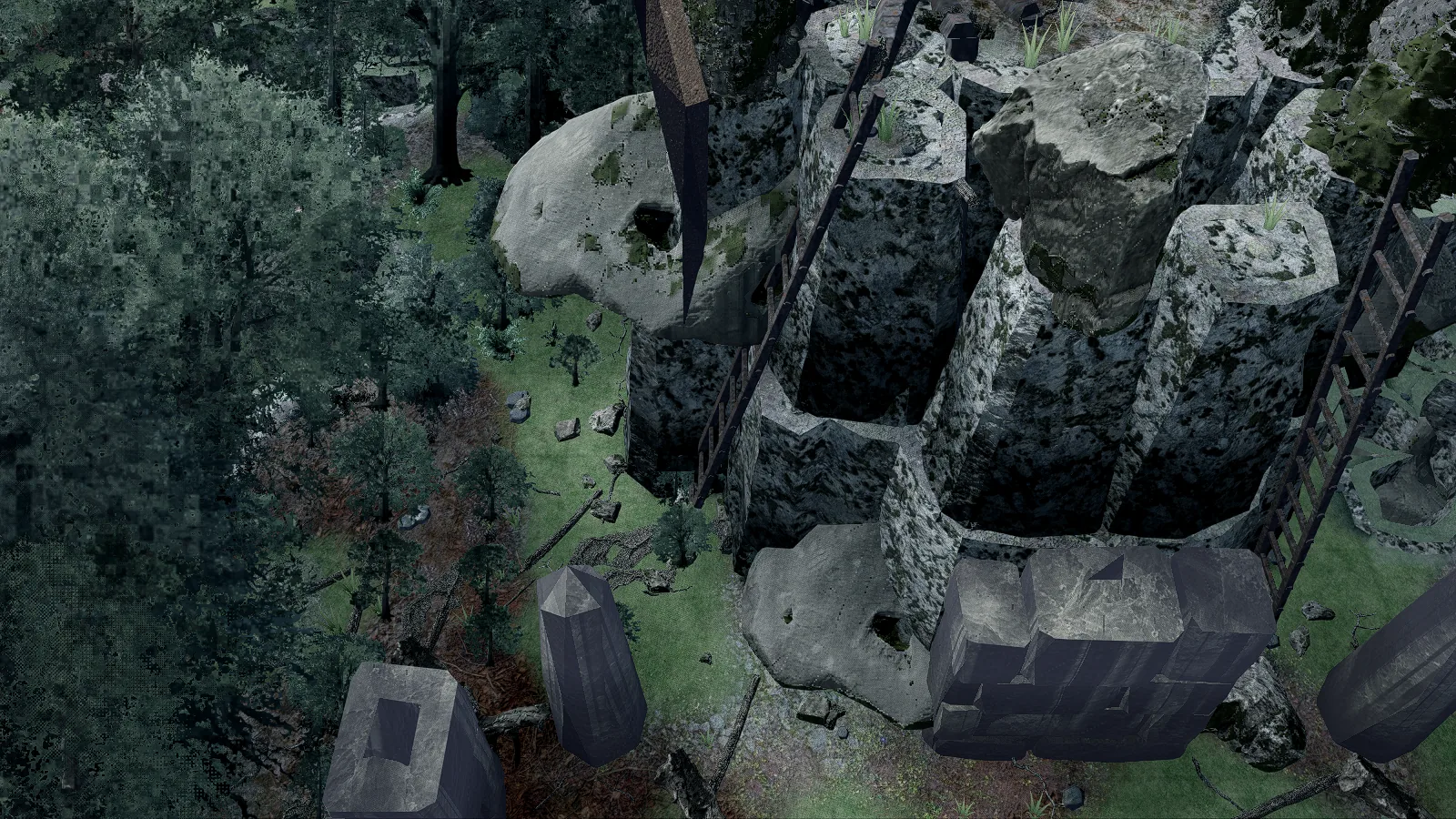
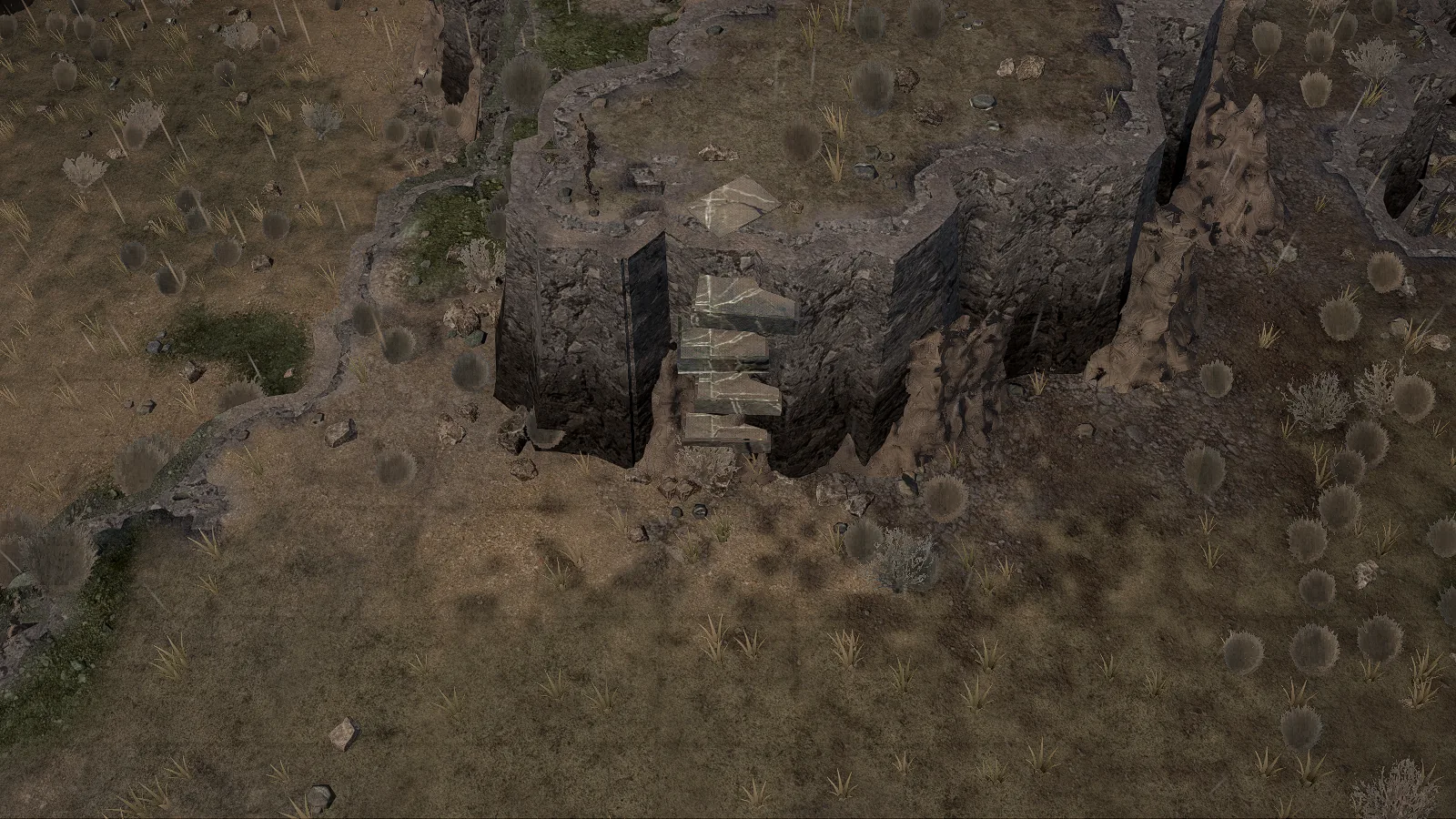
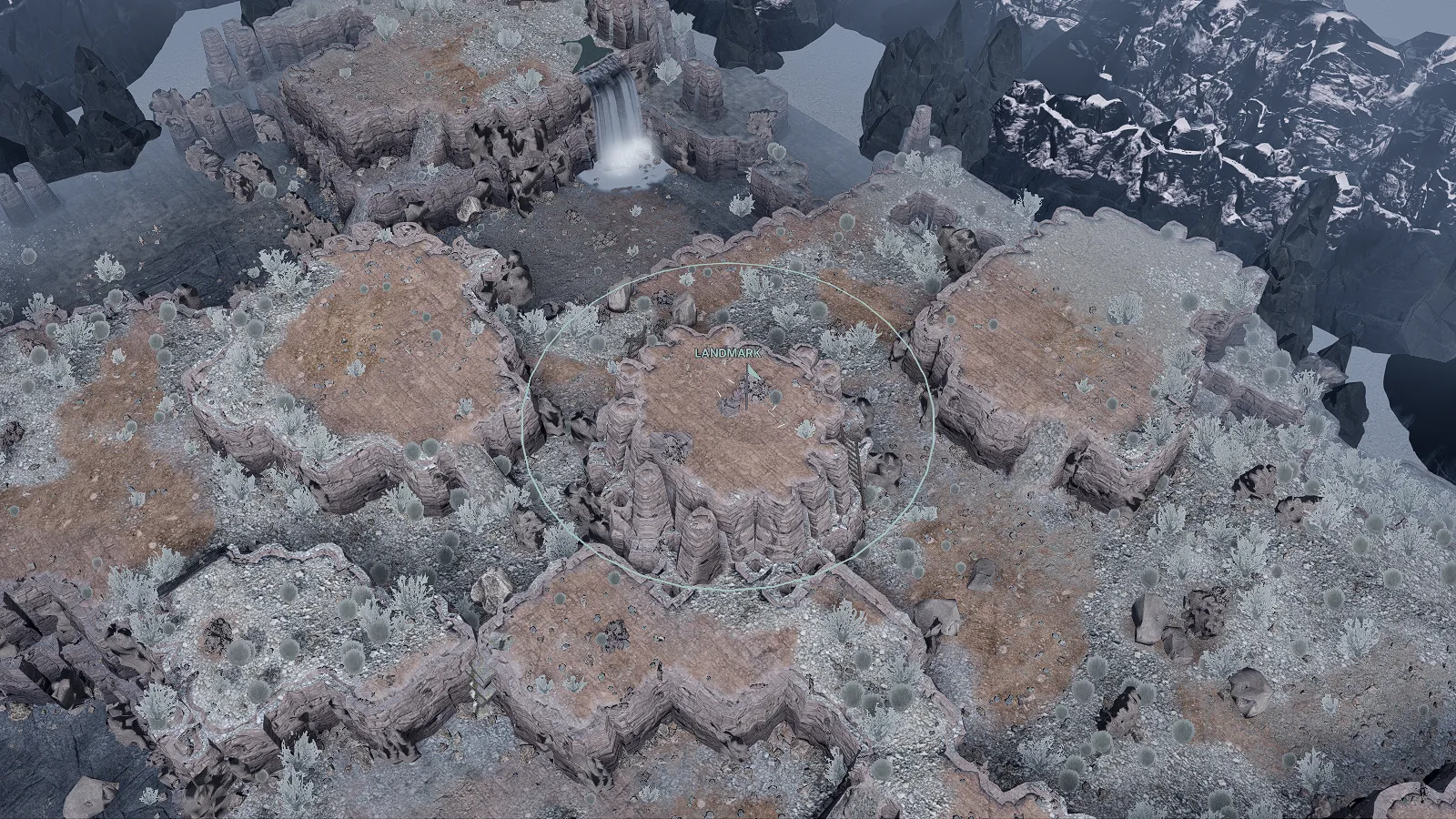
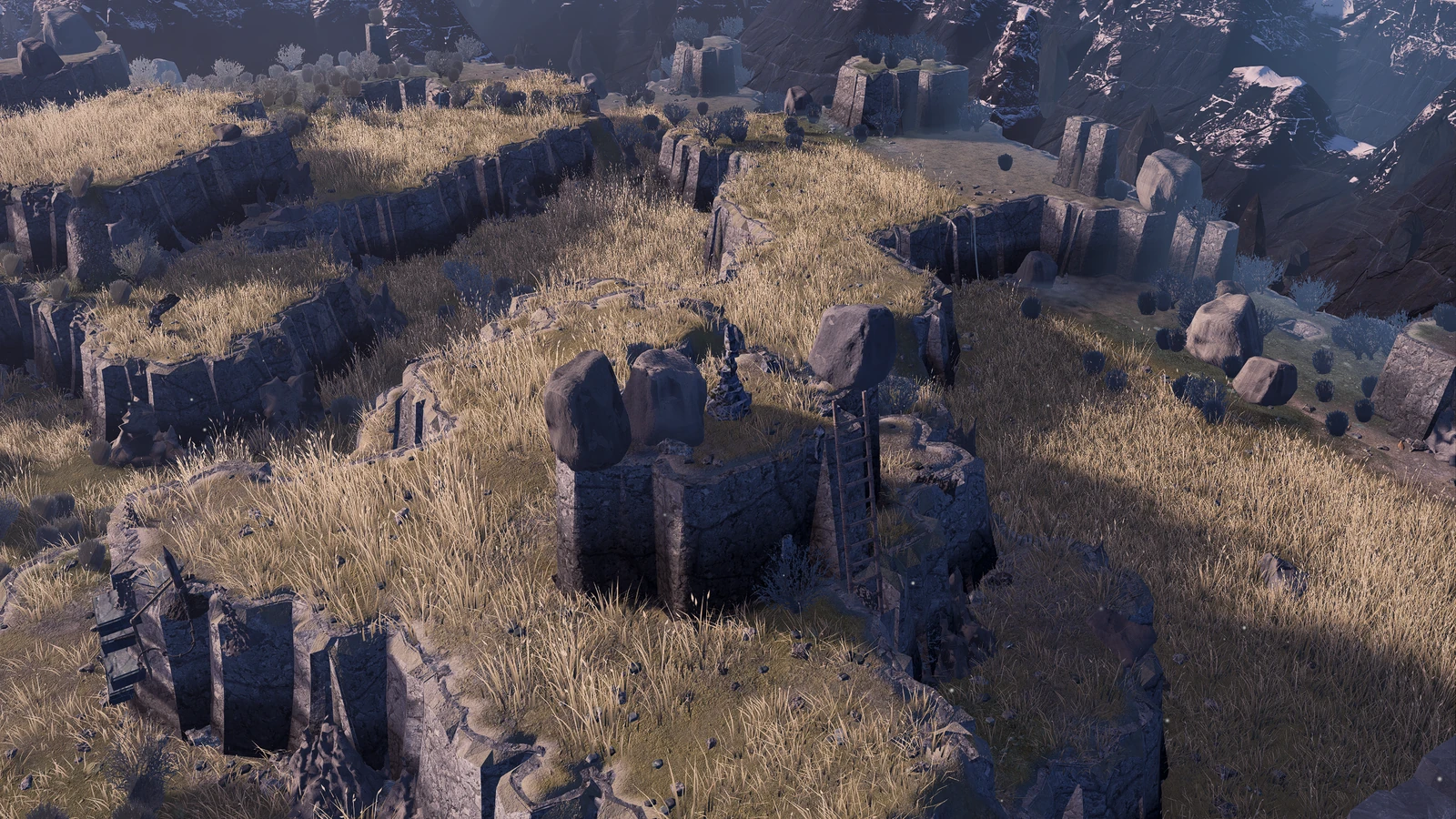
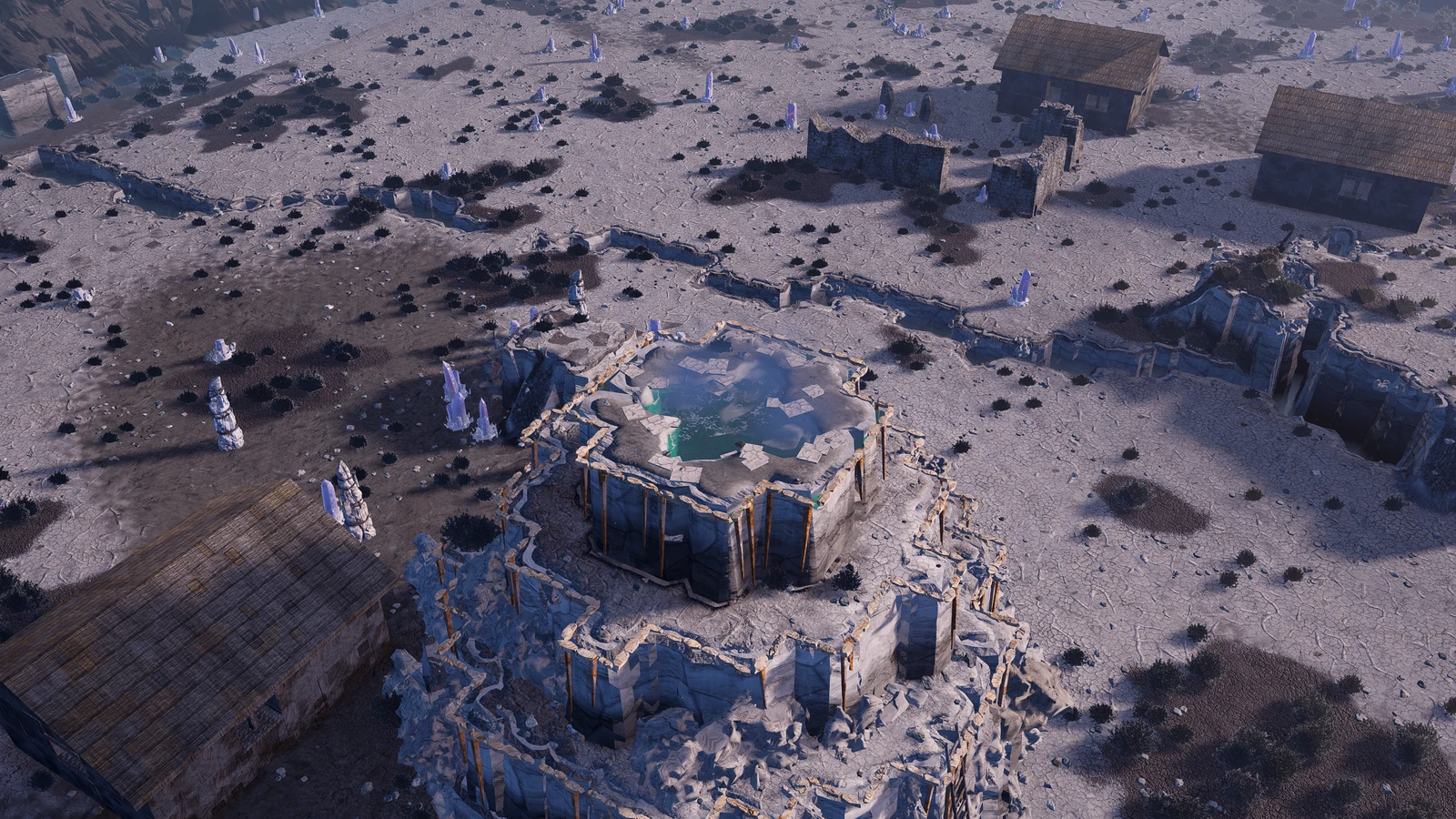
A mission can carry more than one thing to do. Beside the main objective there may be a second captive to free, a set of enemy works to break, a patch of high ground to hold for two turns, a cache to carry home, a captain to bring down or the landmark to scout.
Winning doesn't need any of them. They pay in stock and experience, and every one is a reason to leave good cover. Once the main objective is met and some are still open, the mission goes on, and a Leave the field action lets the squad out when it has had enough.
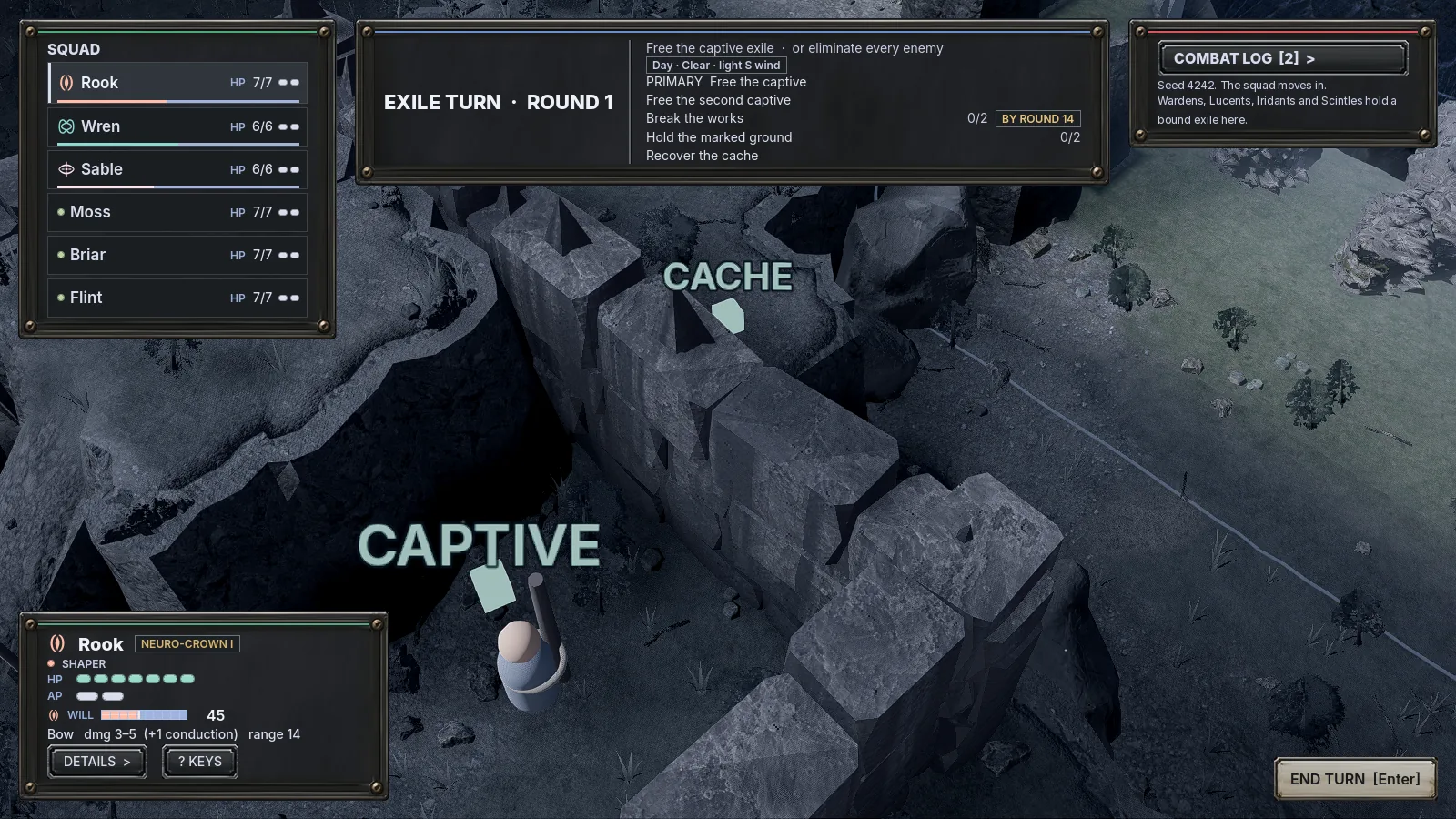
The enemy sends for help. Sieges, defences and the larger garrisons get reinforcement waves. A turn before one lands, the log and a chip in the top bar name the edge it will come from, and never the tile. Nothing of the wave is drawn until the squad can see it. Cover chips under fire as well: low rocks and trees break down, so the spot that saved you last turn may not save you this one.
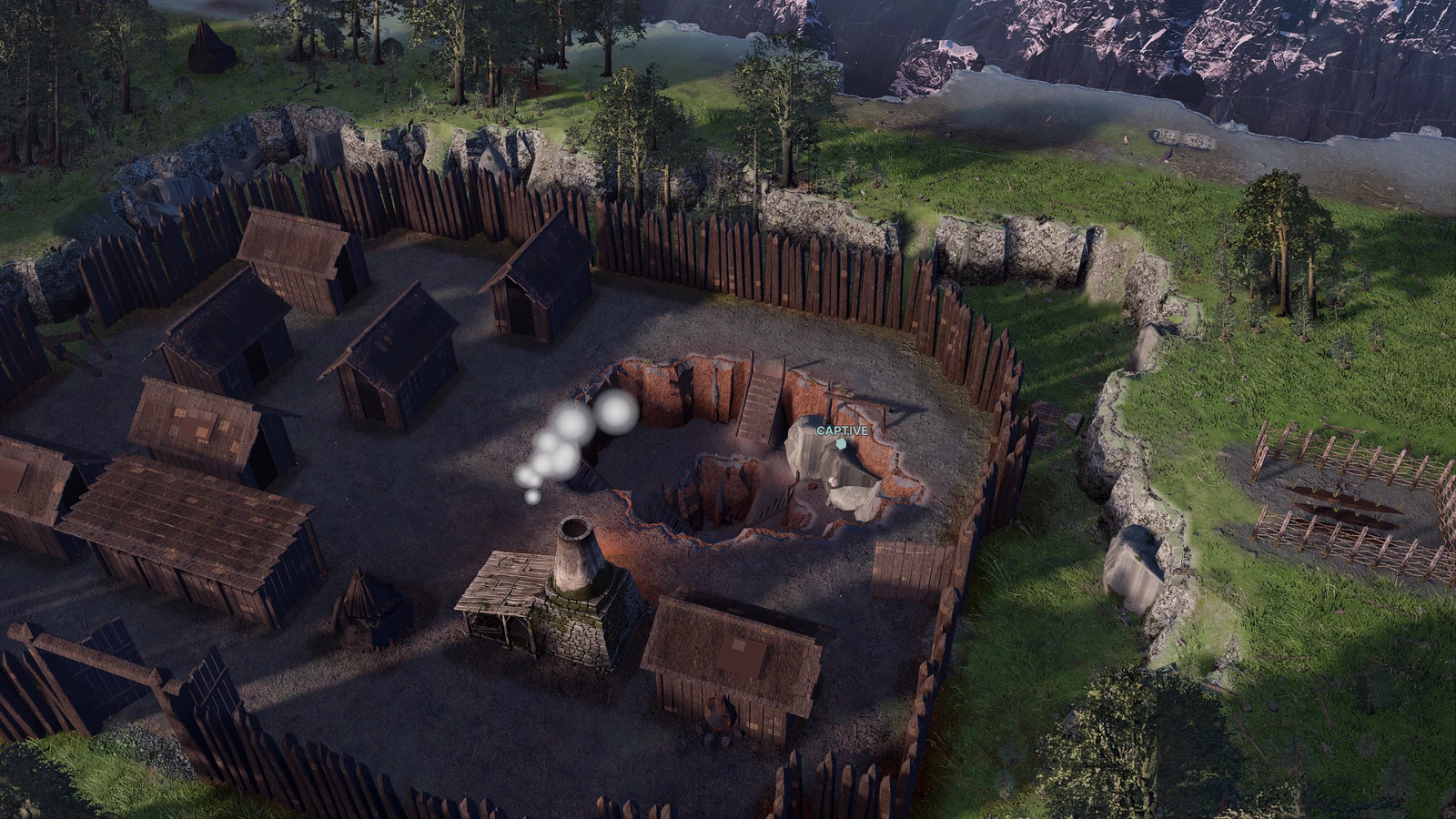
The boards are built up, too. Round the settlements stand houses you can walk into, a Tuatha hut or hall or a timber lodge, and the roof lifts away when an exile goes inside. Most rivers get a bridge of glass, timber or stone beside a ford, so a broken bridge strands nobody, and the cliffs of the canyon, alpine, highland and coast country open into a cave mouth or two under a rock roof.
In the Firbolg camps of forest and marsh country, timber walks on stilts run two levels up over the pools and along the trees, railed, with a stair at each end. A fight goes on under a walk and on top of it at once, and the walks burn.
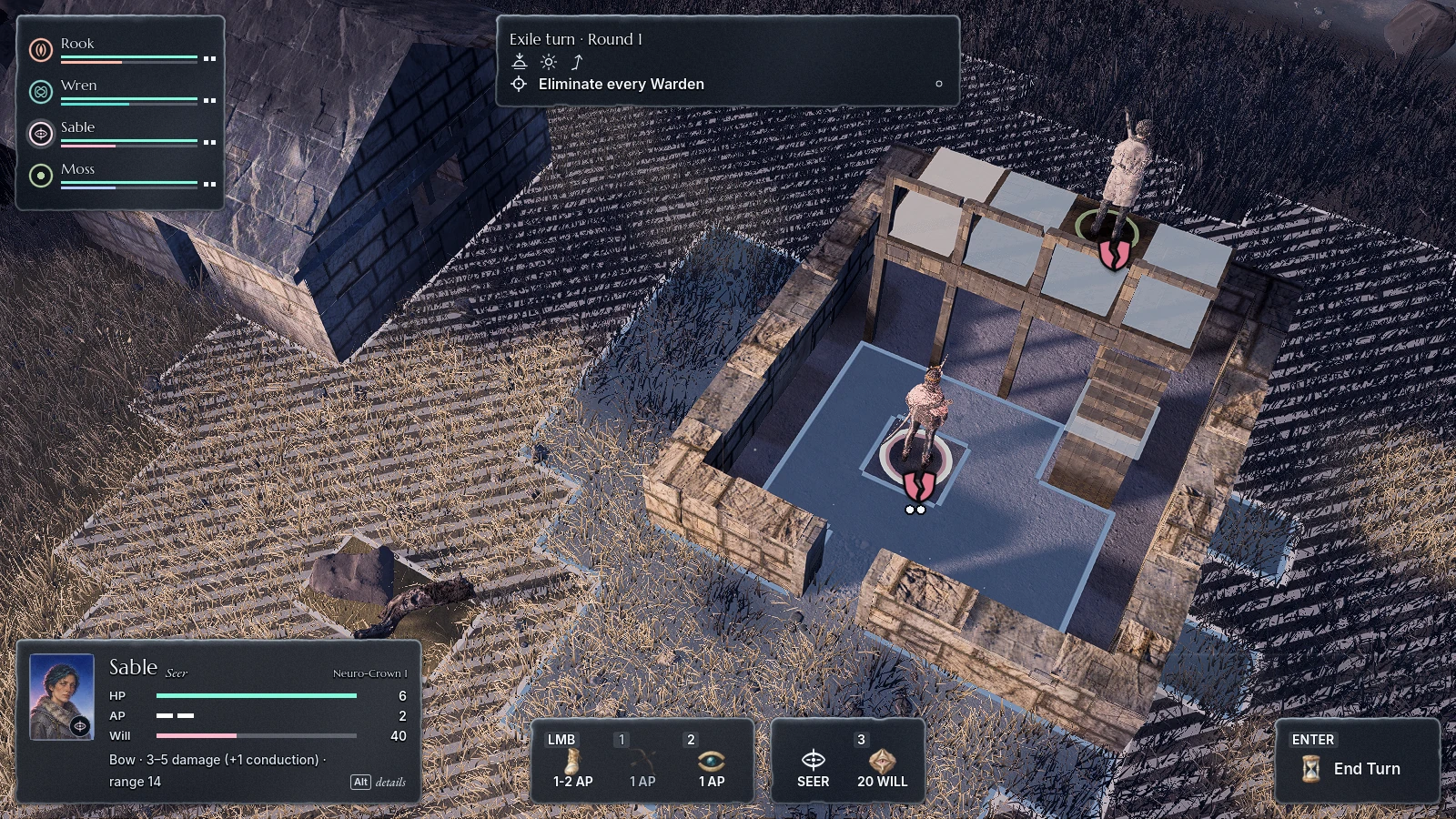
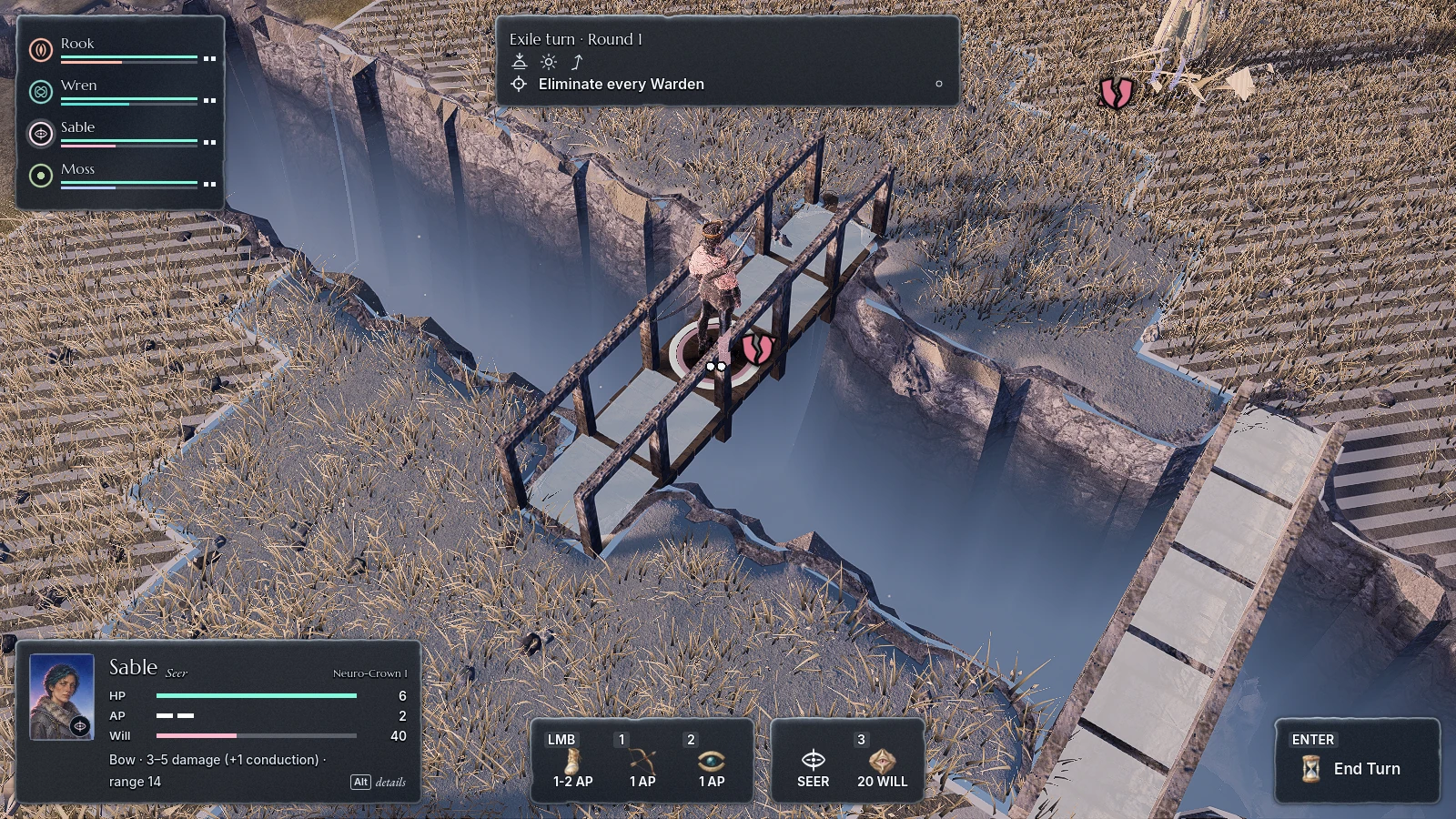
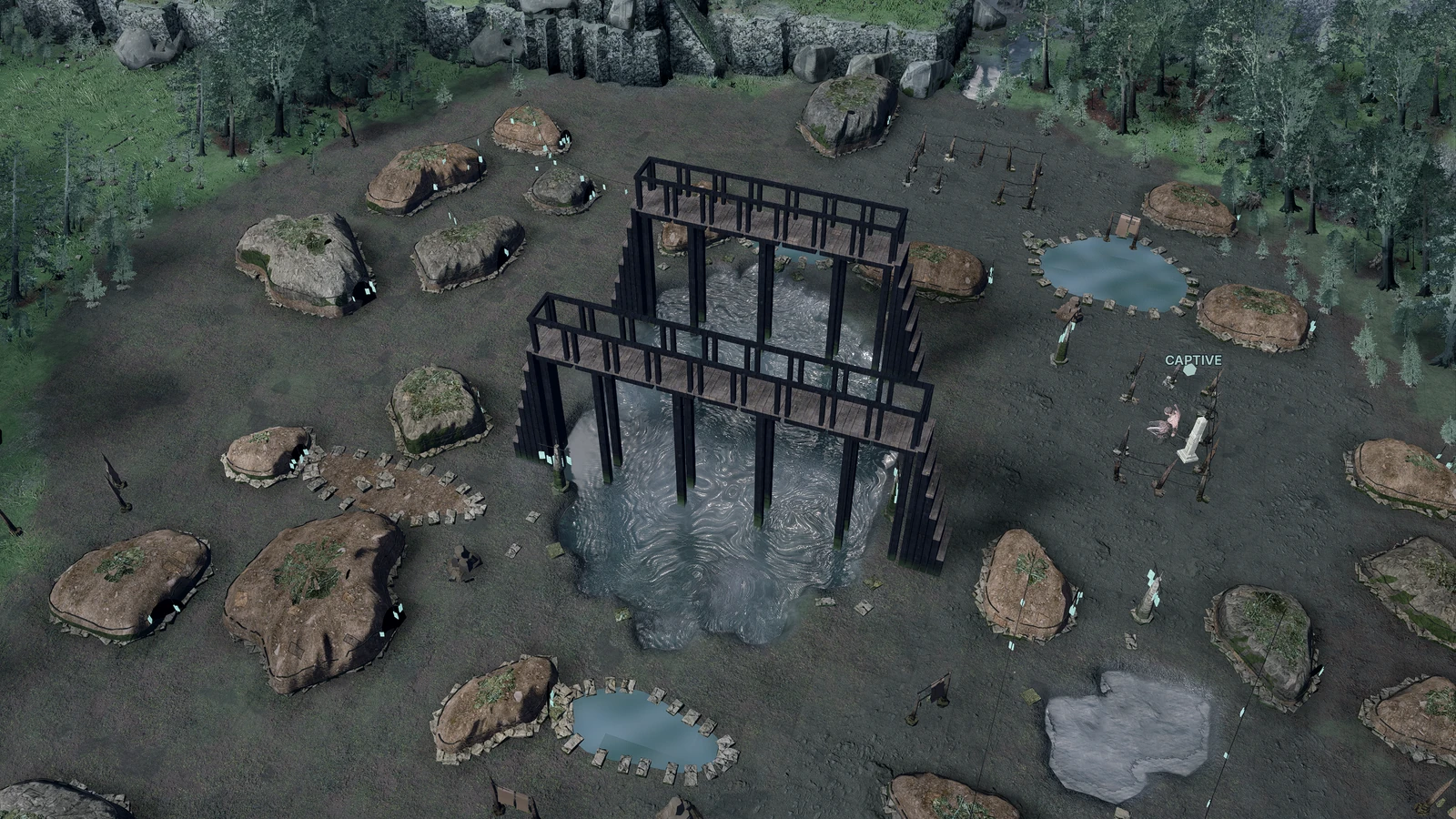
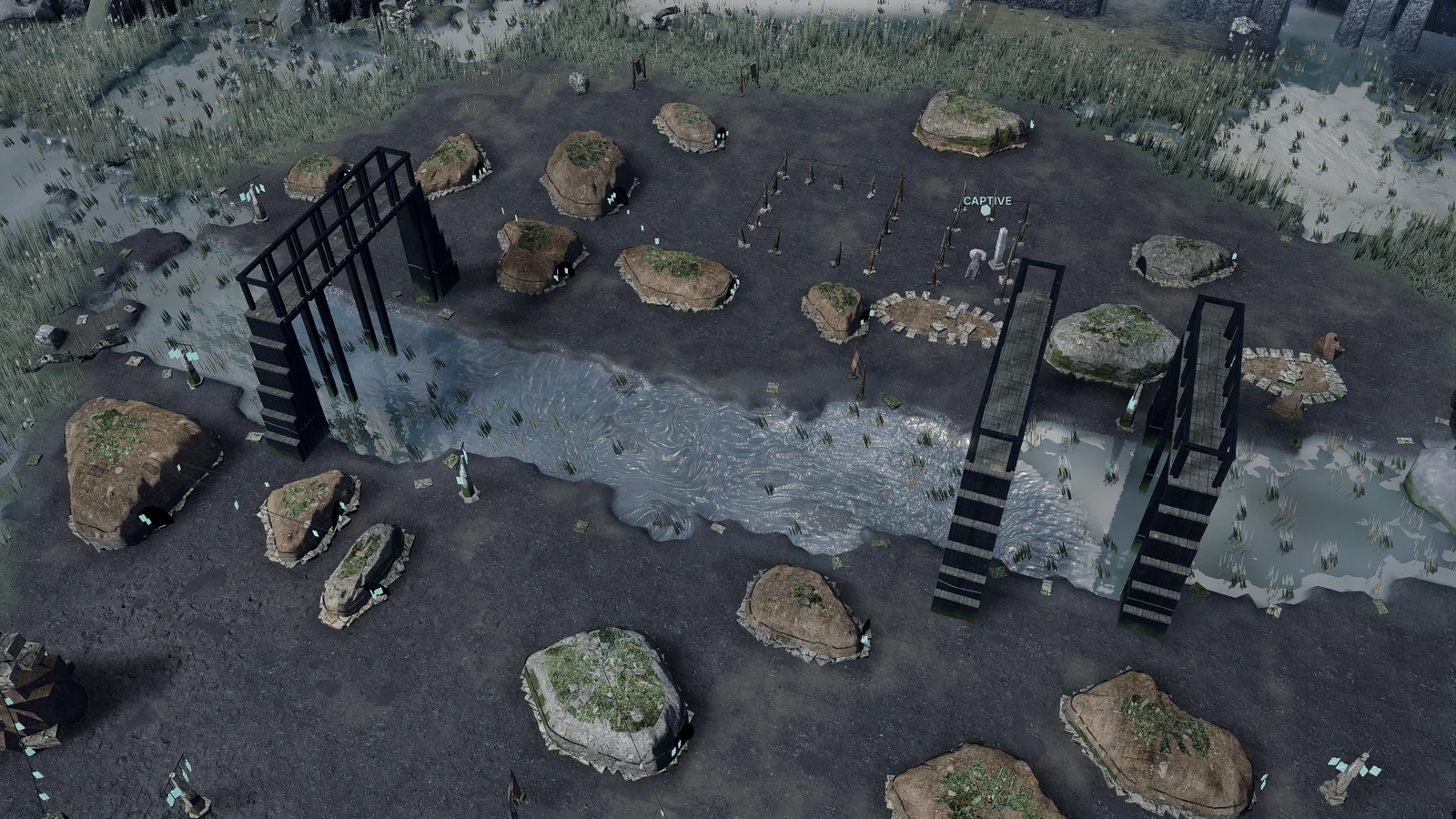
It isn't all finished. The houses are bare inside, the cave rock is a plain stand-in until it gets models of its own, and the objective markers are plain stakes for now. A big board still takes a few seconds to build.
The enemy
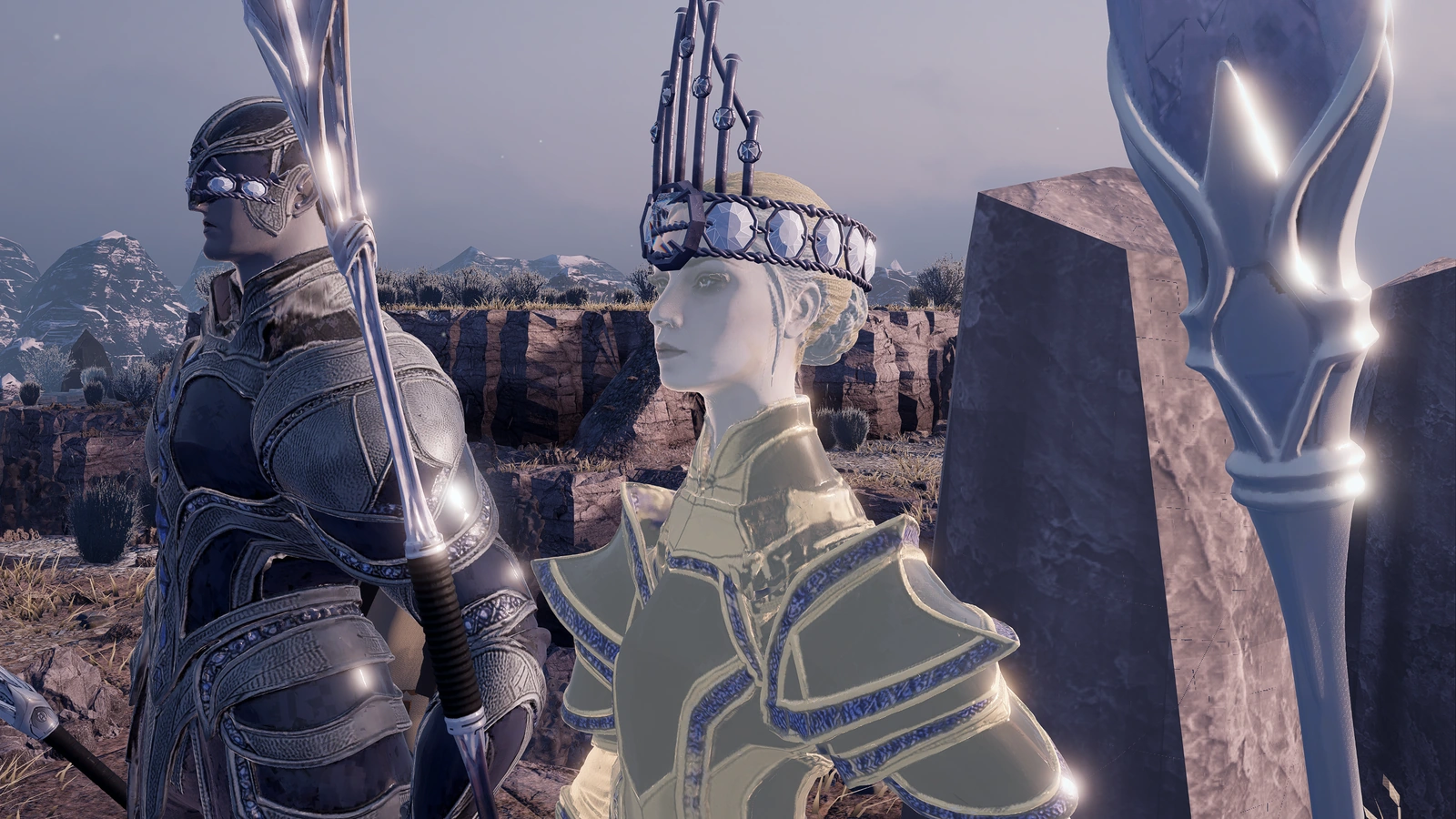
The Tuatha Dé Danann got here first. Tall and elven, they wear stained glass for armour and hold the western uplands. Every one of them is crowned, with a circlet of forged crystal on the head, and the first crowns your exiles wore came out of their forges. They keep small tamed apes, Ramapithecus, as servants, and a troop works at the edge of every Tuatha place you fight in.
Wardens and their Captains form the line with lances. Lucents in heavy plate swing two-handed crystal swords. Iridants carry a staff that fires a beam of refracted light, dazzling whoever it hits, and Scintles range out ahead of everyone with javelins.
The Tuatha bring a war-beast too, the Amphicyon, a wolf's long head on a bear's body, which always comes straight at the squad. And in their cities and salt works they arm the Bound, the humans they hold to their work, with spears, slings and clubs.
The Firbolg live in the caverns under the great forests of the east, and nothing about them is human. They fight with sound. A Chorister's Dirge drains Will from eight tiles away. With the Choristers come quick Descants with glass knives, lean Antiphons whose curved blades drain Will like the song, and the Bourdon, a giant with a slab of a blade that neither stone nor mind can shift.
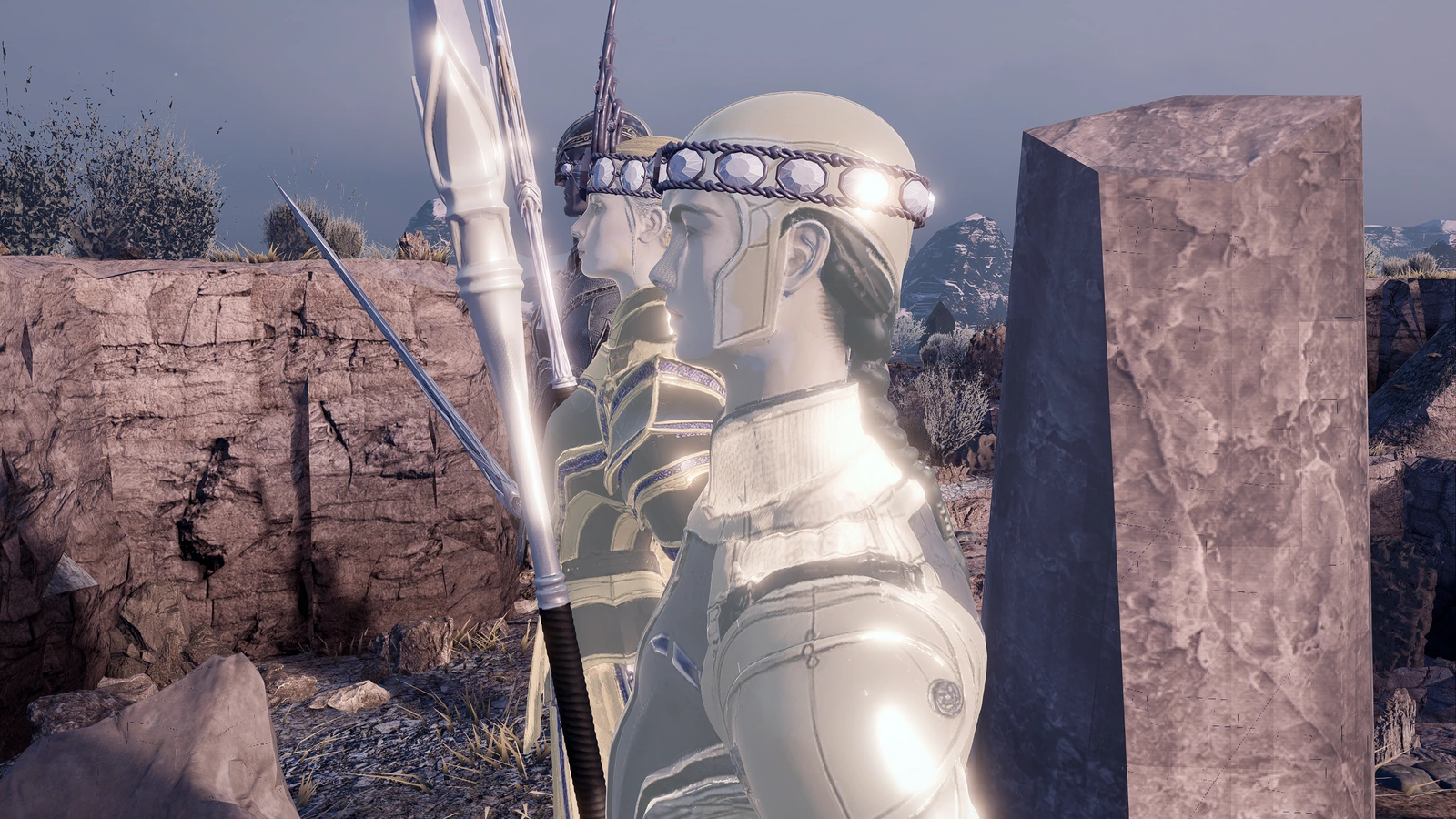
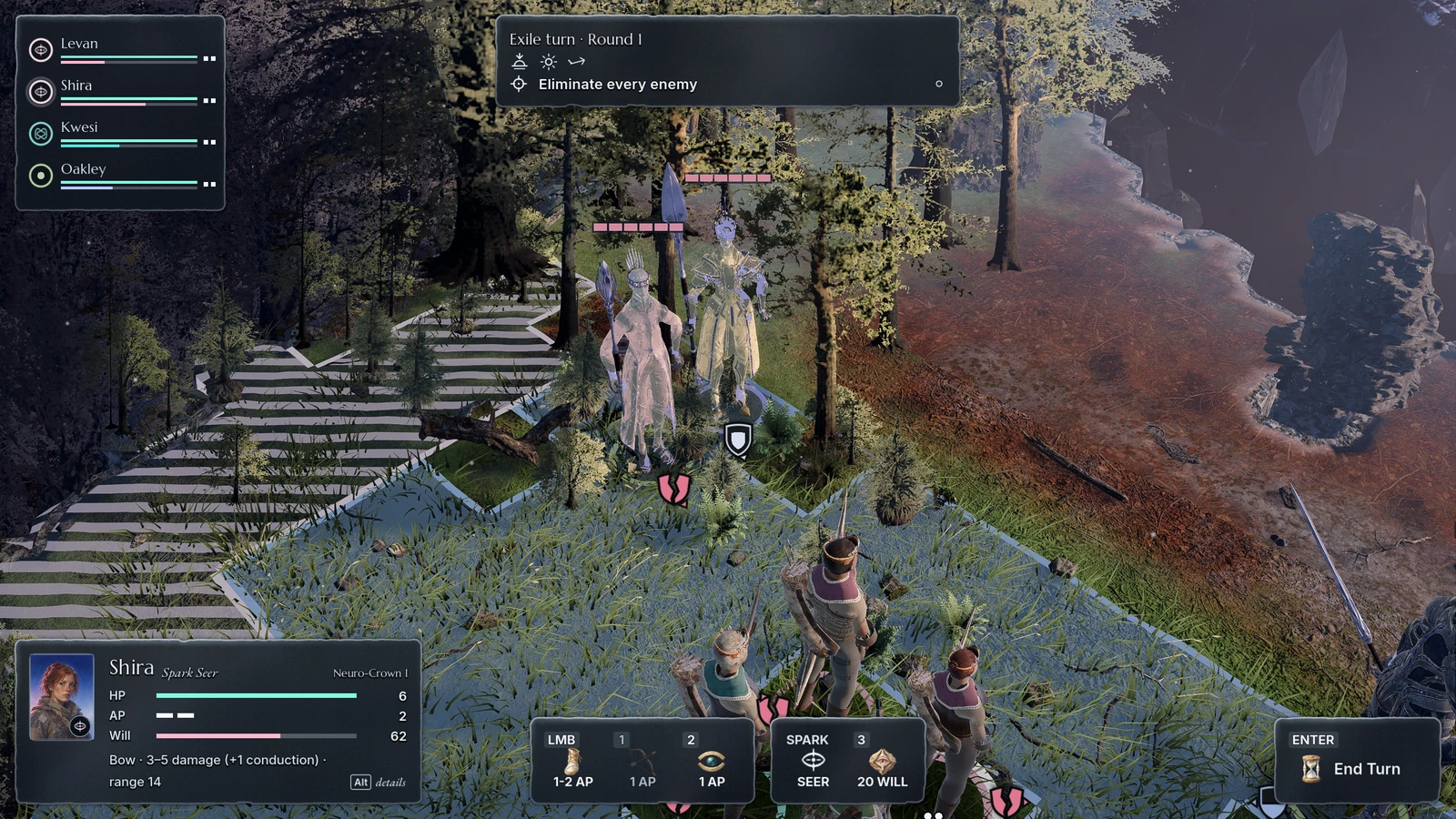
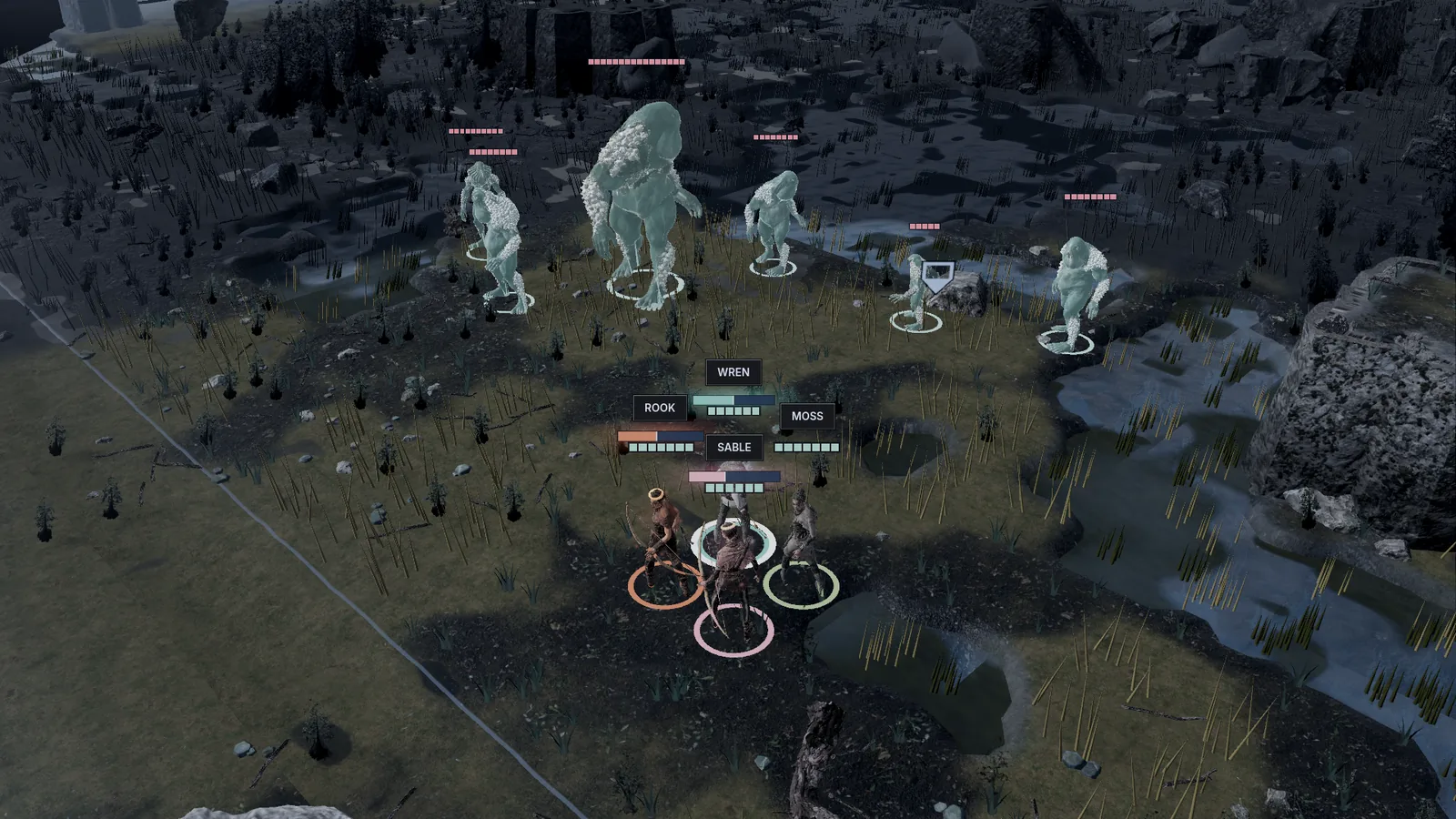
Every image on this page is a work-in-progress capture from the game, and some of it already looks different. See what's built and what's next on the progress page.
Follow development
No spam. Development updates, roughly monthly. See the privacy policy.